
系动词
- 格式:ppt
- 大小:2.67 MB
- 文档页数:35


系动词1. 最常用连系动词:be(am; is/was; are/were)。
2. 表变化的系动词:get; turn; go; fall; become; grow; come; run。
Eg: It is becoming colder and colder.The food has gone bad.此处还需注意的是become和turn后接表职业的名词时冠词的有无:Eg: Two years later, he became a teacher.但Two years later, he turned teacher.另外,go表变化时一般指事情向消极、不好的方面转化。
3. 所谓“感官动词”:look; sound; taste; smell; feel。
一般它们在句子中译成:。
起来;。
上去。
此类系动词为高考高频词。
Eg: The food tasted good.食物尝起来很香。
Eg: He looked sadly at the picture. /She looked sad after hearing the news.Tom tasted the food and it tasted good.4. 表状态的系动词:keep; stay; remain;(依然是;保持)Eg: She remains loyal to her father despite his cruelty towards her.What a lovely day today! I love fine weather and Ihope it will stay fine for some more days.Much remains to be done.5. 表像系动词:seem; appear。
汉语意义:看起来像、似乎、好像。
这两个动词有一个共同的特点,即如果要表达时态的变化,需要后接不定时来完成。
Eg: He seemed to have caught cold./ When Father came in, Tom seemed to be eating something.句型转换也要要求牢记It seemed that he had caught cold.When Father came in, it seemed that Tom was eating something.6. 终止系动词:prove; turn out。

系动词
系动词是用来连接主语和表语以表示主语的身份、性质、状态等的词,又称连系动词,不能单独作谓语,必须与表语连用构成系表结构。
中考常考的系动词有以下几种:
▲be 动词。
以肯定的语气叙述主语的状态时,要用系动词 be,be 后接名词、形容词、不定式、副词和介词短语等作表语。
如:
(1)She is a student.
(2)He is excited about the coming football game.
▲感官系动词。
用于表示说话人所感知的主语的特征或状态。
常见的感官系动词有 look,feel,sound,taste,smell 等,其后常接形容词作表语。
如:
This dish tastes good.
▲状态变化类系动词。
用于表示主语状态的变化。
常见的状态变化类系动词有become,get,grow, come,turn,fall 等,其后大多接形容词作表语。
如:
The whole class fell silent.
▲状态持续类系动词。
表示主语状态的持续。
常见的状态持续类系动词有remain,stay,keep等。
如:
His room keeps clean all the time.
▲表象系动词。
用于从印象的角度说明主语所处的状态和特征。
常见的表象系动词有 appear,seem等。
如:
He seems unhappy.。

6大系动词1.状态系动词:通常表示主语的特征、状态和身份等,只有be动词,例如:He is a teacher. 他是一名教师。
(is与补足语一起说明主语的身份。
)He is a famous scientist.他是一位有名的科学家注意:主语不同,be的形式也不同,且有时态的变化。
2.感官系动词:feel, smell, sound, taste.This flower smells very sweet.这朵花闻起来很香。
The soup tastes good.这碗汤尝起来很美味。
This kind of cloth feels very soft.这种布摸起来很软。
3.变化系动词:这些系动词表示主语变成什么样,变化系动词主要有become, grow, turn, fall, get, go, come, run.He became mad after that. 自那之后,他疯了。
一般情况下,系动词没有进行时态,但是这些表示变化类的系动词,是可以用进行时态的,例如It was becoming cold, so we lit the fire. 天气变冷了,所以我们点起了火。
另外某些含有变化意义的动态系动词如get, become, grow, turn等的进行时态可与形容词的比较级连用,表示渐进过程,其意思是“越来越……”。
4.持续系动词:用来表示主语继续或保持一种状况或态度,主要有keep, remain, stay, lie, stand。
He always keeps silent at meeting. 他开会时总保持沉默。
5.表像系动词:用来表示"看起来像"这一概念,主要有seem, appear, look。
He looks tired. 他看起来很累。
6.终止系动词:表示主语已终止动作,主要有prove, turn out, 表达"证实","变成"之意。
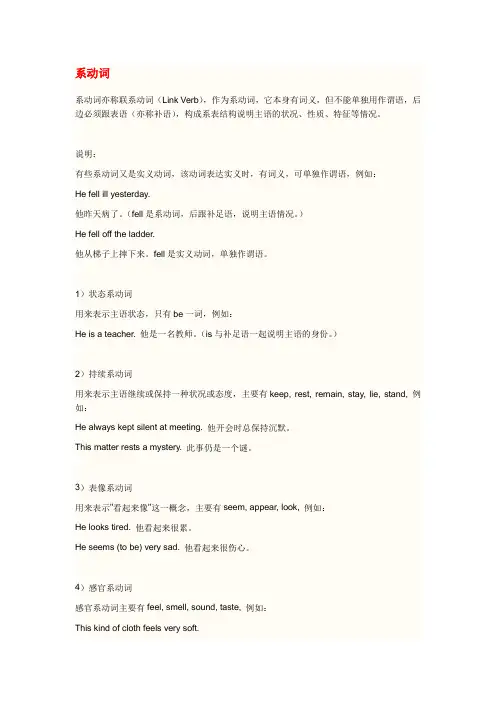
系动词系动词亦称联系动词(Link Verb),作为系动词,它本身有词义,但不能单独用作谓语,后边必须跟表语(亦称补语),构成系表结构说明主语的状况、性质、特征等情况。
说明:有些系动词又是实义动词,该动词表达实义时,有词义,可单独作谓语,例如:He fell ill yesterday.他昨天病了。
(fell是系动词,后跟补足语,说明主语情况。
)He fell off the ladder.他从梯子上摔下来。
fell是实义动词,单独作谓语。
1)状态系动词用来表示主语状态,只有be一词,例如:He is a teacher. 他是一名教师。
(is与补足语一起说明主语的身份。
)2)持续系动词用来表示主语继续或保持一种状况或态度,主要有keep, rest, remain, stay, lie, stand, 例如:He always kept silent at meeting. 他开会时总保持沉默。
This matter rests a mystery. 此事仍是一个谜。
3)表像系动词用来表示"看起来像"这一概念,主要有seem, appear, look, 例如:He looks tired. 他看起来很累。
He seems (to be) very sad. 他看起来很伤心。
4)感官系动词感官系动词主要有feel, smell, sound, taste, 例如:This kind of cloth feels very soft.这种布手感很软。
This flower smells very sweet.这朵花闻起来很香。
5)变化系动词这些系动词表示主语变成什么样,变化系动词主要有become, grow, turn, fall, get, go, come, run.例如:He became mad after that. 自那之后,他疯了。
She grew rich within a short time. 她没多长时间就富了。