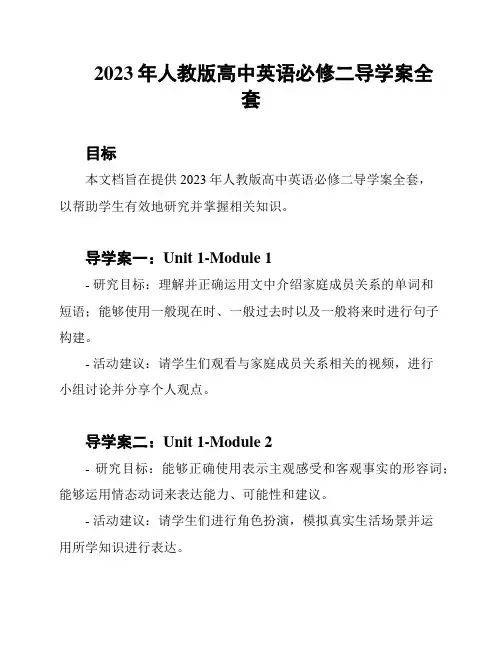
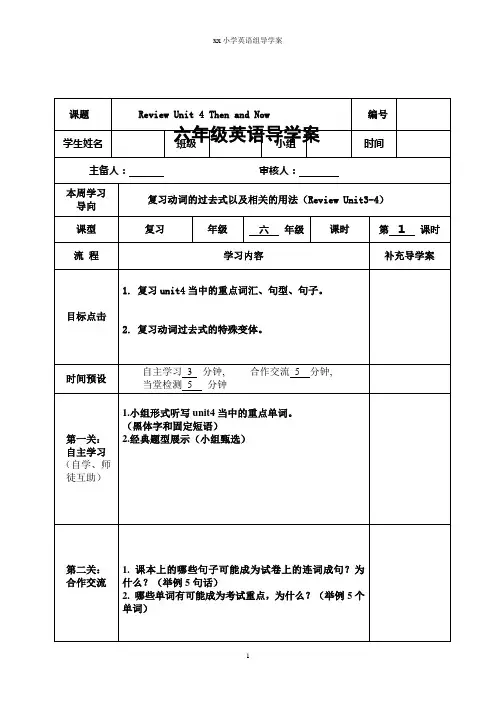
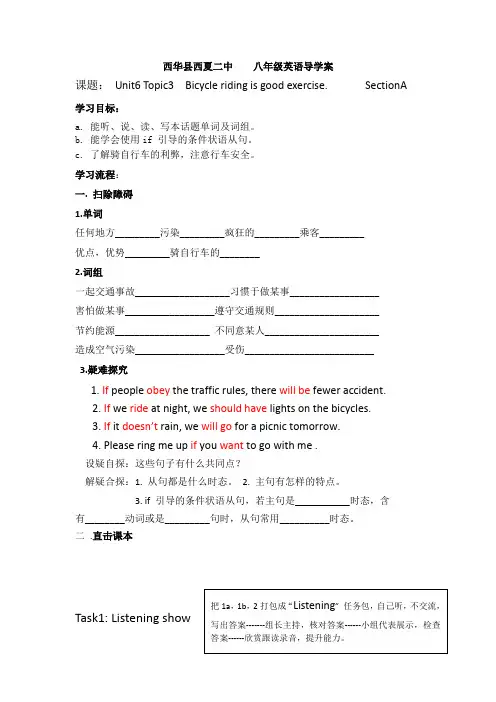
英语优质课导学案
- 格式:doc
- 大小:26.01 KB
- 文档页数:6
英语优质课导学案
A Guide to Excellent English Lessons
Effective English language instruction is crucial for students to
develop strong communication skills necessary for academic and
professional success. An excellent English lesson plan should
incorporate a variety of engaging activities that cater to diverse
learning styles and promote active participation. This guide outlines
key elements of a high-quality English lesson that can help students
enhance their proficiency in reading comprehension writing and oral
expression
Lesson Objectives
The first step in designing an effective English lesson is to clearly
define the learning objectives. These objectives should be specific
measurable and aligned with relevant educational standards. For
example an objective for a secondary level English class might be
Students will be able to analyze the use of figurative language in a
short story and explain how it contributes to the overall theme of the
text Another objective could be Students will demonstrate the ability to craft a well-organized five paragraph essay with a clear thesis
statement supporting details and a concluding paragraph
Activating Prior Knowledge
Beginning the lesson by activating students prior knowledge is an
important strategy to help them make connections to new
information. This can be done through a range of activities such as a
brainstorming session a quick write or a class discussion. For instance
if the lesson is focused on literary devices the teacher might ask
students to share examples of metaphors similes and personification
they have encountered in their reading. This not only engages
students but also allows the instructor to assess their baseline
understanding of the topic
Explicit Instruction
Following the activation of prior knowledge the teacher should
provide clear explicit instruction on the key concepts or skills being
taught. This may involve presenting new vocabulary terms explaining
grammatical rules or modeling the steps of a writing process. During
this phase the instructor should use visual aids such as PowerPoint
slides anchor charts or handouts to reinforce the material. It is also
beneficial to incorporate opportunities for students to actively
participate through activities like guided practice or think pair share
discussions
Differentiated Learning
To ensure all students can access the content an excellent English
lesson should incorporate differentiated learning strategies. This may
include offering choice boards providing scaffolded resources or
utilizing flexible grouping. For example during a poetry unit some
students might analyze the rhyme scheme and meter of a poem
while others focus on identifying and interpreting the figurative
language. By differentiating the content process and product the
teacher can meet the diverse needs of learners in the classroom
Formative Assessment
Ongoing formative assessment is crucial for monitoring student
progress and informing instructional decisions. Throughout the
lesson the teacher should employ a variety of informal assessment
techniques such as exit tickets short written responses or
observational checklists. This data can help the teacher identify areas
that require reteaching or additional support. Providing students
with specific and timely feedback is also an essential component of
formative assessment
Engaging Activities
In addition to direct instruction an excellent English lesson should
include engaging student-centered activities that foster active
learning. These might include cooperative learning tasks Socratic
seminars or project-based learning experiences. For instance in a unit on persuasive writing students could engage in a debate where they
research and defend opposing viewpoints on a controversial issue.
By participating in hands-on activities students are more likely to
develop a deeper understanding of the content and strengthen their
critical thinking and communication skills
Opportunities for Practice
To reinforce the skills and concepts taught in the lesson students
need ample opportunities to practice applying their knowledge. This
could involve independent writing assignments small group
discussions or performance-based assessments. For example after
learning about the elements of a short story students might be asked
to write their own original narrative that incorporates setting
character development and a clear plot structure. Providing students
with meaningful feedback and chances for revision is also essential
for improving their abilities
Connections to Real-World
Whenever possible an excellent English lesson should make explicit