
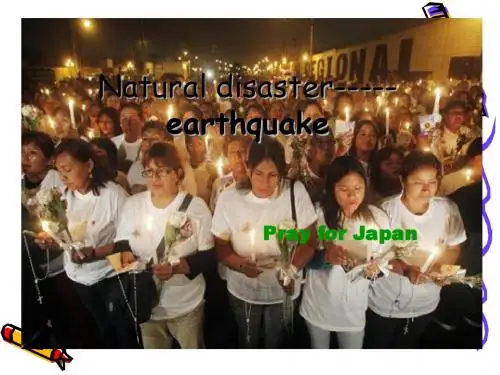
Natural disaster-----earthquake
- 格式:ppt
- 大小:1.75 MB
- 文档页数:19

关于灾难的英语单词1有关自然灾害的英语单词:自然灾害 Natural Disaster : 地震 earthquake雪崩 avalanche火山泥流 lahar泥石流 mudflow/landslide debris flow超级火山爆发 supervolcano 洪水 flood大(或急剧的)漩涡 maelstrom海啸 Tsunami暴风雪 blizzard干旱 Drought雹暴 Hailstorm热浪 heat wave飓风(台风)Hurricanes, Tropical cyclones, and Typhoons冰雹 ice storm龙卷风 tornado冰河时代 ice age森林大火 wildfire流行病 Epidemic饥荒 Famine太阳耀斑 Solar flare 流行性的pandemic,universal 禽流感poultry,bird瘟疫plague灾难disaster尸体corpse火山volcano地震earthquake海啸tsunami雪崩山崩landslide landslip avalanche大陆漂移continental drift 流沙quicksand传染病infectious disease contagion infection 酸雨acid rain冰雹hail hailstonePs: 关于地震的单词 earthquake 地震shake 震动;摇晃tremor颤动;震动temblor [美语] 地震hit 袭击、打击,使遭受strike 突然发生;打击jolt 使颠簸,摇晃rock 摇,摇动,使振动roll across 波动,起伏,横摇 rip through 裂开,破开;突进,横撞直闯damage 损害;损伤destroy 毁坏,破坏;摧残shatter 破坏;捣毁;破灭 devastate 蹂躏,破坏;使荒废;毁灭 level 推倒,夷平flatten 夷为平地seismological 地震学上的 seismology 地震学seismograph 地震仪seismographer 地震学家aftershock 余震smaller tremors 小地震epicenter 震中magnitude 震级Richter Scale(1-10) 里氏震级 at a scale of 7.8 on the Richter calculations 里氏7.8级地震earthquake monitoring 地震监控 tsunami 海啸rock and mud slides 泥石流 tsunami warning system 海啸预警系统 tidal waves 潮汐波,浪潮 natural disaster 自然灾害 tragedy 灾难wreckage 残骸death toll 死亡人数survivors 幸存者victims 受灾者international contributions 国际援助 evacuation 撤离rescue team 救援小组collapse垮塌被抛弃的abandoned 动荡turbulence 骚动turmoil强制pressure。

介绍一种自然灾害以及防护措施英语作文Natural disasters are events that occur naturally and can cause significant damage to the environment, property, and human lives. One of the most common natural disastersis earthquakes, which can strike suddenly and without warning, causing buildings to collapse, roads to crack, and triggering landslides. In this essay, I will introduce earthquakes as a natural disaster and discuss various protective measures that can be taken to mitigate their impact.Earthquakes are caused by the shifting of tectonicplates beneath the Earth's surface. When these plates move against each other, they create seismic waves that travel through the ground, causing the Earth to shake. The magnitude of an earthquake is measured on the Richter scale, with higher magnitudes indicating a more powerful quake. Earthquakes can occur anywhere in the world, but are most common in areas located along fault lines, such as thePacific Ring of Fire.One of the most effective ways to protect against earthquake damage is to ensure that buildings and infrastructure are constructed to withstand seismic activity. This can be achieved through the use of earthquake-resistant materials, such as reinforced concrete and steel, as well as the implementation of building codes and regulations that require structures to meet certain safety standards. Retrofitting older buildings to make them more earthquake-resistant is also crucial in high-risk areas.In addition to building design, early warning systems can help to minimize the impact of earthquakes by providing advance notice of an impending quake. These systems use seismometers to detect seismic activity and send out alerts to residents in affected areas, giving them time to take cover or evacuate. Public education and awareness campaigns can also play a key role in earthquake preparedness, teaching people how to respond during an earthquake andwhat safety measures to take.Another important aspect of earthquake protection is emergency planning and response. Governments and organizations should have disaster management plans in place that outline how to respond to an earthquake, including search and rescue operations, medical care for the injured, and the distribution of food and supplies to those in need. Community drills and exercises can help to ensure that residents are prepared for a seismic event and know what to do in an emergency.In conclusion, earthquakes are a natural disaster that can have devastating consequences, but with proper planning and preparedness, their impact can be minimized. By implementing earthquake-resistant building practices, early warning systems, public education campaigns, and effective emergency response plans, communities can protect themselves against the destructive power of earthquakes. It is important for individuals, governments, and organizations to work together to reduce the risk ofearthquakes and ensure the safety and well-being of all those affected by these powerful natural events.。

描述自然灾害英语作文Natural disasters are catastrophic events that occurdue to natural processes of the Earth. These disastersoften result in widespread destruction, loss of life, and economic hardship. There are various types of natural disasters, each with its own causes and impacts on the environment and human society.One of the most common natural disasters is earthquakes. Earthquakes are caused by the sudden release of energy in the Earth's crust, leading to the shaking of the ground.The severity of an earthquake is measured on the Richter scale, with higher magnitudes indicating stronger earthquakes. Earthquakes can cause buildings and infrastructure to collapse, resulting in casualties and extensive damage to property.Another type of natural disaster is hurricanes, also known as typhoons or cyclones depending on the region. Hurricanes are powerful tropical storms with strong windsand heavy rainfall. These storms can cause widespread flooding, landslides, and wind damage. The storm surge, a rise in sea level due to the hurricane's winds and low atmospheric pressure, can inundate coastal areas and cause extensive damage to coastal communities.Floods are another common natural disaster that occurs when an area experiences an overflow of water. This can happen due to heavy rainfall, rapid snowmelt, or thefailure of dams and levees. Floods can cause damage to homes, infrastructure, and agriculture, as well as lead to the displacement of people and loss of life.Wildfires are another type of natural disaster that occurs in many parts of the world, particularly in dry, forested areas. These fires are often started by lightning strikes or human activities such as campfires or discarded cigarettes. Wildfires can spread rapidly, consuming everything in their path including homes, wildlife habitats, and forests. They can also lead to air pollution and respiratory problems for people living nearby.Volcanic eruptions are also natural disasters thatoccur when magma, gas, and ash are expelled from a volcano. These eruptions can cause pyroclastic flows, lava flows, ashfall, and volcanic gases, all of which can have devastating effects on nearby communities. Volcanic eruptions can also lead to secondary hazards such as lahars, landslides, and tsunamis.Overall, natural disasters are significant events that can have far-reaching impacts on both the environment and human society. While we cannot prevent natural disasters from occurring, we can take steps to mitigate their effects through preparedness, early warning systems, and effective response and recovery efforts. By understanding the causes and impacts of natural disasters, we can better prepare for and respond to these events when they occur.。

译林版牛津初中英语八年级上册Unit8Natural disasters知识点归纳及巩固练习题1. disaster n. 灾难;不幸,祸患natural disasters 自然灾害2. mop vt. 用拖把擦干净(mopped mopping)up adv 完全地mop up / eat up /clean up /use upmop up 拖干,把......拖干(mop it /them up)eg. Hobo wants Eddie to mop up all the water. earthquake n. 地震an earthquake in the earthquake eg. There was an earthquake in Sichuan in 2008.4. 1)thousands of 成千上万的/hundreds of 成百上千的/ millions of 成百万的+名词复数eg. Thousands of people lost their lives in the earthquake.There are thousands of people on the road.2)数词+hundred/thousand/million+名词复数There are three thousand students in our school.5. accident n. 事故,意外的事eg. There was a car accident yesterday.昨天有一场交通事故。
A car accident killed three men three days ago.Three men lost their lives in the car accident three days ago. 在三天前的一场交通事故中三人丧生。
6. coach n. 长途汽车(coaches) get on/off the coachIt took us three hours to go to Nanjing by coach. .7. crash vi. & vt. 猛撞;碰撞crash into 猛撞,碰撞eg. A car crashed into a tree last night. 昨天晚上一辆车猛撞到一棵树上。