
书法名人-王羲之,英语介绍
- 格式:pptx
- 大小:1.37 MB
- 文档页数:4
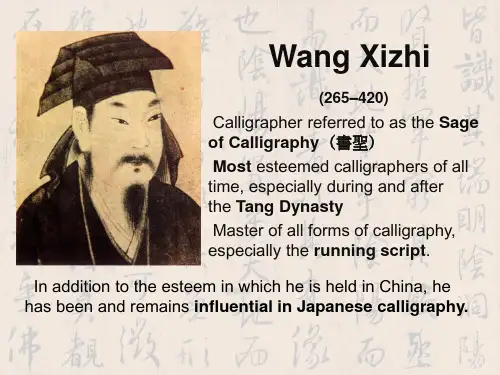

王羲之自我介绍200字(中英文版)Title: A Self-Introduction of Wang XizhiAs an eminent calligrapher of the Jin Dynasty, Wang Xizhi is renowned for his profound attainments in the art of calligraphy.My name, Wang Xizhi, is synonymous with the "Golden Age" of Chinese calligraphy, a period that bore witness to the remarkable development and innovation in this art form.我名叫王羲之,是晋代著名的书法家。
我的名字与我国书法艺术的“黄金时代”联系在一起,那个时代见证了中国书法的remarkable 发展和创新。
Born into a family of scholars and artists, I inherited the refined tastes and artistic sensibilities that would come to define my life"s work.My dedication to calligraphy was not merely a pursuit of beauty, but a reflection of my spiritual and philosophical beliefs.I believed that the art of calligraphy was a means to convey the essence of one"s character and inner being.出生于一个学者和艺术家的家庭,我继承了定义我一生工作的精致品味和艺术感。
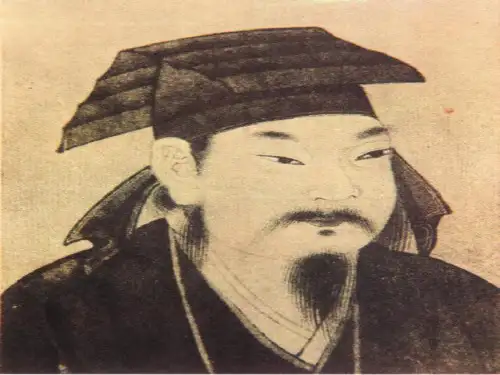

my role model王羲之英语作文In the vast expanse of Chinese history, numerousfigures have left indelible marks in various fields, from literature to art, science to politics. Among these luminaries, one name stands out for me above all others: Wang Xizhi, the renowned calligrapher of the Eastern Jin Dynasty. His mastery of the brush and profound understanding of the art of calligraphy have made him my role model.Wang Xizhi, also known as Wang Youjun, was born into a prestigious family with a rich cultural heritage. It was this enriching environment that nurtured his talent and passion for calligraphy. His early exposure to various styles and techniques laid a solid foundation for hisfuture masterpieces.What sets Wang Xizhi apart is his innovative approach to calligraphy. He did not confine himself to traditional methods but instead experimented and explored new techniques, blending them seamlessly with his own unique style. His calligraphy is renowned for its elegance, grace,and dynamism, embodying the essence of both yang (masculine) and yin (feminine) principles.One of Wang Xizhi's most famous works is the "Quick March of the Orchids and Bamboos," a scroll that embodiesthe essence of his artistic vision. The scroll, with itsfluid strokes and harmonious composition, is a testament to his profound understanding of the natural world and his ability to translate its beauty onto paper. The way he captured the essence of nature through his brushstrokes is truly remarkable, making his work not just visually appealing but also deeply meditative.However, Wang Xizhi's legacy is not just confined tohis calligraphic works. His dedication to the art, his passion for perfection, and his unwavering commitment to personal growth are qualities that I admire deeply. Hespent countless hours practicing, refining his techniques, and pushing the boundaries of what was considered possiblein calligraphy. His perseverance and dedication to hiscraft are an inspiration to us all.Moreover, Wang Xizhi's character and moral values are equally noteworthy. He was a man of integrity and humility,qualities that are often overlooked in the quest forartistic greatness. He was not swayed by fame or fortune but remained true to his artistic vision and his personal principles.In conclusion, Wang Xizhi's life and work serve as a powerful reminder of the importance of passion, dedication, and personal growth. His calligraphy, with its elegance and dynamism, is a testament to the power of art and the impact it can have on our lives. His legacy, both as an artist and as a human being, is a beacon of inspiration for us all.**我的榜样:王羲之**在中国历史的长河中,无数杰出人物在文学、艺术、科学和政治等各个领域留下了不可磨灭的印记。

我最喜欢的书法家王羲之英语作文Ink brushes dance across the rice paper, leaving trails of elegance that have captivated me since I first dipped my brush into the inkwell. The master behind these strokes of genius is Wang Xizhi, a name that resonates with the finesse of calligraphy and the depth of Chinese culture. His works are not just scripts; they're symphonies of ink that have stood the test of time, speaking volumes about the artistry of the Eastern world.Wang Xizhi, often dubbed as the "Sage of Calligraphy," was a force of nature in the realm of Chinese art. His style is a blend of fluidity and precision, a harmonious fusion that's as challenging to master as it is to appreciate. His most celebrated piece, the "Lanting Xu" or "Preface to the Poems Composed at the Orchid Pavilion," is a treasure trove of his signature flair. It's a piece that's taught in every Chinese calligraphy class, a benchmark for aspiring calligraphers.The local lingo often refers to his work as "the epitome of elegance," and it's not just a figure of speech. His strokes are as light as a feather yet carry the weight of a thousand words. Each character is a testament to his dedication and the sheer perfection he pursued in his craft. His influence is so profound that even today, calligraphy enthusiasts often quote his techniques using phrases like "the floating clouds and the startled dragon," which vividlydescribe the dynamic and lively nature of his characters.Wang Xizhi's legacy is not just about the art he left behind; it's about the inspiration he continues to provide. His work is a reminder that beauty can be found in the most traditional of forms, and that the art of calligraphy is as much about discipline as it is about creativity. For me, his work is a constant source of inspiration, a beacon that guides my hand to seek the balance between form and freedom in every stroke I take.In the world of calligraphy, Wang Xizhi is more than a favorite; he's a legend whose work transcends the boundaries of language and culture. His legacy is a timeless piece ofart history, and for me, it's a personal journey of discovery and admiration that continues to inspire awe with every fresh look at his masterpieces.。