
TPO5-Lisetnign
- 格式:pptx
- 大小:17.39 MB
- 文档页数:43


Tpo65全套阅读解析阅读-1 (1)原文 (2)译文 (3)题目 (5)答案 (9)背景知识 (10)阅读-2 (15)原文 (15)译文 (16)题目 (18)答案 (22)背景知识 (23)阅读-3 (24)原文 (24)译文 (26)题目 (27)答案 (31)背景知识 (32)阅读-1原文The Pit Organs of Snakes①It is thought that the facial pits or pit organs on the head of some snakes are specialized infrared(heat)receptors.When a rattlesnake strikes,the direction of the strike seems to be guided by the infrared radiation from its prey.A rattlesnake strikes only at warm-blooded prey,and when the prey is dead and at room temperature,the snake will not strike.However,a blindfolded snake strikes correctly at a dead rat that is pulled across the cage,provided the rat is warmer than the surroundings.Blindfolded,the snake cannot be guided by vision;nor is it guided by the sense of smell,for it will strike correctly even at a moving, cloth-wrapped electric bulb.The pit organs are evidently involved in sensing the location of warm objects.All snakes that have pit organs feed preferentially on warm-blooded prey,and this further supports the view that these organs are infrared sensors.In the rattlesnake the pit organs are located,one on each side, between the nostril and the eye;they are connected to many nerves,and this in itself suggests a sensory role for the organ.②The sensitivity of the facial pit has been examined by recording the activity in the nerve leading from the organ.A variety of stimuli,such as sound,vibration,or light of moderate intensity(with the infrared part of the spectrum filtered out),has no detectable effect on the activity in the nerve.However,if objects of a temperature different from the surroundings are brought into the receptive field around the head,there is a striking change in nerve activity,regardless of the temperature of the intervening air.③How is the infrared radiation sensed?The pit is covered by a thin transparent membrane,and it has been suggested that a rise in temperature in the pit behind the membrane could cause an expansion of the gas with a consequent deformation of the membrane.This in turn could be sensed by a suitable receptor. This hypothesis is highly improbable,for a cut in the membrane that opens the pit to the outside air causes no loss in responsiveness,a result that is incompatible with the hypothesis that a pressure change is sensed.④We are left with two other possibilities to consider:Either the effect is photochemical,which means that the infrared radiation is absorbed by a specificcompound,analogous to the light-sensitive pigments in the eye,or the pit organs are sensitive to the slight temperature rise caused when infrared radiation reaches it.The infrared radiation emitted from a mammalian body has low quantum energy, which makes any photochemical effect on a pigment extremely unlikely.Pure infrared radiation can be produced by a laser,and experiments with such radiation of known wavelength provide strong evidence that the mode of reception in the facial pit organ is entirely thermal.⑤Can the pit organs be used for perception of the infrared source in the way our two eyes are used for stereoscopic vision?This seems likely,not only from observations of the precision with which a snake can strike,but also from studies of its brain activity.When infrared radiation falls on the facial pit organ,electric activity can be recorded from the optic tectum,the part of the brain with which the optic nerve is connected.This in itself is suggestive;although the nerves from the pit organ are completely separate from the optic nerves,the same part of the brain seems to handle visual information,which is known to be stereoscopic,and infrared information.The optic tectum has left and right parts,located on either side of the brain.Each part receives input from each eye via the optic chiasma,the point at which the optic nerves from the left and right eye meet.Many of the neurons in the tectum respond to stimulation of the pit organ on the opposite side of the head.This is reminiscent of the way information from the eyes is handled; the crossover of the optic nerve in the optic chiasma is essential for stereoscopic vision and interpretation of rmation from the two pit organs is apparently coordinated and interpreted in a similar way,a conclusion in agreement with recorded changes in the neural activity in the tectum when the infrared source is in a position to irradiate both pits at once.It therefore appears that the facial pits indeed provide stereoscopic perception and substantially aid in the precision of estimating the location of prey.译文蛇的坑状器官①据认为,一些蛇面部的凹陷或头部的凹陷器官是特殊的红外(热)感受器。

托福TPO5综合写作及材料「阅读和听力」托福TPO5综合写作范文及材料「阅读和听力」托福TPO5综合写作材料是讨论美国西南部墨西哥地区查科峡谷的巨屋的作用。
下面是店铺整理的托福TPO5综合写作范文和材料,希望能帮到大家!托福TPO5综合写作范文The author of the reading passage proposes three theories as likely explanations of the primary function of Chaco Canyon houses, grant structures built in the I2th century. The lecturer, however, points to the inaccuracies in each of these theories.The lecturer argues that the modest number of fireplaces in these structures is in contradiction with the huge size of these houses, indicating that these structures could not have been used for Residential purposes. The Reading, however, draws comparisons between the Chaco houses and other similar large Residential st ructures in support of the “Residential” theory.The second theory, that the houses were used for food storage, is also rejected by the lecturer. He explains that a place that had been used for storing maize would have many traces of scattered Maize, which is not the case in the area of the Chaco Canyon houses. This proves that the “food storage theory” is unlikely.Finally, regarding the third theory, the “ceremony theory”, the lecturer contends that the presence of broken pots close to the great houses does not offer sufficient proof that this was a place for ceremonial activities. He argues that there are other materials such as pieces of construction trash found along with the broken pots, which suggest that these pots were probably not used for ceremonial purposes but instead were discarded byconstruction workers upon completion of the great houses.托福TPO5综合写作阅读材料As early as the twelfth century A.D., the settlements of Chaco Canyon in New Mexico in the American Southwest were notable for their “great houses,” massive stone buildings that contain hundreds of rooms and often stand three or four stories high. Archaeologists have been trying to determine how the buildings were used. While there is still no universally agreed upon explanation, there are three competing theories.早在12世纪,美国西南部墨西哥地区查科峡谷的居民就以他们的“巨屋”而闻名。

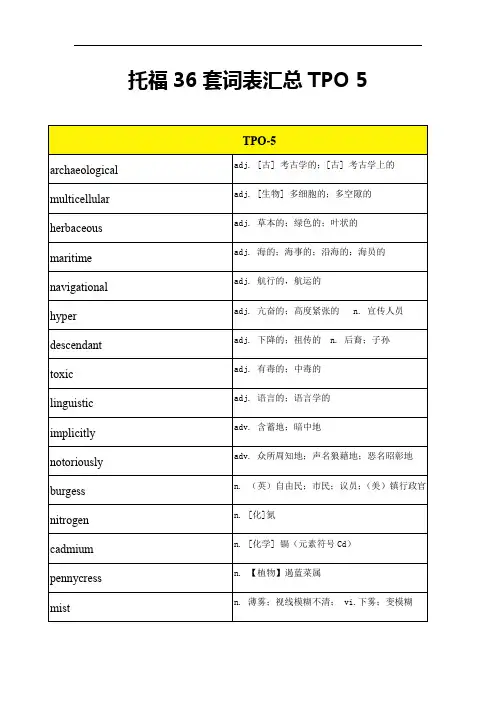
TPO 5 Conversation 1counselor ['kaʊnslɚ] n. 指导老师overwhelm [ˌovɚ'wɛlm] v. 覆盖,淹没understatement ['ʌndɚstetmənt] n. 轻描淡写dorm [dɔrm] n. 宿舍economics ['ikə'nɑmɪks] n. 经济学sociology [ˌsosɪ'ɑlədʒi] n. 社会学distinguish [dɪ'stɪŋɡwɪʃ] v. 使自己扬名appreciate [ə'priʃɪet] v. 欣赏,赏识feedback ['fidbæk] n. 反馈orchestra ['ɔrkɪstrə] n. 管弦乐队string [strɪŋ] n. (乐器上的)弦quartet [kwɔr'tɛt] n. 四重奏audition [ɔ'dɪʃən] v. 试音pursue [pə'sʊ] v. 从事,追求similar ['sɪmələr] adj. 类似的Lecture 1sociology [ˌsosɪ'ɑlədʒi] n. 社会学alligator ['ælɪɡetɚ] n. 短吻鳄sewer ['suɚ] n 下水道escape [ə'skep] v. 逃避,避开twinkle ['twɪŋkl] v. 闪烁definition [ˌdɛfɪ'nɪʃən] n. 定义observe [əb'zɝv] v. 遵守transmission [træns'mɪʃən] n. 传达,传播explore [ɪk'splɔr] v. 探索analogy [ə'nælədʒi] n. 类似replicate ['rɛplɪket] v. 复制property ['prɑpɚti] n. 性质,性能characteristics [ˌkærəktə'rɪstɪk] n. 规格参数表longevity [lɔn'dʒɛvəti] n. 长寿fecundity [fɪˈkʌndətɪ] n. 多产fidelity [fɪ'dɛləti] n. 精确accuracy ['ækjərəsi] n. 精确性,准确性essential [ɪ'sɛnʃl] adj. 必不可少的principle ['prɪnsəpl] n. 原则,原理mutation [mju'teʃən] n. 突变insight ['ɪn'saɪt] n. 领悟,顿悟Lecture 2cover ['kʌvɚ] v. 包括,涉及pinpoint ['pɪnpɔɪnt] v. 准确描述enormous [ɪ'nɔrməs] adj. 巨大的,极大的mission ['mɪʃən] n. 任务equator [ɪ'kwetɚ] n. 赤道topographical [ˌtɑpəˈɡræfɪkl] adj. 地形学的basin ['besn] n. 盆地planetary ['plænətɛri] adj. 行星的crater ['kretɚ] n. 火山口redistribute [ˌridɪ'strɪbjut] v. 重新分配mantle ['mæntl] n. 覆盖物penetrate ['pɛnətret] v. 穿过crust [krʌst] n. 外壳formation [fɔr'meʃən] n. 形成,构成precise [prɪ'saɪs] adj. 精确的estimate ['ɛstə,met] v. 估计investigate [ɪn'vɛstɪɡet] v. 调查indicate ['ɪndɪket] v. 指出polar ['polɚ] adj. 极地的reflective [rɪ'flɛktɪv] adj. 反光的hydrogen ['haɪdrədʒən] n. 氢inference ['ɪnfərəns] n. 推论molecule ['mɑlɪkjul] n. 分子perpetually [pɚˈpɛtʃʊəlɪ] adv. 永恒地shadow ['ʃædo] n. 阴影evaporation [ɪˌvæpəˈreʃən] n. 蒸发practical ['præktɪkl] adj. 实际的astronaut ['æstrə'nɔt] n. 宇航员melt [mɛlt] v. 熔化haul [hɔl] v. 拖,搬运permanent ['pɝmənənt] adj. 固定的fascinating ['fæsɪnetɪŋ] adj. 吸引人的in favor of 赞成,支持the South Pole 南极region ['riːdʒən] n. 地区obtain [əb'teɪn] v. 获得break down 分解oxygen ['ɑːksɪdʒən]n. 氧process ['prɑˌsɛs]v. 加工turn into (使)变成fuel ['fjuːəl] n. 燃料Conversation 2appreciation [əˌpriʃɪ'eʃən] n. 欣赏,鉴赏content ['kɑntɛnt] n. 内容unique [jʊ'nik] adj. 独一无二的introductory [ˌɪntrə'dʌktəri] adj. 介绍的prerequisite [ˌpri'rɛkwəzɪt] n. 前提frankly ['fræŋkli] adv. 真诚地satisfactory [ˌsætɪs'fæktəri]adj. 令人满意的preparation [ˌprepə'reɪʃn]n. 准备staff [stæf]n. 员工employee [ɪm'plɔɪiː]n. 雇员Lecture 3assignment [ə'saɪnmənt]n. 任务spectroscopy [spɛk'trɑskəpi] n. 光谱学spectrum ['spɛktrəm] n. 光谱substance ['sʌbstəns] n. 物质spectral ['spɛktrəl] adj. 光谱的laser ['lezɚ] n. 激光curator [kjʊ'retɚ] n. 馆长original [ə'rɪdʒənl] n. 原物,原件authentic [ɔ'θɛntɪk] adj. 真的canvas ['kænvəs] n. 帆布brushstroke n. 绘画的技巧pigment ['pɪgmənt] n. 颜料ingredient [ɪn'ɡridɪənt] n. (混合物的)组成部分agent ['edʒənt] n. 代理商detective [dɪ'tɛktɪv] n. 侦探ultraviolet [ˌʌltrə'vaɪələt] adj. (光)紫外的zinc [zɪŋk] n. 锌lead [lid] n. 铅distinct [dɪ'stɪŋkt] adj. 截然不同的previous ['privɪəs] adj. 以前的invasive [ɪn'vesɪv] adj. 扩散性的microscope ['maɪkrəskop] n. 显微镜tiny ['taɪni] adj. 微小的fleck [flɛk] n. 小片restoration ['rɛstə'reʃən] n. 修复,修整attempt [ə'tempt] n. 企图practical ['præktɪkl] adj. 实际的particular [pər'tɪkjələr] adj. 特定的technique [tek'niːk]n. 技术collaboration [kəˌlæbə'reɪʃn] n. 合作establish [ɪ'stæblɪʃ] v. 确立dissolve [dɪ'zɑːlv]v. (使)溶解remove [rɪ'muːv]v. 消除previous ['priːviəs] adj. 以前的restorer [rɪ'stɔːrər] n. 修建者Lecture 4fairy tale 神话故事folktale [ˈfokˌtel] n. 民间故事genre ['ʒɑnrə] n. 类型orally [ˈorəlɪ] adv. 口头上地version ['vɝʒn] n. 版本thread [θrɛd] n. 线索,思路magical ['mædʒɪkl] adj. 不可思议的royalty ['rɔɪəlti] n. 皇室specify ['spɛsɪfaɪ] v. 具体说明transmit [træns'mɪt] v. 传播authoritative [ə'θɔrətetɪv] adj. 可靠的,可相信的tailor ['telɚ] v. 剪裁identifiable [aɪ,dɛntɪ'faɪəbl] adj. 可辨认的generalizable ['dʒenərəlaizəbl] adj. 可概括的description [dɪ'skrɪpʃən] n. 描述plot [plɑt] n. 故事情节contrary ['kɑntrɛri] adj. 相反的target ['tɑrɡɪt] v. 把…作为目标eliminate [ɪ'lɪmɪneɪt] v. 除去definition [ˌdefɪ'nɪʃn] n. 定义unspecified [ˌʌn'spesɪfaɪd] adj. 未指定的constant ['kɑːnstənt]adj. 不变的oral ['ɔːrəl] adj. 口头的character ['kærəktər] n. 个性formal ['fɔːrml]adj. 正式的standard ['fɔːrml]adj. 标准的。