发英文邮件结尾礼貌用语
- 格式:docx
- 大小:37.26 KB
- 文档页数:3
发英文邮件结尾礼貌用语
Dear Sir/Madam,
I hope this email finds you well.
I am writing to discuss the topic of polite endings in English emails. It is
essential to conclude an email with appropriate etiquette, as it not only
shows respect and professionalism but also leaves a positive impression on
the recipient. In this article, we will explore some common and effective
email closing phrases that can be used in various professional settings.
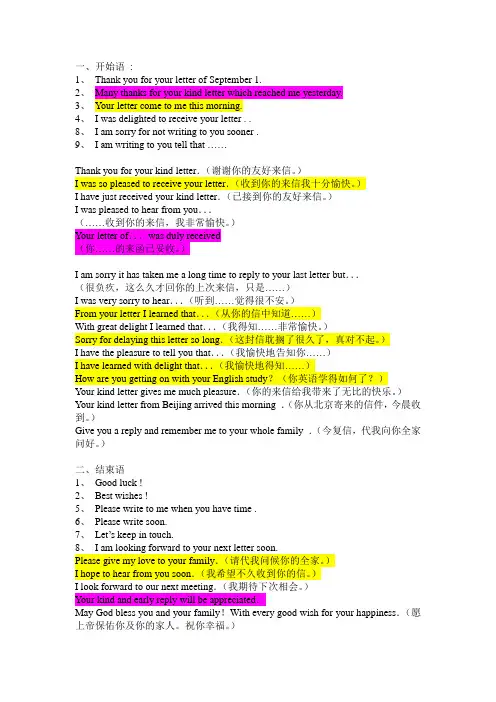
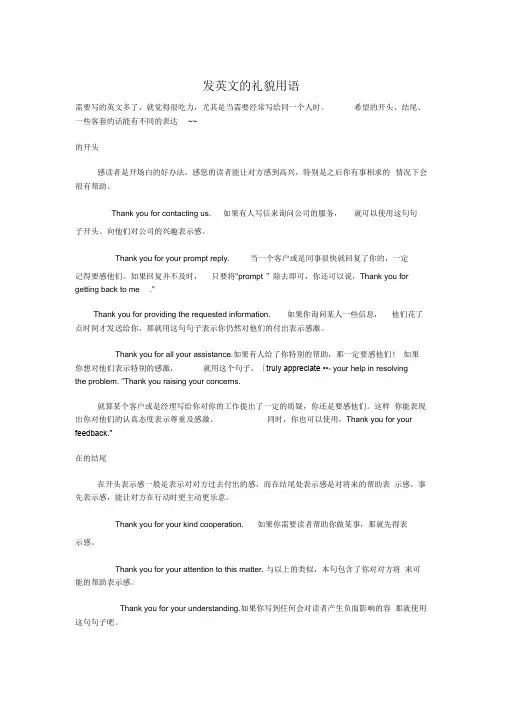
1. Regards
"Regards" is a simple and widely accepted way to end an email
professionally. It is a safe choice when you want to maintain a formal tone.
This closing expresses respect and consideration for the recipient.
2. Sincerely
"Sincerely" is another popular choice for formal emails, especially when
you are writing to someone for the first time or in a business context. It adds
a touch of sincerity to your message, emphasizing that your intentions are
genuine and sincere.
3. Best regards
"Best regards" is a versatile closing that can be used in both formal and
informal emails. It conveys warm wishes and well intentions. This phrase is
often used when you want to maintain a professional tone without being too
formal. 4. Kind regards
"Kind regards" is a friendly and considerate closing that is suitable for
emails where you want to express a sense of warmth and friendliness. It is
commonly used in professional emails when you have an established rapport
with the recipient.
5. Thank you
"Thank you" is a gracious way to end an email after someone has
extended their assistance or provided information. This closing phrase
expresses gratitude and acknowledges the recipient's efforts. It is appropriate
to use when you genuinely appreciate the recipient's help.
6. Yours faithfully
"Yours faithfully" is a more formal closing often used when starting an
email with "Dear Sir/Madam" or "To whom it may concern." It reflects a
higher level of formality and respect. However, this closing is less
commonly used in modern email communication.
7. Yours sincerely
"Yours sincerely" is a formal closing that is typically used when
addressing someone by their name. It signifies professionalism while
maintaining an appropriate level of politeness. This closing is often used in
business correspondence or when you are writing to someone you have a
more formal relationship with.
8. Warmest regards "Warmest regards" is a closing that conveys a sense of genuine warmth
and friendliness. It is commonly used when you have a closer relationship
with the recipient, such as a colleague or acquaintance. This phrase adds a
personal touch to your email without sacrificing professionalism.
In conclusion, the ending of an English email plays a crucial role in
leaving a positive impression on the recipient. It is important to choose an
appropriate closing phrase that matches the context and relationship you
have with the recipient. Whether you opt for a more formal approach or a
warmer tone, the key is to ensure your email closing reflects courtesy,
professionalism, and respect.
Thank you for your attention to this matter. Should you have any further
questions or require additional information, please do not hesitate to contact
me.
Best regards,
[Your Name]