
2016年中考英语专题复习 need与must用法
- 格式:doc
- 大小:34.50 KB
- 文档页数:3
NEED 需知
need可以用作情态动词、及物动词和名词,但各自的用法有所不同。
一、need用作情态动词
1、need用作情态动词时,没有人称、数和时态的变化,后接动词原形,可以指现在,也可以指将来,主要用于否定句和疑问句中,较少用于肯定句。
如:
You need not worry about my English study, Mum.
妈妈,你不必担心我的英语学习。
2、引导一般疑问句时,直接将need移到句首。
此时对它的回答同must引导的一般疑问句的回答相同,肯定回答用Yes,… must;否定回答用No,… needn’t或No,… don’t have to。
变成否定句直接need后加not。
如:
Need/ Must I come to your birthday party? 我必须来参加你的生日聚会了吗?
Yes, you must. 是的。
No, you needn’t./No, you don’t have to. 不,你没必要。
3、need+ have+ done表示对过去某事是否有必要的看法,常含有责备之意。
如:
You needn’t have told him the secrets between us.
你没有必要告诉他你我之间的秘密。
4、need用作情态动词可以和否定副词:hardly, never, seldom等连用,表示实际的否定。
如:
I need hardly tell you how sad I feel about my fault.
我不必告诉你我对我的过错有多么难过。
二、need用作及物动词
1、need用作及物动词时,有人称、数和时态的变化(主语第三人称单数用needs,过去式用needed),后接名词、代词或动词不定式(表示主动意义),往往用于肯定句和否定句中。
如:We all need some help.
我们都需要一些帮助。
It’s cold outside. You need to wear a warm coat.
外面天冷。
你得穿暖和的衣服。
2、引导一般疑问句时,必须借助助动词do, did或does。
变成否定句时亦如此。
如:
Did Millie need any money to buy gifts for her mother? Millie需要一些钱来帮她妈妈买礼物吗/ Yes, she did. 是的,需要。
No, she didn’t. 不,不需要。
I don’t need things like that.
我不需要像那样的动词。
3、后接动名词时表示被动的含义,相当于不定式的被动语态,但此时的主语须是物,即:物+ need +doing=物+ need+ to be done。
如:
My hair needs cutting.= My hair needs to be cut.
我需要理发了。
三、need用作名词
1、need用作名词时,意为“需要、必要”,既可用作可数名词也可用作不可数名词。
如:
We should try our best to meet the workers’ needs.
我们应该尽力满足工人们的需要。
2、There is no need+ for somebody of doing something/to do something.意为“对某人来说没必要做某事”,此时可以转换成Somebody doesn’t need to do something。
如:
There is no need for us to worry about our study.
=We don’t need to worry about our study.
我们没必要担心我们的学习。
3、常见短语:be in need of in need
I’ll come to help you when you are in need of help.
在你需要帮助的时候我会来帮你的。
A friend in need is a friend indeed.
患难见真情。
must中考焦点访谈
【焦点1】Cars, buses and bikes stop when the traffic light is red.
A. can
B. must
C. may
D. need
【访谈】must表示主观的义务和必要, 主要用于肯定句和疑问句, 意思为“必须……,得……,要……”。
故本题应选B。
【焦点2】--- I fill in the check-in form right now, sir?
----No, you needn’t. You can complete it this afternoon.
A. May
B. Can
C. Would
D. Must
----Mum, must I do my homework now?
----No, you . You can do it after supper.
A. mustn’t
B. can’t
C. shouldn’t
D. needn’t
【访谈】回答must引导的一般疑问句时,与need引导的一般疑问句回答一样,肯定回答用:Yes, 主语+must;否定回答用:No,主语+needn’t /don’t have to。
故这两题都应选D。
【焦点3】Alice has been in China for several years. She be a big girl now.
A. need
B. must
C. can
D. may
Mary be at home. I saw her in the library just now.
A. mustn’t
B. needn’t
C. shouldn’t
D. can’t
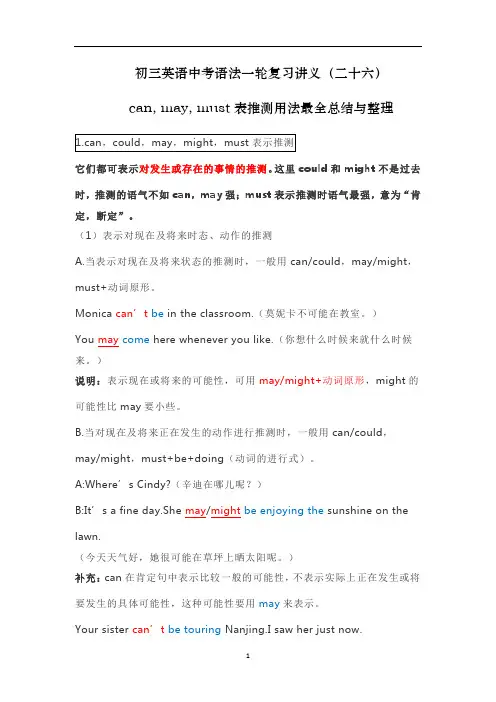
【访谈】must用于肯定句,表示可能性很大的猜测、推测,意为“一定、必定或想必”,后面接动词的一般时,表示对现在的推测,接动词的完成式,表示对过去的推测。
若变为否定句时,须将must 改为can’t,意为“不可能”。
故这两题应分别选B和D。
【焦点4】You open the door before the train gets into the station.
A. don’t have to
B. mustn’t
C. needn’t
D. may not
【访谈】must的否定形式mustn’t表示“禁止、杜绝、绝对不许做(某事)”,意为“不能”,加强语气用must never。
故本题应选B。
【焦点5】The woman must be your English teacher, she?
A. mustn’t
B. needn’t
C. isn’t
D. can’t
My father must have finished reading the novel yesterday, he?
A. needn’t
B. can’t
C. wasn’t
D. didn’t
【访谈】must表示“推测”用于反意疑问句时,不能用must,而要根据陈述部分的不定式结构(即must之后的动词)以及含义采用相应的动词形式。
如有表示过去的时间状语,则
反意疑问句部分的助动词用过去时;如没有表示过去的时间状语,则反意疑问句部分的助动词要根据实际情况而定。
故这两题应分别选C和D。

![[need的用法]can、may、must、need的用法](https://imgs-1438308264.cos.ap-hongkong.myqcloud.com/7c3e1b0ba200a6c30c22590102020740be1ecd3c.webp)
