
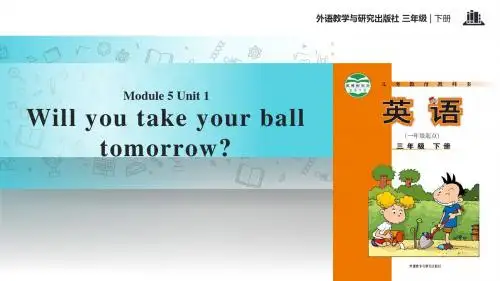
外研版一起英语三年级下册 教学课件 Module 5 Unit 1
- 格式:pptx
- 大小:6.68 MB
- 文档页数:15
外研版一起六年级英语下册教案
Unit 1 He is playing but then the telephone rings.
教材分析
语言功能:谈论或描述某人正在做某事的时候,同时又发生了什么事情。
语言结构:He’s playing but then the telephone rings.
教学目标:
a.语言知识目标:学习目标语句
He’s playing but then the telephone rings.
b.语言技能目标:能够听懂会说本模块句型,能运用英语描述一件事情发生时,经常发生什么事情。
c.情感态度目标:激发学生学习英语的兴趣及运用英语交流的热情,使学生在学习中建立自信,提高学生参与语言活动的积极性。
教学重、难点:
重点:He’s playing but then the telephone rings.,并能在实际情景中运用。
难点:现在进行时和一般现在时的区分和综合运用。
学生分析
学生在以往的学习中已经学习了现在进行时和一般现在时的用法,有了一定的基础,因此在本课的学习中,他们需要更多的活动来参与,来实践,来运用他们所学的语言。而且六年级的学生对生活中的事情有一定的体验,并且具备了一定的语言表达能力和想象能力,只要通过教师的及时引导,就能够地出不得将语言运用起来。
设计理念
在本课的设计中,以学生为主体,教师为主导,采用多种教学形式,并与信息技术相整合,设计贴近学生实际的教学活动,培养学生的综合语言运用能力。
教学准备
单词卡片、录音机、课件、挂图、照片
教学过程
Ⅰ. Warm-up (热身活动)
a. 做“I say, you do”的游戏,教师通过指令让学生做各种动作,同时复习动词短语和句型。
b. 教师用实物投影,展示几张学生正在做某件事情时的照片,让学生对照片进行描述。
课前的游戏,既调节情绪、活跃气氛,又使学生快速进入英语学习状态,并激活学生已有的知识,为进行新课教学做好铺垫。
小学英语 说一说(Module 5 Unit 1 She goes to school on Mondays. Unit 2
Does your mum go to work on Saturdays?)
学习目标
能够谈论自己的喜好并询问和谈论他人的喜好。
重点:句型:1. She goes to school on Mondays.
2. —Does Tom go to school on Mondays?
—No, he doesn’t.
3. Tom doesn’t go to school on Mondays.
难点:第三人称单数在句子中的运用。
考点精讲
【课文朗读】
1. Cat: Do you like football?
Do you play football on Mondays?
Oh, you don’t!
2. A: Is Amy at home?
B: No, she isn’t. She goes to school on Mondays.
A: Is Sam at home?
B: No, he isn’t. He goes to school on Mondays too.
A: Who’s that?
B: It’s Tom.
A: Does Tom go to school on Mondays?
B: No, he doesn’t. He’s only two years old!
A: Ha ha...
B: Ha ha...
3. Amy goes to school on Mondays.
Tom doesn’t go to school on Mondays.
4. Daming: The dog likes meat. The cat likes fish.
Sam: Does the cat like meat?

外研版(一起)三年级英语下册教案
Module 5 Unit 1 We'll pick fruit.
教学目标
1.知识目标:掌握四会单词:pick, fruit, orange, peach,能听懂会说重点句型:We will
pick ….Will we pick …? Yes, we will. \ No, we won’t。
2.能力目标:能在实际生活中灵活运用句型:We will pick ….Will we pick …? Yes, we will.\
No, we won’t.
3.情感目标:培养学生乐于模仿,敢于开口表达自己见解的能力,并能在小组活动中积极与他人合作,共同完成学习任务。
教学重点
运用语言结构 “We will pick ….Will we pick …? Yes, we will.\ No, we won’t.”谈论将来要发生的事情。
教学难点
正确运用一般将来时的一般疑问句形式,并能做出相应的回答。
教学准备
CAI,卡片,录音机,磁带,水果图片,练习册。
教学过程
一、热身
1. Greeting.
2. Sing a song “I love apple”.
3. Free Talk:
T: My favourite fruit is strawberry. What’s your favourite fruit?
Ss: My favourite fruit is … .
二、新课程先
T: We like fruit very much. We are going to go to a fruit farm. What will we do at the fruit farm?
OK, today we’ll learn Module5 Unit1 “We’ll pick fruit”. (齐读课题)
三、练习
1. Look at the screen, listen and follow. Think it over: What will we do?
班级: 姓名: 表现:
家长签名: 1 Module 5
Unit 1 Will you take your ball
tomorrow?
基础题
一. 看图,写单词
1. _______________ 2. ______________
3. ________________ 4. _______________
二. 按照要求回答
例: Will you take your kite?
Yes, I will.
1. Will you take a ball?
______________________________________________
2. Will you have a picnic tomorrow?
______________________________________________
3. Will she take some rice tomorrow?
______________________________________________
4. Will he go to school tomorrow? 班级: 姓名: 表现:
家长签名: 2 ______________________________________________
5. Will you go swimming tomorrow?
______________________________________________
能力题
一. 选词填空