
急性腹痛诊治流程
- 格式:doc
- 大小:44.50 KB
- 文档页数:1
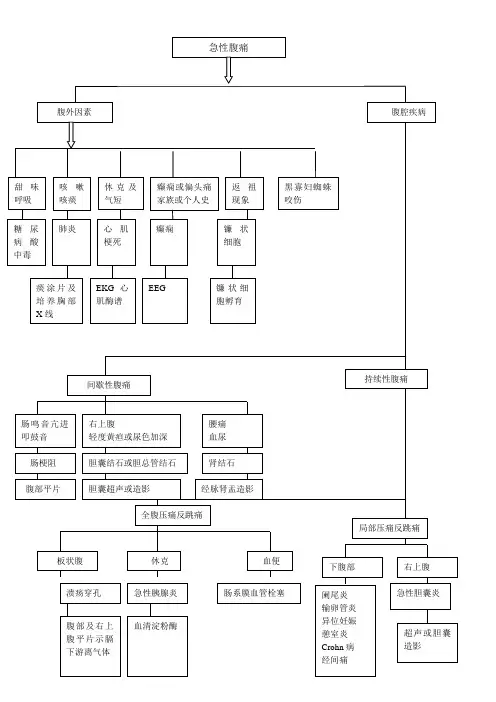

急腹症急救流程引言:急腹症是指突然发生的腹部疼痛,可能是由于腹腔内脏器官的急性病变引起的。
急腹症的处理需要及时准确的急救措施,以避免严重并发症的发生。
本文将介绍急腹症急救的流程,包括预检、急救措施和转运。
正文:1. 预检1.1 患者病史和症状评估在急救过程中,首先需要了解患者的病史和症状。
询问患者疼痛的性质、发作时间、疼痛区域和伴随症状等信息,以便更好地判断病因。
1.2 体格检查进行全面的体格检查,包括观察患者的面色、呼吸、血压、脉搏等生命体征。
同时,还需仔细触诊腹部,判断腹部肌紧张、压痛、反跳痛等情况,以辅助诊断。
2. 急救措施2.1 给予镇痛在急腹症急救过程中,为了减轻患者的疼痛,可以给予适量的镇痛药物,如吗啡等。
但要注意,镇痛药物的使用应遵循医生的建议,避免延误病情。
2.2 快速补液急腹症患者常伴有脱水情况,因此需要快速补液。
通过静脉输液,补充体液和电解质,维持患者的血容量和血压稳定。
2.3 氧气供给对于呼吸困难或氧饱和度下降的患者,应及时给予氧气供给,以保证组织的氧合。
3. 急救措施(续)3.1 卧床休息急腹症患者需要卧床休息,避免过度活动,以减少腹部痛和并发症的发生。
3.2 禁食禁饮在急腹症急救过程中,要禁止患者进食和饮水,以防止病情恶化或手术时出现并发症。
3.3 密切观察对于急腹症患者,需要进行密切观察,监测患者的生命体征、疼痛程度和病情变化。
及时发现异常情况,采取相应的处理措施。
4. 转运4.1 选择合适的转运方式根据患者的病情和医疗资源的可用性,选择合适的转运方式。
对于病情较轻的患者,可以选择普通救护车进行转运;对于病情较重的患者,应选择专业的医疗救护车或直升机转运,以确保患者的安全和及时就医。
4.2 与医院联系在转运过程中,与目的地医院保持联系,向医院提供患者的病情信息,并预约手术室或急诊科的床位,以便医院做好接诊准备。
4.3 安全转运在转运过程中,要确保患者的安全。
保持患者的体位稳定,避免颠簸和剧烈运动。

急诊腹痛就诊流程及内容英文回答:Emergency Room Abdominal Pain Consultation Process and Content.Emergency room visits for abdominal pain are quite common, as it can be a symptom of various underlying conditions. The consultation process in the emergency room for abdominal pain typically involves a series of steps to assess the severity and cause of the pain. Here is an outline of the typical process and content of an emergency room consultation for abdominal pain:1. Triage: Upon arrival at the emergency room, the patient is assessed by a triage nurse who determines the urgency of the situation based on the severity of the pain, vital signs, and other symptoms. Patients with severe pain or signs of a life-threatening condition are prioritizedfor immediate evaluation.2. Medical History: The patient is then taken to an examination room where a healthcare provider, usually a physician or nurse practitioner, will conduct a detailed medical history interview. They will ask questions about the onset, duration, and location of the pain, as well as associated symptoms such as nausea, vomiting, fever, or changes in bowel movements. It is important for the patient to provide accurate and detailed information to assist in the diagnosis.3. Physical Examination: Following the medical history interview, a physical examination is performed. The healthcare provider will palpate the abdomen to assess for tenderness, check for any abnormal masses or organ enlargement, and listen for bowel sounds. They may also perform additional examinations, such as checking blood pressure and heart rate, to gather more information about the patient's condition.4. Diagnostic Tests: Based on the medical history and physical examination findings, the healthcare provider mayorder diagnostic tests to aid in the diagnosis. These may include blood tests, such as a complete blood count and liver function tests, imaging studies like an abdominal ultrasound or CT scan, or other specialized tests depending on the suspected cause of the abdominal pain. These tests help to identify any underlying conditions or abnormalities that may be causing the pain.5. Pain Management: While waiting for test results or a definitive diagnosis, the healthcare provider will often provide pain management to alleviate the patient's discomfort. This may involve prescribing pain medications or administering them intravenously if necessary.6. Consultation and Treatment: Once the diagnostic test results are available, the healthcare provider will review them and consult with specialists if needed. The treatment plan will depend on the underlying cause of the abdominal pain. It may involve medications, surgical intervention, or other therapies specific to the diagnosed condition.7. Discharge or Admission: After the evaluation andtreatment, the patient may either be discharged with appropriate instructions for follow-up care or admitted to the hospital for further monitoring and treatment if necessary.In summary, the emergency room consultation process for abdominal pain involves triage, medical history interview, physical examination, diagnostic tests, pain management, consultation, and treatment. The goal is to identify the cause of the pain and provide appropriate care to alleviate the patient's symptoms.中文回答:急诊腹痛就诊流程及内容。

腹痛急救流程图腹痛是一种常见的症状,可能由多种原因引起,包括消化系统问题、泌尿系统问题、妇科问题等。
在急救场景中,腹痛可能是一种紧急情况,需要迅速采取措施来评估和处理。
以下是腹痛急救流程图的标准格式文本,详细描述了在急救场景中处理腹痛的步骤和注意事项:1. 评估患者状况:- 确定患者是否有呼吸困难、意识丧失或其他紧急情况。
- 询问患者腹痛的性质、持续时间、疼痛程度等详细信息。
- 检查患者的腹部是否有明显的肿胀、压痛或其他异常体征。
2. 给予初步急救:- 让患者保持平卧位,尽量保持安静。
- 给予患者适量的水,保持水分平衡。
- 如果患者有发热,可以给予退热药物。
3. 采集患者病史:- 询问患者是否有过类似的腹痛症状。
- 了解患者的既往病史、用药情况和过敏史。
- 询问患者是否有其他相关症状,如恶心、呕吐、腹泻等。
4. 进一步评估腹痛症状:- 检查患者的体温、脉搏、呼吸等生命体征。
- 用听诊器听取患者腹部的肠鸣音。
- 轻轻按压患者腹部,观察是否有压痛或反跳痛。
5. 判断腹痛的可能原因:- 根据患者的病史和体征,初步判断腹痛可能的原因。
- 考虑消化系统问题(如胃溃疡、胆囊炎等)、泌尿系统问题(如肾结石、膀胱炎等)、妇科问题(如卵巢囊肿、子宫内膜异位症等)等可能性。
6. 寻求专业医疗帮助:- 如果患者的腹痛症状严重或持续时间较长,应立即寻求专业医疗帮助。
- 呼叫急救车辆或将患者送往最近的医院急诊科就诊。
7. 提供必要的支持和安慰:- 在等待医疗帮助的过程中,给予患者必要的支持和安慰。
- 鼓励患者保持平静,避免过度焦虑或紧张。
需要注意的是,以上流程图仅为一般情况下的参考,具体的急救措施应根据患者的具体情况和医生的建议进行调整。
在急救过程中,务必保持冷静和专业,确保患者的安全和舒适。
如果您遇到腹痛急救情况,请务必及时寻求医疗专业人士的帮助。
