
动名词作宾语PPT课件
- 格式:pptx
- 大小:663.60 KB
- 文档页数:17
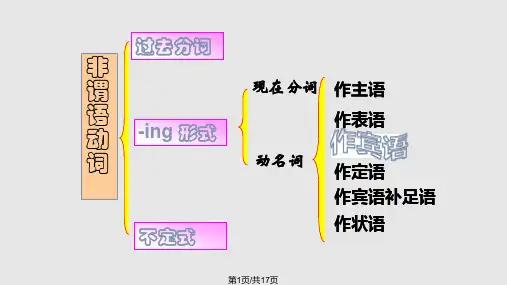
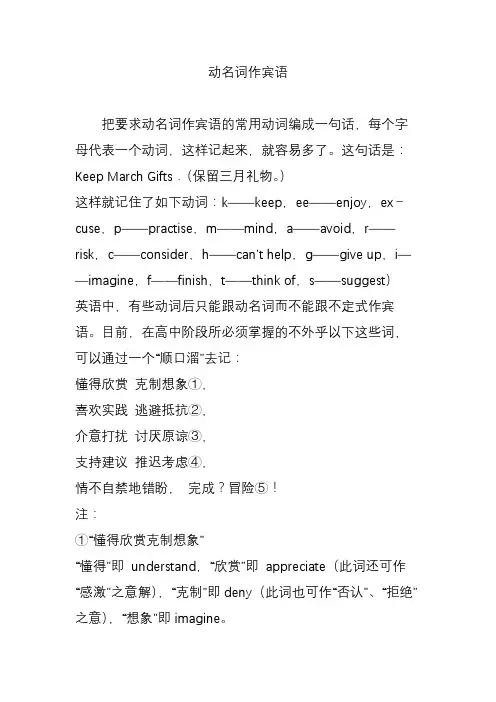
动名词作宾语
把要求动名词作宾语的常用动词编成一句话,每个字母代表一个动词,这样记起来,就容易多了。这句话是:
Keep March Gifts.(保留三月礼物。)
这样就记住了如下动词:k——keep,ee——enjoy,ex-cuse,p——practise,m——mind,a——avoid,r——risk,c——consider,h——can’t help,g——give up,i——imagine,f——finish,t——think of,s——suggest)
英语中,有些动词后只能跟动名词而不能跟不定式作宾语。目前,在高中阶段所必须掌握的不外乎以下这些词,可以通过一个“顺口溜”去记:
懂得欣赏 克制想象①,
喜欢实践 逃避抵抗②,
介意打扰 讨厌原谅③,
支持建议 推迟考虑④,
情不自禁地错盼, 完成?冒险⑤!
注:
①“懂得欣赏克制想象”
“懂得”即 understand,“欣赏”即 appreciate(此词还可作“感激”之意解),“克制”即deny(此词也可作“否认”、“拒绝”之意),“想象”即imagine。 ②“喜欢实践逃避抵抗”
“喜欢”即 enjoy,“实践”即 practise,“逃避”即 avoid避免,躲开,es-cape逃避,“抵抗”即 resist。
③“介意打扰讨厌原谅”
“介意”即 mind,“打扰”即 excuse,“讨厌”即 dislike,“原谅”即 pardon。
④“支持建议推迟考虑”
“支持”即favour(此词也可作“赞成”、“宠爱”讲),“建议”即 sug-gest,“推迟”即 delay,“考虑”即 consider。
⑤“情不自禁地错盼,完成?冒险!”
“情不自禁地”即 can’t help,“错盼”即“错过”和“盼望”,即miss和look forward to,“完成”即 finish,“冒险”即 risk。
例句:
1)I suggest making a change in the plan.
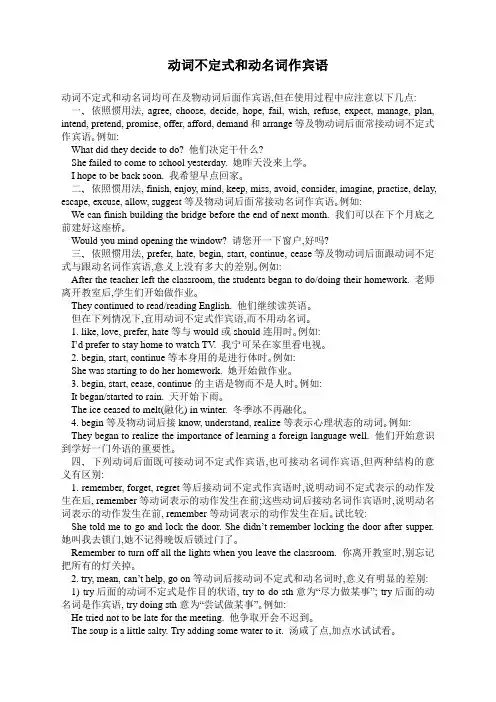
动词不定式和动名词作宾语
动词不定式和动名词均可在及物动词后面作宾语,但在使用过程中应注意以下几点:
一、 依照惯用法, agree, choose, decide, hope, fail, wish, refuse, expect, manage, plan,
intend, pretend, promise, offer, afford, demand和arrange等及物动词后面常接动词不定式作宾语。例如:
What did they decide to do? 他们决定干什么?
She failed to come to school yesterday. 她昨天没来上学。
I hope to be back soon. 我希望早点回家。
二、 依照惯用法, finish, enjoy, mind, keep, miss, avoid, consider, imagine, practise, delay,
escape, excuse, allow, suggest等及物动词后面常接动名词作宾语。例如:
We can finish building the bridge before the end of next month. 我们可以在下个月底之前建好这座桥。
Would you mind opening the window? 请您开一下窗户,好吗?
三、 依照惯用法, prefer, hate, begin, start, continue, cease等及物动词后面跟动词不定式与跟动名词作宾语,意义上没有多大的差别。例如:
After the teacher left the classroom, the students began to do/doing their homework. 老师离开教室后,学生们开始做作业。

动名词作宾语
They went on walking and never stopped talking。 他们继续走,说个不停。
I found it pleasant walking along the seashore。 在海滩上走真是乐事.
考点1:介词+动名词作宾语.
放在类似于be afraid of, be/get used/accustomed to, think of, be fond of, feel
like, give up, look forward to, pay attention to, have trouble/difficulties in , insist
on , persist in, put off 等的词组后作宾语.
动名词前的介词有时可以省略,如:have difficulty (in) doing, have no trouble (in)doing, prevent/stop…(from)doing, there is no use(in)doing等。
考点2:动词+动名词作宾语
1)后跟-ing的动词的顺口溜:
喜欢考虑怎逃免 (enjoy, consider, escape , avoid)
承认放弃太冒险 (admit, give up, risk)
介意想象莫推延 (mind, imagine, delay, put off)
欣赏完成是期望 (appreciate, finish, look forward to)
建议允许勤练习 (suggest, allow, practice)
不禁原谅要坚持 (can't help, excuse, insist on)
继续注意使成功 (keep on, pay attention to, succeed in)
补充:be worth, give up, feel like, be busy doing sth, prevent/stop/ keep…from

动名词作主语和宾语 1. 动名词的形式
主动形式 被动形式
一般式
完成式
注意:动名词的否定形式直接在它之前加not。
2. Detailed principles
① 动名词做主语的用法 (subject)
动名词做主语往往表示经常性、习惯性的动作,谓语动词用单数动词。如:
__________(see) is believing. ____________(help) her is my duty.
__________ (eat)too much is bad for your health.
______________(work)with you is a pleasure.
动名词做主语和不定式做主语一样,也可以用it作形式主语。如:
It is useless trying to argue with Mark.
It is no use talking with him.
归纳:常用-ing形式作主语的句型有:
It be no use/useless doing 做……是没用的
_____________________________________________
_____________________________________________
_____________________________________________
……
eg:在这儿等没好处,我们走回家吧。
争辩此事是浪费时间。
要把一切按时准备好很困难。
② 动名词作宾语的用法 (object)
1.有些动词或短语后常用动名词作宾语。如admit, appreciate, avoid, consider, suggest,
allow, enjoy, escape, finish, imagine, practise, mind, miss, imagine等动词, insist on, keep on,