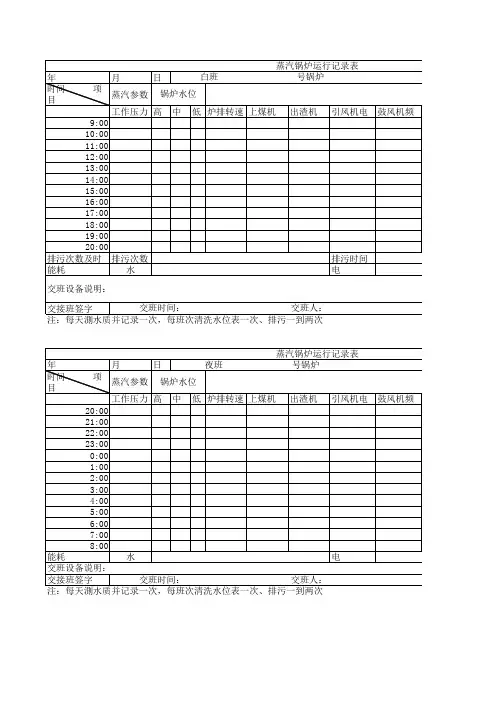
蒸汽锅炉运行方案及流程
- 格式:doc
- 大小:15.83 KB
- 文档页数:3
蒸汽锅炉运行方案及流程
英文回答:
The operation of a steam boiler involves several steps
and processes. Firstly, the boiler needs to be prepared for
operation. This includes checking the water level, ensuring
proper fuel supply, and inspecting safety devices. Once
everything is in order, the boiler can be ignited.
During operation, the fuel is burned in the combustion
chamber, producing heat. This heat is transferred to the
water in the boiler through the heat exchanger. The water
is heated and converted into steam. The steam then flows
through pipes to the desired location where it can be used
for various purposes, such as heating or powering machinery.
To maintain the operation of the boiler, regular
monitoring and maintenance are required. This includes
checking the water level, pressure, and temperature, as
well as inspecting and cleaning the various components of the boiler. Any abnormalities or issues should be addressed
promptly to ensure the safe and efficient operation of the
boiler.
In addition to the regular maintenance, certain
precautions should be taken during the operation of a steam
boiler. For example, the boiler should not be operated at a
pressure higher than its design limit to avoid potential
accidents. The fuel supply should also be monitored to
prevent any fuel shortages or malfunctions. Proper
ventilation is necessary to ensure the combustion process
is efficient and safe.
Overall, the operation of a steam boiler involves
preparing the boiler, igniting the fuel, generating steam,
and monitoring and maintaining the boiler's performance. It
is important to follow proper procedures and precautions to
ensure the safe and efficient operation of the boiler.
中文回答:
蒸汽锅炉的运行涉及多个步骤和过程。首先,需要准备锅炉进行操作。这包括检查水位,确保燃料供应和检查安全装置。一切准备就绪后,可以点火启动锅炉。
在运行过程中,燃料在燃烧室中燃烧,产生热量。这种热量通过换热器传递给锅炉中的水。水被加热并转化为蒸汽。然后,蒸汽通过管道流向所需位置,可以用于各种用途,如供暖或驱动机械。
为了保持锅炉的运行,需要进行定期监测和维护。这包括检查水位、压力和温度,以及检查和清洁锅炉的各个组件。任何异常或问题都应及时处理,以确保锅炉的安全和高效运行。
除了定期维护外,在蒸汽锅炉的操作过程中还需要采取一定的预防措施。例如,锅炉不应在超过其设计限制的压力下运行,以避免潜在的事故。还应监控燃料供应,防止燃料短缺或故障。适当的通风对于确保燃烧过程的高效和安全至关重要。
总的来说,蒸汽锅炉的运行包括准备锅炉、点火燃烧燃料、产生蒸汽以及监测和维护锅炉的性能。遵循正确的程序和预防措施,以确保锅炉的安全和高效运行非常重要。