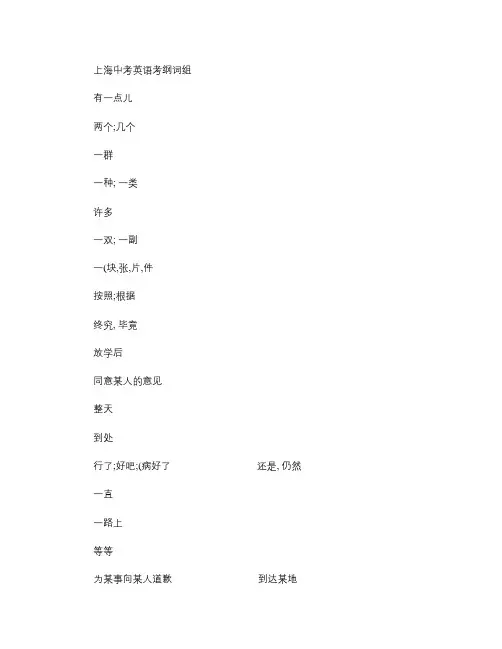
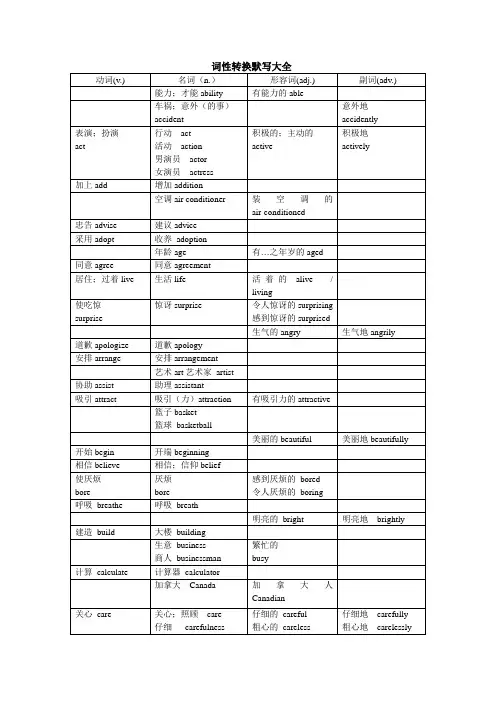
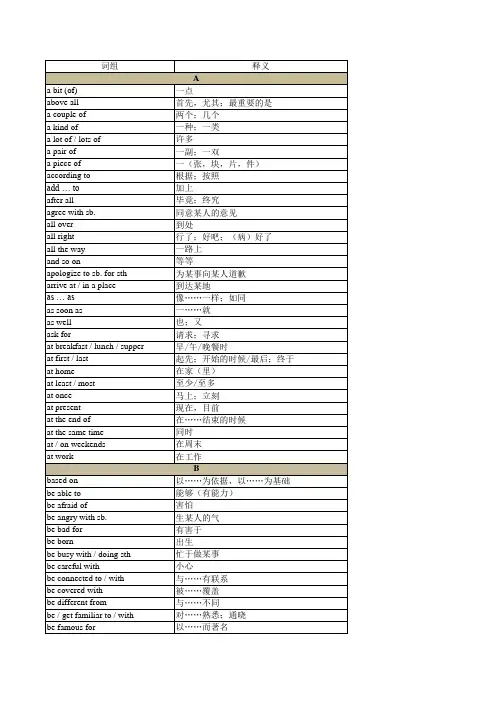
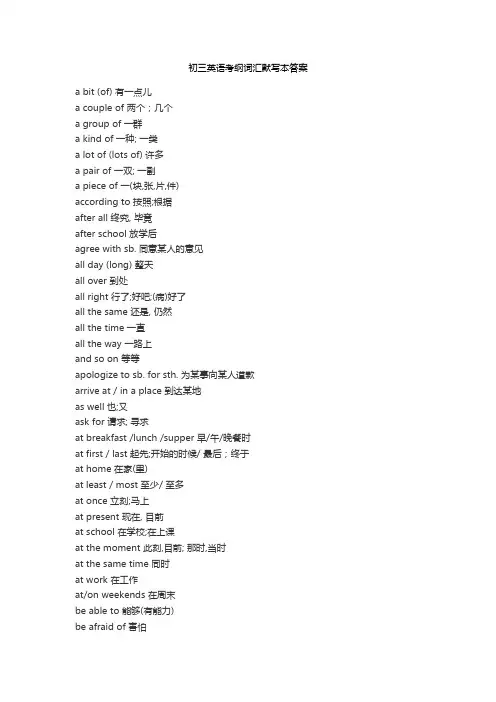
上海初中英语考纲词汇默写
- 格式:doc
- 大小:25.49 KB
- 文档页数:4
上海初中英语考纲词汇默写
Shanghai middle school students face a challenging task when it
comes to English vocabulary dictation. The English curriculum in
Shanghai is rigorous and comprehensive, requiring students to
master a vast array of vocabulary words across a wide range of topics.
This essay will explore the importance of vocabulary dictation in the
Shanghai middle school English curriculum, the challenges students
face, and strategies for effective preparation and practice.
The Shanghai middle school English curriculum is designed to equip
students with a strong foundation in the English language, preparing
them for future academic and professional pursuits. Vocabulary
dictation is a crucial component of this curriculum, as it not only
tests students' memorization skills but also their understanding of
word usage, spelling, and context. The ability to accurately recall and
apply a large vocabulary is essential for success in reading
comprehension, writing, and oral communication.
One of the primary challenges faced by Shanghai middle school
students in vocabulary dictation is the sheer volume of words they are required to memorize. The curriculum covers a diverse range of
topics, including but not limited to, academic subjects, everyday life,
current events, and cultural references. Students must not only
commit these words to memory but also develop a deep
understanding of their meanings and appropriate usage.
Another challenge lies in the nuances of the English language. Many
words in English have multiple meanings, subtle differences in
connotation, or complex grammatical rules. Mastering these
linguistic intricacies can be particularly daunting for non-native
English speakers. Students must be able to distinguish between
homophones, synonyms, and antonyms, and apply the correct form
of a word in a given context.
Furthermore, the high-stakes nature of vocabulary dictation exams in
the Shanghai middle school curriculum adds an additional layer of
pressure and anxiety for students. These exams often carry
significant weight in a student's overall academic performance, and
the consequences of poor performance can be far-reaching,
affecting their eligibility for advanced courses, extracurricular
activities, and even future educational and career opportunities.
Despite these challenges, Shanghai middle school students have
developed a range of effective strategies to prepare for and excel in
vocabulary dictation. One of the most important strategies is consistent and dedicated practice. Students must invest time and
effort in regularly reviewing and reinforcing the vocabulary words
covered in the curriculum. This can be achieved through a variety of
methods, such as flashcards, online quizzes, group study sessions,
and engaging in conversations that incorporate the targeted
vocabulary.
Another effective strategy is to contextualize the vocabulary words.
Rather than simply memorizing definitions, students should strive to
understand the words in their broader linguistic and cultural contexts.
This can involve analyzing the word's etymology, exploring its usage
in authentic texts or media, and identifying common collocations or
idiomatic expressions.
Additionally, Shanghai middle school students often employ
mnemonic devices and visualization techniques to aid in the
retention of vocabulary words. For example, they might create
mental images or stories that associate a word with a memorable
image or personal experience. These strategies not only enhance
memory but also help students develop a deeper understanding of
the vocabulary.
Furthermore, Shanghai middle school students recognize the
importance of continuous feedback and self-assessment. They
regularly seek out opportunities to practice vocabulary dictation, whether through mock exams, peer quizzes, or teacher-led
assessments. By identifying their strengths and weaknesses, students
can tailor their study strategies and focus their efforts on areas that
require more attention.
Finally, Shanghai middle school students understand the value of
developing strong study habits and time management skills. They
allocate dedicated study time for vocabulary dictation, prioritizing it
alongside their other academic responsibilities. This disciplined
approach, combined with effective study strategies, helps them
maintain a consistent level of performance and achieve their goals.
In conclusion, the vocabulary dictation component of the Shanghai
middle school English curriculum poses significant challenges for
students. However, through a combination of dedicated practice,
contextual understanding, mnemonic strategies, continuous