浙江省宁波市鄞州高级中学2020-2021学年高一年级1月考试英语试题 Word版含答案
- 格式:docx
- 大小:46.60 KB
- 文档页数:14
听下面一段对话,回答第14至第17四个小题。
14. Why is Angela Zhang in the news?
A. She won a contest.B. She donated $100, 000.C. She reads 300 books a year.
15. How old is Nithin Tumma?
A. Solve 45 problems in an hour.
B. Solve 20 problems in 45 minutes.
C. Solve 10 problems in half an hour.
20. What will the highest scorer of each team receive?
听下面一段独白,回答第18至第20三个小题。
18. How often is the Noetic Learning Math Contest held?
A. Once a year.B. Twice a year.C. Once every two years.
19. What are students required to do during the contest?
A. At 8:30.B. At 7:45.C. At 6:15.
听下面一段对话,回答第8至第10三个小题。
8. What did the man do just now?
A. He exercised indoors.B. He worked hard.C. He took a walk.
9. What will the man do first?
5. What are the speakers mainly talking about?
A. A handmade hat.B. A birthday party.C. Jonathan’snewjob.
第二节(共15小题;每小题1.5分,满分22.5分)
听下面5段对话或独白。每段对话或独白后有几个小题,从题中所给的A、B、C三个选项中选出最佳选项,并标在试卷的相应位置。听每段对话或独白前,你将有时间阅读各个小题,每小题5秒钟;听完后,各小题给出5秒钟的作答时间。每段对话或独自读两遍。
A. A “Team Winner” medal.
B. A “Team Achievement Plaque”.
C. A “National Honor Roll” medal.
第二部分阅读理解(共两节,满分35分)
第一节(共10小题;每小题2.5分,满分25分)
阅读下列短文,从每题所给的A、B、C和D四个选项中,选出最佳选项,并在答题纸上将该项涂黑。
3. Where does the conversation take place?
A. At a store.B. At a hotel.C. At a laundry.
4. How do the speakers most probably feel now?
A. Lonely.B. Regretful.C. Worried.
1. What does Jason plan to do?
A. Work for Bruce.B. Look for a new job.C. Sell things in a market.
2. For what will the man go to Japan?
A. A business trip.B. Further study.C. A wedding.
A
Some students get so nervous before a test. They do poorly even if they know the material. Sian Beilock, a professor at the University of Chicago in Illinois, has studied these highly anxious test-takers. The students start worrying about the results. And when they worry, it actually uses up attention and memory resources(资源).
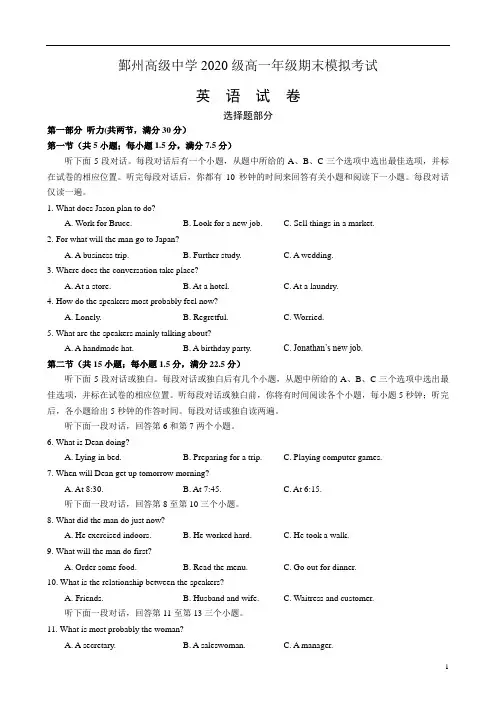
鄞州高级中学2020级高一年级期末模拟考试
英语试卷
选择题部分
第一部分听力(共两节,满分30分)
第一节(共5小题;每小题1.5分,满分7.5分)
听下面5段对话。每段对话后有一个小题,从题中所给的A、B、C三个选项中选出最佳选项,并标在试卷的相应位置。听完每段对话后,你都有10秒钟的时间来回答有关小题和阅读下一小题。每段对话仅读一遍。
听下面一段对话,回答第11至第13三个小题。
11. What is most probably the woman?
A. A secretary.B. A saleswoman.C. A manager.
12. Why does John Green want to speak to Mark Brown?
A. To inform him of the new office.
B. To ask some personal problems.
C. To discuss about a new ordew number?
A. 86392747.B. 86392774.C. 83697247.
A. Order some food.B. Read the menu.C. Go out for dinner.
10. What is the relationship between the speakers?
A. Friends.B. Husband and wife.C. Waitress and customer.
听下面一段对话,回答第6和第7两个小题。
6. What is Dean doing?
A. Lying in bed.B. Preparing for a trip.C. Playing computer games.
7. When will Dean get up tomorrow morning?
A. 13.B. 18.C. 19.
16. Where is Neveah Mosher from?
A. California.B. Michigan.C. New York.
17. What is the woman advised to do?
A. Spend more time in reading.B. Try to make some news.C. Do some research.
14. Why is Angela Zhang in the news?
A. She won a contest.B. She donated $100, 000.C. She reads 300 books a year.
15. How old is Nithin Tumma?
A. Solve 45 problems in an hour.
B. Solve 20 problems in 45 minutes.
C. Solve 10 problems in half an hour.
20. What will the highest scorer of each team receive?
听下面一段独白,回答第18至第20三个小题。
18. How often is the Noetic Learning Math Contest held?
A. Once a year.B. Twice a year.C. Once every two years.
19. What are students required to do during the contest?
A. At 8:30.B. At 7:45.C. At 6:15.
听下面一段对话,回答第8至第10三个小题。
8. What did the man do just now?
A. He exercised indoors.B. He worked hard.C. He took a walk.
9. What will the man do first?
5. What are the speakers mainly talking about?
A. A handmade hat.B. A birthday party.C. Jonathan’snewjob.
第二节(共15小题;每小题1.5分,满分22.5分)
听下面5段对话或独白。每段对话或独白后有几个小题,从题中所给的A、B、C三个选项中选出最佳选项,并标在试卷的相应位置。听每段对话或独白前,你将有时间阅读各个小题,每小题5秒钟;听完后,各小题给出5秒钟的作答时间。每段对话或独自读两遍。
A. A “Team Winner” medal.
B. A “Team Achievement Plaque”.
C. A “National Honor Roll” medal.
第二部分阅读理解(共两节,满分35分)
第一节(共10小题;每小题2.5分,满分25分)
阅读下列短文,从每题所给的A、B、C和D四个选项中,选出最佳选项,并在答题纸上将该项涂黑。
3. Where does the conversation take place?
A. At a store.B. At a hotel.C. At a laundry.
4. How do the speakers most probably feel now?
A. Lonely.B. Regretful.C. Worried.
1. What does Jason plan to do?
A. Work for Bruce.B. Look for a new job.C. Sell things in a market.
2. For what will the man go to Japan?
A. A business trip.B. Further study.C. A wedding.
A
Some students get so nervous before a test. They do poorly even if they know the material. Sian Beilock, a professor at the University of Chicago in Illinois, has studied these highly anxious test-takers. The students start worrying about the results. And when they worry, it actually uses up attention and memory resources(资源).
鄞州高级中学2020级高一年级期末模拟考试
英语试卷
选择题部分
第一部分听力(共两节,满分30分)
第一节(共5小题;每小题1.5分,满分7.5分)
听下面5段对话。每段对话后有一个小题,从题中所给的A、B、C三个选项中选出最佳选项,并标在试卷的相应位置。听完每段对话后,你都有10秒钟的时间来回答有关小题和阅读下一小题。每段对话仅读一遍。
听下面一段对话,回答第11至第13三个小题。
11. What is most probably the woman?
A. A secretary.B. A saleswoman.C. A manager.
12. Why does John Green want to speak to Mark Brown?
A. To inform him of the new office.
B. To ask some personal problems.
C. To discuss about a new ordew number?
A. 86392747.B. 86392774.C. 83697247.
A. Order some food.B. Read the menu.C. Go out for dinner.
10. What is the relationship between the speakers?
A. Friends.B. Husband and wife.C. Waitress and customer.
听下面一段对话,回答第6和第7两个小题。
6. What is Dean doing?
A. Lying in bed.B. Preparing for a trip.C. Playing computer games.
7. When will Dean get up tomorrow morning?
A. 13.B. 18.C. 19.
16. Where is Neveah Mosher from?
A. California.B. Michigan.C. New York.
17. What is the woman advised to do?
A. Spend more time in reading.B. Try to make some news.C. Do some research.