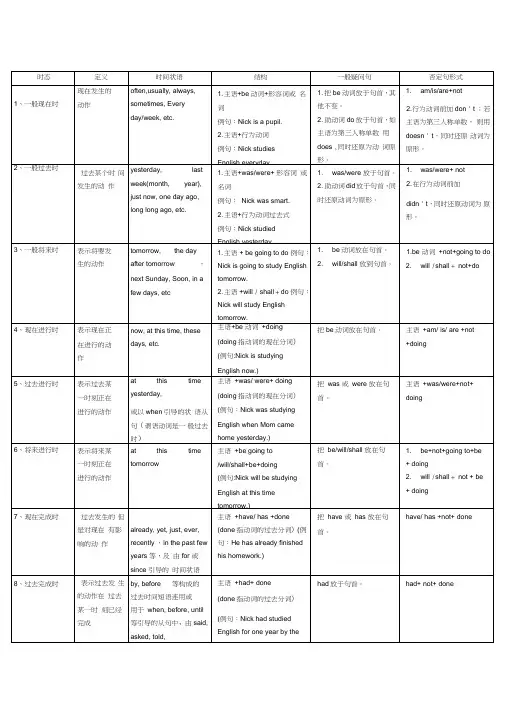
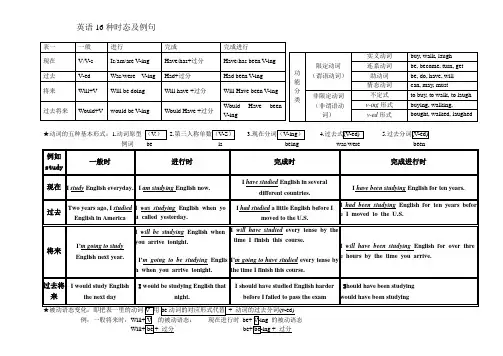
英语时态表格16种时态
- 格式:docx
- 大小:18.76 KB
- 文档页数:4
going to + /shall+do
放在句首。shall提到句首。
going to+not+ do
/shall+not+ do
7、过去完成时
表示在过去某一时间或动作之前已经发生或完成的动作或情况。表示“过去的过去”
by, before等构成的过去时间短语连用或用于when, before, until等引导的从句中。由said, asked, told, thought等引导的宾语从句中,
主语+be going to/will/shall+shall+have+p,p(过去分词)+其他
例句:By the time you get back,great changes will have taken place in this area
12、过去将来完成时
过去某一时间对将来某一时刻以前所会发生的动作,常用在虚拟语气中,表示与过去的事实相反
had+ done
had放于句首。
had+ not+ done
8、过去将来时
表示在过去的某个时候看来将要发生的动作或者存在的状态。), the following month (week),etc.
+do
were going to +do
提到句首。
主语+was/ were+ doing
把was或were放在句首。
主语+was/ were+ not+ doing
5、现在完成时
过去发生或已经完成的动作对现在造成的一向或结果,或从过去已经开始,持续到现在的动作或状态。
already, yet, just, ever, never, before, recently,in the past few years, 等,及由for或since引导的时间状语。
例句:I shall have been working here in this factory for twenty years by the end of the year
16、过去将来完成时
表示从过去某时看至未来某时以前会一直在进行的动作。
Should/would+have+been+现在分词
had+been+doing+其他
4,最近情况:He had been quarrelling with his wife.他和他的妻子吵了一场架。(最近)
5,反复动作:He had been asking me the same question.他一直问我相同的问题(屡次)
例句:She had been suffering from a bad cold when she took the exam
特殊含义:1,尚未完成:He had been writing the novel他已经在写小说了(他没写完)
2,企图:He had been studying the meaning of this proverb他曾今学习过这个谚语(他曾经努力学习过他)
3,未得结果:We had been studying what our enemy had said我们一直致力于敌人所说的(但是我们没有理解)
例句:He told me that by the end of the year he would have been living there for thirty years.
主语+am/ is/ are +doing
把be动词放在句首。
主语+am/ is/ are +not +doing
3、一般过去时
过去某个时间里发生的动作或状态; 过去习惯性、经常性的动作、行为。
ago, yesterday, last week(month, year…), in 2000, just now, one day, long long ago, etc.
Shoud/would+be+现在分词
例句:They said they would be coming
He said he could not come because he would be having a meeting
11、将来完成时
在将来某一时刻之前开始的动作或状态
By the time of,by the end of+时间短语(将来)by the time+从句(将来)
1. was/were
2.行为动词过去式
1.把was或 were放于句首。
2.用助动词did提问,同时还原为动词原形。
1.主语+was/were+ not
2. 在行为动词前加do在其前加didn’t,同时还原行为动词。
4、过去进行时
表示过去某段时间或某一时刻正在发生或进行的动作或行为。
at this time yesterday或以when引导的谓语动词是一般过去时的时间状语等。
Since+时间点,for+时间段
Hanv/has+been+doing+其他
例句:I have been sitting here for an hour
The children have been watching TV since six o'clock.
14、过去完成进行时
某正在进行的动作或状态,持续到过去某个时刻,还未完成,一直持续到之后的当前才结束
定义
状语
结构
一般疑问句
否定句形式
1、一般现在时
经常、反复发生的动作或行为及现在的某种状况。
often, usually, always, sometimes, every
day(week,month),
once a week,
on Mondays, etc.
动词
2.行为动词
主语+be+其他
1.把动词be放于句首。
2.用助动词do提问,如主语为第三人称单数,则用does,同时还原为动词原形。
is/are+not
2.此时态的谓语动词若为行为动词,则在其前加don’t;若主语为第三人称单数,则用doesn’t,同时还原行为动词。
2、现在进行时
表示现阶段或说话时正在进行的动作或状态。
now, at this time, these days, etc.
Had they been expecting the news for some time?
6,情绪:What had he been doing?他做了什么(不耐烦)
15、将来完成时
表示动作从某一时间开始一直延续到将来某一时间。是否继续下去,要视上下文而定。
Shall/will have been doing
或were放于句首。
+not+
do
were +not+ going to +do
9、一般过去将来时
立足于过去某一时刻,从过去看将来,常用于宾语从句中
The next day(morning,
Year)
The following month
(week) etc
1,Was/were+going to+do
Should/would have done sth
例句:I thought you'd have left by this time
He told them he would have finished it by 8 o'clock
13、现在完成进行时
从过去某一时间开始一直延续到现在的动作,这一动作可能刚刚开始,也可能仍然在继续,并可能延续到将来
2,would/should+do+其他
Was/were放于句首,would/should提到句首
1,Was/were+not+going to+do
2,would/should+not+do
10、过去将来进行时
就过去某一而言,将来某一时刻或某一段时间正在进行的动作,主要用于宾语从句中,多用于间接引语
have/ has +done
把have或has放在句首。
have/ has +not+ done
6、一般将来时
表示将要发生的动作或存在的状态及打算、计划或准备做某事。
tomorrow,tomorrow morning/afternoon, the day after tomorrow ,next Sunday/week/year/month, soon, in a few days minutes, etc
放在句首。shall提到句首。
going to+not+ do
/shall+not+ do
7、过去完成时
表示在过去某一时间或动作之前已经发生或完成的动作或情况。表示“过去的过去”
by, before等构成的过去时间短语连用或用于when, before, until等引导的从句中。由said, asked, told, thought等引导的宾语从句中,
主语+be going to/will/shall+shall+have+p,p(过去分词)+其他
例句:By the time you get back,great changes will have taken place in this area
12、过去将来完成时
过去某一时间对将来某一时刻以前所会发生的动作,常用在虚拟语气中,表示与过去的事实相反
had+ done
had放于句首。
had+ not+ done
8、过去将来时
表示在过去的某个时候看来将要发生的动作或者存在的状态。), the following month (week),etc.
+do
were going to +do
提到句首。
主语+was/ were+ doing
把was或were放在句首。
主语+was/ were+ not+ doing
5、现在完成时
过去发生或已经完成的动作对现在造成的一向或结果,或从过去已经开始,持续到现在的动作或状态。
already, yet, just, ever, never, before, recently,in the past few years, 等,及由for或since引导的时间状语。
例句:I shall have been working here in this factory for twenty years by the end of the year
16、过去将来完成时
表示从过去某时看至未来某时以前会一直在进行的动作。
Should/would+have+been+现在分词
had+been+doing+其他
4,最近情况:He had been quarrelling with his wife.他和他的妻子吵了一场架。(最近)
5,反复动作:He had been asking me the same question.他一直问我相同的问题(屡次)
例句:She had been suffering from a bad cold when she took the exam
特殊含义:1,尚未完成:He had been writing the novel他已经在写小说了(他没写完)
2,企图:He had been studying the meaning of this proverb他曾今学习过这个谚语(他曾经努力学习过他)
3,未得结果:We had been studying what our enemy had said我们一直致力于敌人所说的(但是我们没有理解)
例句:He told me that by the end of the year he would have been living there for thirty years.
主语+am/ is/ are +doing
把be动词放在句首。
主语+am/ is/ are +not +doing
3、一般过去时
过去某个时间里发生的动作或状态; 过去习惯性、经常性的动作、行为。
ago, yesterday, last week(month, year…), in 2000, just now, one day, long long ago, etc.
Shoud/would+be+现在分词
例句:They said they would be coming
He said he could not come because he would be having a meeting
11、将来完成时
在将来某一时刻之前开始的动作或状态
By the time of,by the end of+时间短语(将来)by the time+从句(将来)
1. was/were
2.行为动词过去式
1.把was或 were放于句首。
2.用助动词did提问,同时还原为动词原形。
1.主语+was/were+ not
2. 在行为动词前加do在其前加didn’t,同时还原行为动词。
4、过去进行时
表示过去某段时间或某一时刻正在发生或进行的动作或行为。
at this time yesterday或以when引导的谓语动词是一般过去时的时间状语等。
Since+时间点,for+时间段
Hanv/has+been+doing+其他
例句:I have been sitting here for an hour
The children have been watching TV since six o'clock.
14、过去完成进行时
某正在进行的动作或状态,持续到过去某个时刻,还未完成,一直持续到之后的当前才结束
定义
状语
结构
一般疑问句
否定句形式
1、一般现在时
经常、反复发生的动作或行为及现在的某种状况。
often, usually, always, sometimes, every
day(week,month),
once a week,
on Mondays, etc.
动词
2.行为动词
主语+be+其他
1.把动词be放于句首。
2.用助动词do提问,如主语为第三人称单数,则用does,同时还原为动词原形。
is/are+not
2.此时态的谓语动词若为行为动词,则在其前加don’t;若主语为第三人称单数,则用doesn’t,同时还原行为动词。
2、现在进行时
表示现阶段或说话时正在进行的动作或状态。
now, at this time, these days, etc.
Had they been expecting the news for some time?
6,情绪:What had he been doing?他做了什么(不耐烦)
15、将来完成时
表示动作从某一时间开始一直延续到将来某一时间。是否继续下去,要视上下文而定。
Shall/will have been doing
或were放于句首。
+not+
do
were +not+ going to +do
9、一般过去将来时
立足于过去某一时刻,从过去看将来,常用于宾语从句中
The next day(morning,
Year)
The following month
(week) etc
1,Was/were+going to+do
Should/would have done sth
例句:I thought you'd have left by this time
He told them he would have finished it by 8 o'clock
13、现在完成进行时
从过去某一时间开始一直延续到现在的动作,这一动作可能刚刚开始,也可能仍然在继续,并可能延续到将来
2,would/should+do+其他
Was/were放于句首,would/should提到句首
1,Was/were+not+going to+do
2,would/should+not+do
10、过去将来进行时
就过去某一而言,将来某一时刻或某一段时间正在进行的动作,主要用于宾语从句中,多用于间接引语
have/ has +done
把have或has放在句首。
have/ has +not+ done
6、一般将来时
表示将要发生的动作或存在的状态及打算、计划或准备做某事。
tomorrow,tomorrow morning/afternoon, the day after tomorrow ,next Sunday/week/year/month, soon, in a few days minutes, etc