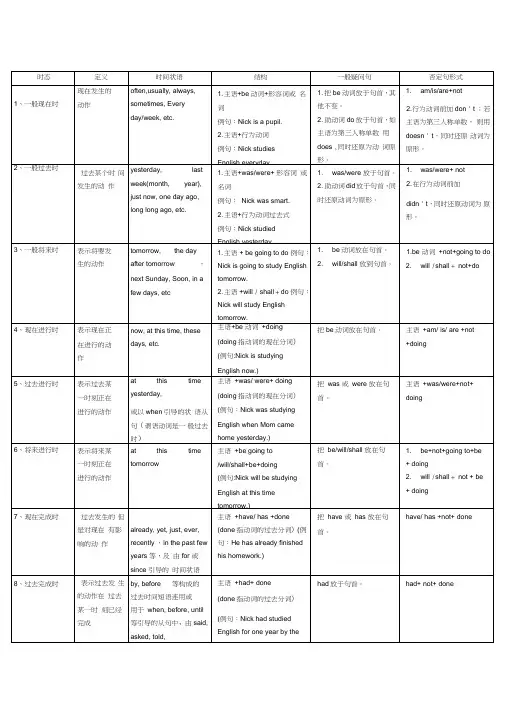
人教部编版初中英语16种时态用法详解
- 格式:pdf
- 大小:6.97 MB
- 文档页数:5
人教部编版初中英语16种时态用法详解
1.一般现在时(do/does; is/am/are)
①表示现在的情况、状态或特征。
例:He is a student.
他是一个学生。
②表示经常性、习惯性动作。
例:He always helps others.
他总是帮助别人。
③客观事实和普遍真理。
例:The earth moves the sun.
地球绕着太阳转。
④表示一个按规定、计划或安排要发生的动作。
仅限于某些表示“来、去、动、停、开始、结束、继续”等的动词,可以与表示未来时间的状语搭配使用。
常见的用法是:飞机、火车、轮船、汽车等定期定点运
行的交通方式。
例:The next train leaves at 3 o'clock this afternoon.
下一趟火车今天下午3点开车。
⑤在时间、条件和让步状语从句中经常用一般现在(有时也用现在完成时)表示将的来事情。
(即:主将从现原则)例:I will call you as soon as I arrive at the airport.
我一到机场就会给你打电话。
When you have finished the report, I will have waited
for about 3 hours.
等你完成这份报告的时候,我就已经等了将近3个小时了。
2. 现在进行时(am/is/are doing)
①表示此时此刻正在发生的事情。
例:He is listning to the music now.
他现在正在听音乐。
②表示目前一段时间内一直在做的事情,但不一定此
时此刻正在做。
例:I am studying computer this term.
这个学期我一直在学习计算机。
③现在进行时可以表示将来的含义。
a. 瞬时动词的进行一定表将来。
例:I am leaving.
我要离开了。
b. 持续动词的进行只有有将来的时间状语或有将来语
境中才表将来。
例:I am travelling next month.
下个月我要去旅行。
④现在进行时与频度副词连用,表示说话者或褒义或
贬义的感情色彩。
例:He is always helping others.
他总是帮助别人。
(褒义)
3. 现在完成时(have/has done)
①表示动作到现在为止已经完成或刚刚完成,强调对
现在产生的影响。
例:I bought a new house, but I haven't sold my old
one yet, so at the moment I have two houses.
我买了一所新房子,但是还没有卖掉旧的,所以现在我
又两所房子。
②表示从过去某时刻开始,持续到现在的动作或情况,
并且有可能会继续延续下去。
此时经常用延续性动词。
时间状语常用since加一个过去的时间点,或for加一段时间,或by加一个现在时间。
例:Great as Newton was, many of his ideas have been challenged today and are being modified by the work
of scientists of our time.
虽然牛顿是个伟大的人物,但他的许多见解直到今天还
在受到挑战,并且被现代科学家的工作所修正
4. 现在完成进行时(have/has been doing)
表示某一动作开始于过去某一时间,延续或重复地出现
至今,或将继续延续至将来。
例:We have been working on this project for over a month now.
到目前为止,我们一直在处理那个项目,已经花了一个
多月时间了。
5. 一般过去时(did; was/were)
①表示过去某个时间发生的动作或情况。
例:I bought some fruits yesterday.
我昨天买了一些水果。
②表示过去习惯性动作。
例:When I was a boy,I often swam in that river.
would/used to do:表示过去常常......
例:The old man would sit on a bench in the quiet park
and look at others for hours without doing anything or talking to anybody.
老人过去常常坐在宁静的公园里的一条长椅上,看着其
他的人,一坐就是数个小时,什么也不干,也不和任何人交
谈。
He used to visit his mother once a week.
他以前总是每周看望一次他的母亲。
6. 过去完成时(had done)
表示在过去的某个时间或动作以前已经发生的动作或
已经存在的状态。
就是我们常说的"过去的过去"。
Until then, his family hadn't heard from him for six months.
到那时为止,他家里已经有六个月没得到他的消息了。
7. 过去将来时(would do)
表示从过去的某个时间看将要发生的事。
例:I said on Thursday I should see my friend the next day.
我星期四说我将于第二天拜访我的朋友。
8. 过去进行时(was/ were doing)
①表示在过去具体的时间正在发生的动作。
例:Mary was listening to light music 10 minutes ago.
10分钟前,玛丽正在听轻音乐。
②表示过去某个时间段内一直在发生的事情。
例:I was travelling in London last summer vacation.
去年暑假我在伦敦旅行。
③过去进行时可以表示过去将来的含义。
a. 瞬时动词的过去进行时一定表示过去将来的含义。
例:Then she said she was leaving.
然后她说她要离开了。
b. 持续动词的过去进行时只有在有过去将来的时间状
语或过去将来的语境下才能表示过去将来。
例:She said that she was travelling the next day.。