
牛津译林版七年级英语下册Unit 4 Finding your way优质课件
- 格式:ppt
- 大小:2.69 MB
- 文档页数:41


牛津译林版英语七下Unit 4《Finding your way》(第6课时)教学设计
一. 教材分析
《牛津译林版英语七下Unit 4》主要讲述了如何寻找路线和方向。本单元通过引入新的词汇、短语和句型,帮助学生掌握描述路线和方向的表达方法。第6课时主要教学内容为阅读理解,通过一篇关于如何在学校找到各个地点的文章,让学生学会如何运用本单元所学知识解决实际问题。
二. 学情分析
学生在学习本单元前,已经掌握了基本的英语语法和词汇知识,具备一定的听、说、读、写能力。但部分学生对于描述路线和方向的表达方式尚不熟悉,需要在本节课中进行针对性的训练和指导。
三. 教学目标
1. 学生能够掌握描述路线和方向的常用表达方式。
2. 学生能够运用所学知识,解决实际生活中的导航问题。
3. 学生能够提高阅读理解能力,理解并运用文章中的描述路线和方向的句子。
四. 教学重难点
1. 描述路线和方向的表达方式。
2. 如何在实际情境中运用所学知识解决导航问题。
五. 教学方法
1. 情境教学法:通过设置各种实际情境,让学生在实践中学会描述路线和方向。
2. 任务型教学法:通过完成各种任务,让学生在实践中运用所学知识。
3. 交际式教学法:引导学生进行小组讨论和互动,提高学生的交际能力。
六. 教学准备
1. 教学课件:制作包含本节课主要内容的教学课件。
2. 阅读材料:准备一篇关于描述路线和方向的文章,用于课堂阅读理解环节。
3. 地图:准备一张学校地图,用于实践环节。 七. 教学过程
1. 导入(5分钟)
利用图片或视频展示学校地图,引导学生谈论自己熟悉的地点和路线。提问:“Can you show me the way to the library?”,激发学生的学习兴趣。
2. 呈现(10分钟)
呈现文章标题《How to Find Your Way in School》,引导学生阅读文章,并回答问题:“What’s the mn idea of the passage?”。让学生关注文章中描述路线和方向的句子。

牛津译林版英语七下Unit 4《Finding your way》(Welcome to the unit)教学设计
一. 教材分析
《Finding your way》是人教版牛津译林英语七年级下的一个单元,主题是关于方向和地点的询问与描述。本节课的主要内容是通过学习如何描述路线和地点,提高学生的语言运用能力和人际沟通能力。教材中包含了丰富的图片、对话和活动,为学生提供了充足的语言实践机会。
二. 学情分析
七年级的学生已经掌握了基本的英语语法和词汇,对于日常生活中的简单交流已经没有太大问题。但是,他们在描述具体地点和路线时,可能会存在一定的困难。此外,部分学生可能对方向感不强,需要在教学过程中加以引导和训练。
三. 教学目标
1. 知识目标:学生能够掌握描述路线和地点的常用词汇和句型,如:turn left/right, go strght on, take the second/third turning on the left/right等。
2. 能力目标:学生能够在实际情境中运用所学语言描述路线和地点,提高人际沟通能力。
3. 情感目标:培养学生对探索和发现的兴趣,增强团队协作精神。
四. 教学重难点
1. 重点:描述路线和地点的词汇和句型。
2. 难点:如何在实际情境中灵活运用所学语言进行交流。
五. 教学方法
1. 情境教学法:通过设定具体的生活场景,让学生在实际情境中学习和使用语言。
2. 任务型教学法:通过完成各种任务,培养学生运用英语进行实际交流的能力。
3. 小组合作学习:鼓励学生分组进行讨论和实践活动,提高团队协作能力。
六. 教学准备
1. 准备相关图片和地图,用于展示和练习。
2. 准备录音机和磁带,用于播放对话和歌曲。 3. 准备教案和教学课件。
七. 教学过程
1. 导入(5分钟)
利用图片和歌曲《London Bridge》引导学生进入话题,激发学生对方向的兴趣。
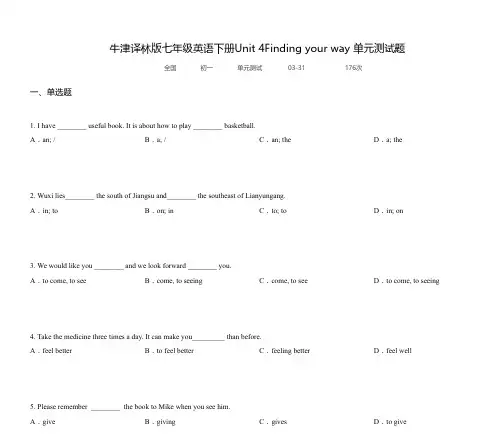
1. I have ________ useful book. It is about how to play ________ basketball.
A.an; /B.a; /C.an; theD.a; the
2. Wuxi lies________ the south of Jiangsu and________ the south east of Lianyungang.
A.in; toB.on; inC.to; toD.in; on
3. We would like you ________ and we look forward ________ you.
A.to come, to seeB.come, to seeingC.come, to seeD.to come, to seeing
4. Take the medicine three times a day. It can make you_________ than before.
A.feel betterB.to feel betterC.feeling betterD.feel well
5. Please remember ________ the book to Mike when you see him.
A.giveB.givingC.givesD.to give 一、单选题全国初一单元测试176次牛津译林版七年级英语下册Unit 4Finding your way 单元测试题
03-31二、完型填空6. You take me to the station. My brother’s taking me.A.can’tB.mustn’t
C.shouldn’tD.don’t have to
7. —Do you think Linda can be a member of the Dancing Club?
—We need to talk about it. Not ________ can be a member of us.
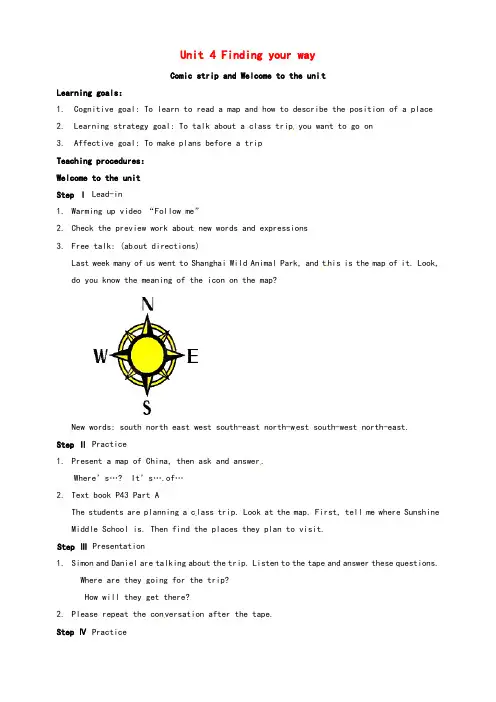
Unit 4 Finding your way
Comic strip and Welcome to the unit
Learning goals:
1. Cognitive goal: To learn to read a map and how to describe the position of a place
2. Learning strategy goal: To talk about a class trip you want to go on
3. Affective goal: To make plans before a trip
Teaching procedures:
Welcome to the unit
Step Ⅰ Lead-in
1. Warming up video “Follow me”
2. Check the preview work about new words and expressions
3. Free talk: (about directions)
Last week many of us went to Shanghai Wild Animal Park, and this is the map of it. Look,
do you know the meaning of the icon on the map?
New words: south north east west south-east north-west south-west north-east.
Step Ⅱ Practice
1. Present a map of China, then ask and answer.
Where’s…? It’s….of…
2. Text book P43 Part A
The students are planning a class trip. Look at the map. First, tell me where Sunshine