
高中英语情态动词课件
- 格式:ppt
- 大小:202.50 KB
- 文档页数:27


高中英语语法 情态动词 ※内部资料※
1
情态动词用法归纳
情态动词的特征:
1、 情态动词本身具有一定的词义,不能单独作谓语,后面只能接动词原形。
2、 没有人称和数的变化。
一、can和could
1、 表示能力,常译为“能、会”。I can speak English.
2、 表示许可,常译为“可以”
--Can I use your phone?
--Of course you can.
3、表示对现在或过去情况的推测,只用于疑问句或否定句。
--Can she be in the classroom? 她可能在教室吗?
--No, she can’t be in it.不,她不可能在教室。
It can’t have rained last night, for the ground is dry.
4、用于肯定陈述句中,表示理论上或习惯上的可能性,也可以表示某人或某物一时的情况,译为“有可能,有时会”。
Accidents can happen at any time.事故随时会发生。
It can be very warm in this area.这个地区有时可能非常暖和.
He can be very friendly at times.他有时会非常友好。
5、用于否定句、疑问句中,表示惊讶、不相信、反问等。
How can you say that? 你怎么能那样说?
6、can与be able to
(1)can只有现在时和过去时,而be able to有更多的时态变化。在将来时、完成时和非谓语动词结构中只能用be able to ;
Will you be able to come? 你能来吗?
I’m sorry I haven’t been able to answer your letter in time.
情态动词
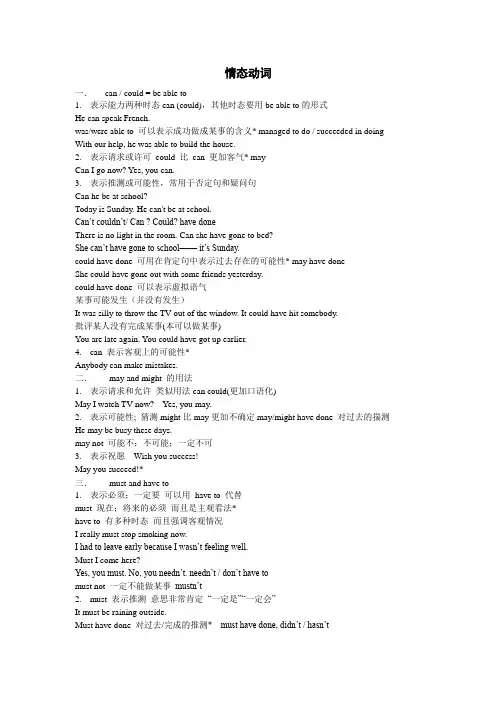
一. can / could = be able to
1. 表示能力两种时态can (could),其他时态要用be able to的形式
He can speak French.
was/were able to 可以表示成功做成某事的含义* managed to do / succeeded in doing
With our help, he was able to build the house.
2. 表示请求或许可 could 比 can 更加客气* may
Can I go now? Yes, you can.
3. 表示推测或可能性,常用于否定句和疑问句
Can he be at school?
Today is Sunday. He can't be at school.
Can’t couldn’t/ Can ? Could? have done
There is no light in the room. Can she have gone to bed?
She can’t have gone to school—— it’s Sunday.
could have done 可用在肯定句中表示过去存在的可能性* may have done
She could have gone out with some friends yesterday.
could have done 可以表示虚拟语气
某事可能发生(并没有发生)
It was silly to throw the TV out of the window. It could have hit somebody.
批评某人没有完成某事(本可以做某事)
You are late again. You could have got up earlier.
4. can 表示客观上的可能性*
Anybody can make mistakes.

情态动词之知识精要
1.表示能力,意为“能,会”,用can, could, be able to均可,could是can的过去式。区别是:can只有过去时could,而be able to有多种时态。can表示一贯的能力 ,be able to表示客观能力和通过努力可以达到的能力
John can speak three foreign languages fluently. 约翰能流利地说三门外语。
John could swim when he was four. 约翰四岁时就会游泳。
I regretted that I hadn’t been able to drive him home. 我后悔我没能开车送他回家。
Will you be able to help me learn English tomorrow? 明天你能帮助我学习英语吗?
2.表示请求或允许,意为“可以”时,用can、could或may均可,不过can比may更正式,could比can语气更委婉。
Can I park my car in front of your office? 我能把我的车停在你的办公室前面吗?
----Could I use your bike now? ---Certainly. Go ahead.
May I have a look at the photos that you took yesterday? 我能看一下你昨天拍的照片吗?
3. must, can, may/might表推测时的用法。
表推测时must用于肯定句,can用于疑问句和否定句,may/might用于肯定句和否定句。must用于否定句时不表推测,表示“禁止,千万不做„”。
The man standing over there must be a doctor. 站在那边的那个男子一定是个医生。
情态动词与虚拟语气
【语法要点】
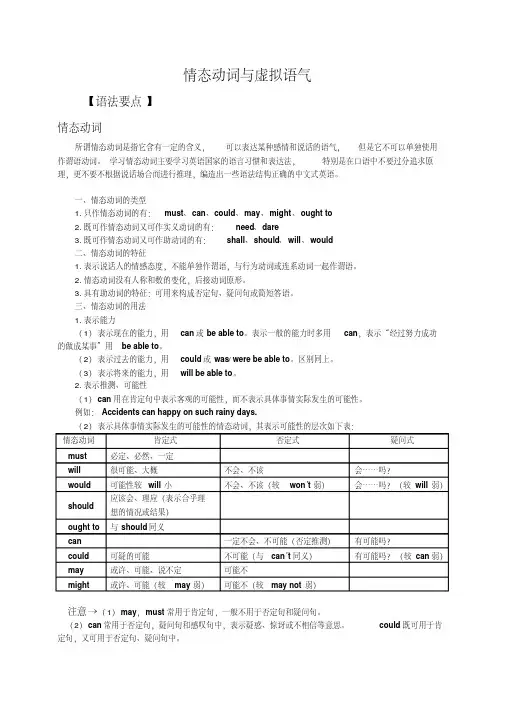
情态动词
所谓情态动词是指它含有一定的含义,可以表达某种感情和说话的语气,但是它不可以单独使用
作谓语动词。学习情态动词主要学习英语国家的语言习惯和表达法,特别是在口语中不要过分追求原
理,更不要不根据说话场合而进行推理,编造出一些语法结构正确的中文式英语。
一、情态动词的类型
1.只作情态动词的有:must、can、could、may、might、ought to
2.既可作情态动词又可作实义动词的有:need、dare
3.既可作情态动词又可作助动词的有:shall、should、will、would二、情态动词的特征
1.表示说话人的情感态度,不能单独作谓语,与行为动词或连系动词一起作谓语。
2.情态动词没有人称和数的变化,后接动词原形。
3.具有助动词的特征:可用来构成否定句、疑问句或简短答语。
三、情态动词的用法
1.表示能力
(1)表示现在的能力,用can或be able to。表示一般的能力时多用can,表示“经过努力成功
的做成某事”用be able to。
(2)表示过去的能力,用could或was/were be able to。区别同上。
(3)表示将来的能力,用will be able to。2.表示推测、可能性
(1)can用在肯定句中表示客观的可能性,而不表示具体事情实际发生的可能性。
例如:Accidents can happy on such rainy days.
(2)表示具体事情实际发生的可能性的情态动词,其表示可能性的层次如下表:
情态动词肯定式否定式疑问式
must 必定、必然、一定
will 很可能、大概不会、不该会……吗?
would 可能性较will小不会、不该(较won’t弱)会……吗?(较will弱)
should 应该会、理应(表示合乎理
想的情况或结果)
ought to 与should同义
can 一定不会、不可能(否定推测)有可能吗?
could 可疑的可能不可能(与can’t同义)有可能吗?(较can弱)