新概念英语第二册第一课学习笔记
- 格式:doc
- 大小:1.86 MB
- 文档页数:10
Lesson 1 A private conversation
【New words and expressions】生词和短语(12)
private adj. 私人的 conversation n. 谈话
theatre n. 剧场,戏院 seat n. 座位
play n. 戏 loudly adv. 大声地
angry adj. 生气的 angrily adv. 生气地
attention n. 注意 bear v. 容忍
business n. 事 rudely adv. 无礼地,粗鲁地
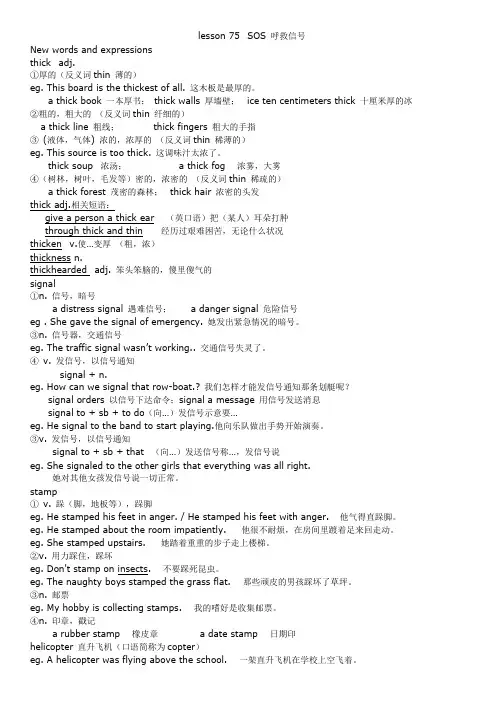
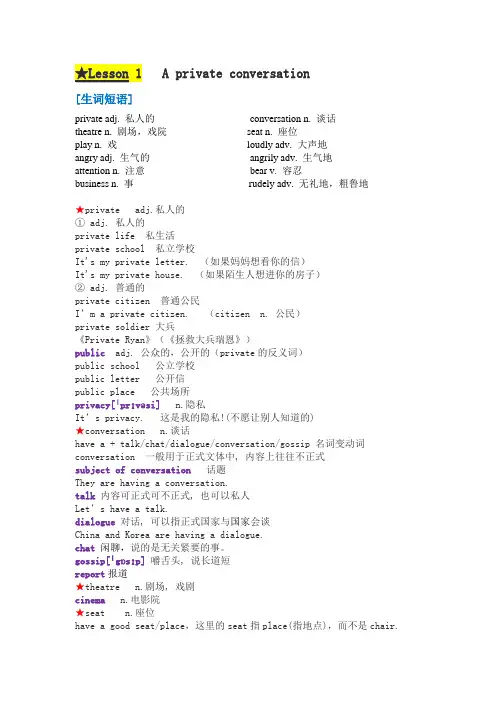
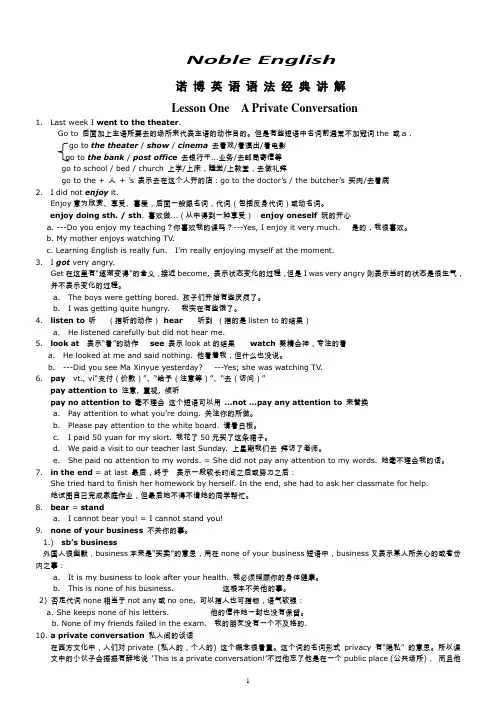
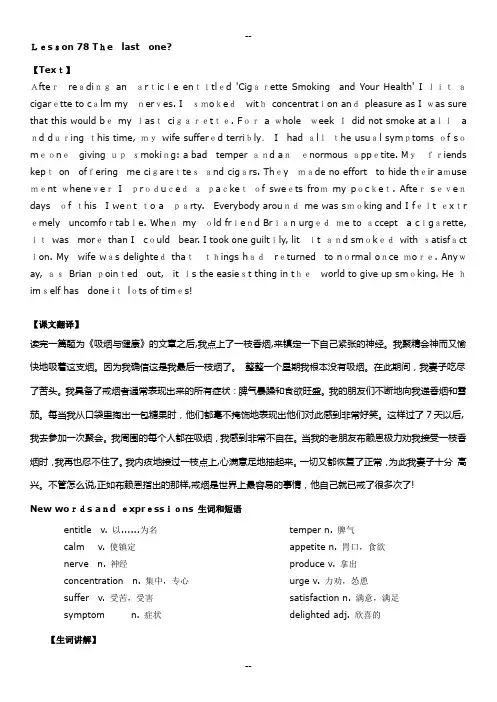
★private adj.私人的
① adj. 私人的
private life 私生活 private school 私立学校
It's my private letter. (如果妈妈想看你的信)
It's my private house. (如果陌生人想进你的房子)
② adj. 普通的
private citizen 普通公民 I’m a private citizen. (citizen n. 公民)
private soldier 大兵 《Private Ryan》(《拯救大兵瑞恩》)
public adj. 公众的,公开的(private 的反义词)
public school 公立学校 public letter 公开信 public place 公共场所
privacy n.隐私 It’s privacy. 这是我的隐私!(不愿让别人知道的)
★conversation n.谈话
have a + talk/chat/dialogue['daɪə,lɔg] /conversation/gossip ['gɑsəp] 名词变动词
conversation 一般用于正式文体中, 内容上往往不正式 2 subject of conversation 话题 They are having a conversation.
talk 内容可正式可不正式, 也可以私人 Let’s have a talk.
dialogue 对话, 可以指正式国家与国家会谈。
China and Korea are having a dialogue.
chat 闲聊,就是北京人说的“侃”,说的是无关紧要的事。
gossip 嚼舌头, 说长道短
★theatre n.剧场, 戏剧 cinema n.电影院
★seat n.座位
have a good seat/place,这里的seat指place(指地点),而不是chair.
take a seat/take your seat 坐下来, 就坐 Is the seat taken? 这个位置有人吗?
请坐的3 种说法:
Sit down, please. (命令性)
Take your seat, please.
Be seated, please. (更礼貌)
作为动词的seat与sit 的区别
sit(sat,sitten) vi. 就座 He is sitting there. 他坐在那儿。
seat vt.让某人就座 seat sb. 让某人就坐,后面会加人
Seat yourself. You seat him.你给他找个位置.
When all those present(到场者)_D_ he began his lecture ['lɛktʃɚ].
A. sit B. set C. seated D. were seated
sit down 坐下;be seated=take a seat 就坐
★angry adj. 生气的 ★angrily adv. 生气的 3 angry =cross I was angry. /He was cross.
annoyed[ə'nɔɪd]: 恼火的; be blue in the face 脸上突然变色
程 I was annoyed.
度 I was angry/cross.
加 I was very angry.
深 I am blue in the face. (脸色都青了, 相当生气了)
★attention n. 注意
Attention ,please. 请注意(口语) pay attention 注意
pay attention to … 对……注意 You must pay attention to that girl.
pay a little attention 稍加注意 pay much attention 多加注意
pay more attention 更多注意 pay no attention 不用注意
pay close attention 特别注意
★bear(bore, born) v. 容忍
① vt. 承受,支撑,承担,负担 Can the ice bear my weight?
Who will bear the cost? 谁来承担这笔费用?
② vt. 忍受(一般与can/could连用于疑问句及否定句中)
She eats too fast. I can’t bear to watch/watching her.
她吃得太快。我看着受不了。
How can you bear living in this place? 你怎么能受得了住在这个地方?
bear =stand =put up with I can't bear/stand you.
endure [ɪn'djur]:忍受,容忍 put up with :忍受
I got divorced [də'vɔrst](离婚).I could not put up with him the woman angrily. They did not pay any attention. In the end, I could
not bear it. I turned round again. ‘I can't hear a word!’ I said angrily.
‘It's none of your business,’ the young man said rudely. ‘This is a
private conversation!’
参考译文:上星期我去看戏. 我的座位很好, 戏很有意思, 但我却无法欣赏.
一青年男子与一青年女子坐在我的身后, 大声地说着话. 我非常生气, 因为我听不见演员在说什么. 我回过头去怒视着那一男一女, 他们却毫不理会.
最后, 我忍不住了, 又一次回过头去, 生气地说: “我一个字也听不见了!”“不关你的事, “那男的毫不客气地说, “这是私人间的谈话!”
【课文讲解】
1、Last week I went to the theatre.
动词go 的原义是离开一个地方去另一个地方,与介词to 连用后,常加上主语所要去的目的来代表主语的动作目的。
go to the +地点表示去某地干嘛
go to the theatre = go to the theatre to see a play去剧场看戏
go to the cinema =see a film 去电影院看电影
go to the dairy 去牛奶店 go to the + 人+ 's 表示去这个人开的店
go to the doctor's 去看病;go to the butcher's 买肉
以下短语中名词前不加冠词:
go to school 去上学; go to church [tʃɝtʃ] 去做礼拜;
go to hospital(医院) 去看病; go to bed 上床,睡觉;
go home(跟home相连一定表示没有事情可做,回家休息) 6 I am at home. 在家休息
2、I had a very good seat.
seat一般指戏院、汽车等配置的固定座位,也可以抽象地表示“座位”或“位子”等概念。
the front seat of a car 汽车的前座 Take a seat, please. 请坐。
3、I did not enjoy it.
enjoy vt. 欣赏,享受,喜爱
① enjoy +n. 喜欢,从当中得到一种享受(后面不能跟人)I enjoy the music.
enjoy the dinner/film/program ['progræm] 表演/game
② enjoy oneself/代词玩的开心 We always enjoy ourselves.
③enjoy +动名词
Jane doesn’t enjoy swimming. She enjoys going to the theatre.
4、I got very angry.
get 在这里有“逐渐变得”的含义,接近become,是个表示过程的动词,表示状态的变化。而I was very angry则仅表示当时的状态是生气,并不暗示过程。
I am/was angry. 是一个事实 I got angry. 强调变化过程
It is hot. It got hot.
got 取代be动词,got 是一个半联系动词,可以直接加形容词。
5、I could not hear the actors. I turned round.
hear+人:听见某人的话
I could not hear you. Beg your pardon? 7 I couldn't hear you./I couldn't hear a word./I couldn't catch [kætʃ]听清楚 your words.
I couldn't hear you clearly./I couldn't catch your words. Beg your
pardon? /I couldn't catch your words.
turn round =turn around 转身
6、In the end, I could not bear it.
in the end 最后,终于,表示一段较长的时间之后或某种努力之后
She tried hard to finish her homework by herself. In the end, she had
to ask her brother for help.