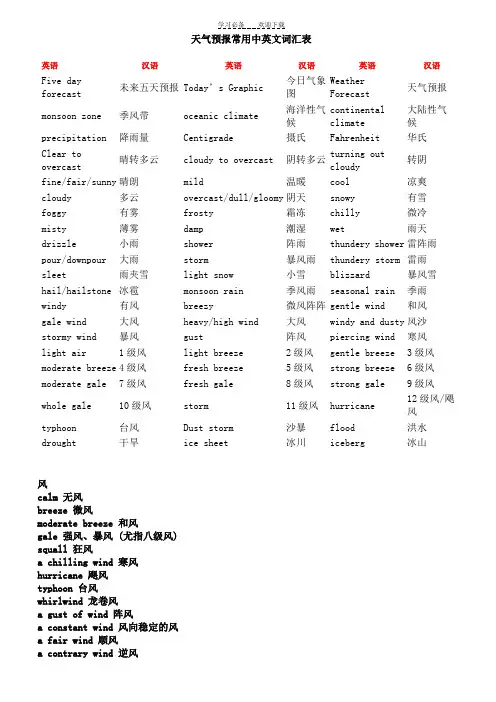
天气预报常用中英文词汇表英语汉语英语汉语英语汉语Five day forecast 未来五天预报Today’s Graphic今日气象图WeatherForecast天气预报monsoon zone 季风带oceanic climate 海洋性气候continentalclimate大陆性气候precipitation 降雨量Centigrade 摄氏Fahrenheit 华氏Clear to overcast 晴转多云cloudy to overcast 阴转多云turning outcloudy转阴fine/fair/sunny 晴朗mild 温暖cool 凉爽cloudy 多云overcast/dull/gloomy 阴天snowy 有雪foggy 有雾frosty 霜冻chilly 微冷misty 薄雾damp 潮湿wet 雨天drizzle 小雨shower 阵雨thundery shower 雷阵雨pour/downpour 大雨storm 暴风雨thundery storm 雷雨sleet 雨夹雪light snow 小雪blizzard 暴风雪hail/hailstone 冰雹monsoon rain 季风雨seasonal rain 季雨windy 有风breezy 微风阵阵 gentle wind 和风gale wind 大风heavy/high wind 大风windy and dusty 风沙stormy wind 暴风gust 阵风piercing wind 寒风light air 1级风light breeze 2级风gentle breeze 3级风moderate breeze 4级风fresh breeze 5级风strong breeze 6级风moderate gale 7级风fresh gale 8级风strong gale 9级风whole gale 10级风storm 11级风hurricane 12级风/飓风typhoon 台风Dust storm 沙暴flood 洪水drought 干旱ice sheet 冰川iceberg 冰山风calm 无风breeze 微风moderate breeze 和风gale 强风、暴风 (尤指八级风)squall 狂风a chilling wind 寒风hurricane 飓风typhoon 台风whirlwind 龙卷风a gust of wind 阵风a constant wind 风向稳定的风a fair wind 顺风a contrary wind 逆风sandstorm 沙暴duststorm 尘暴雨drizzle 毛毛雨thundershower 雷阵雨shower 阵雨rainstorm 暴风雨light rain shower 小阵雨heavy shower 强阵雨isolated shower 局部阵雨scattered shower 零星阵雨cloud-burst 大暴雨pouring rain 倾盆大雨freezing rain 冻雨thunder 雷lightning 闪电raindrop 雨点rainfall 降雨量雪snow showerheavy snowlight snow, flurrysleetblizzardsnowstormsnowflakesnowdriftsnowfall雾\霜fog 雾;雾气mist 薄雾freezing fog 冻雾hail 雹;冰雹dew 露frost 霜气候mountain climate 山的气候desert climate 沙漠气候monsoon climate 季风气候plateau climate 高原气候continental climate 大陆性气候littoral climate 海气候maritime climate 海洋气候forest climate 森林气候天气预报:Weather in BeijingHello, everybody. Welcome to today's weather forecast. Now let's look at the map and see how the weather will be in Beijing tomorrow. It will be a little rainy in the morning and sunny in the afternoon. The temperature will be 13-25 degrees centigrade 摄氏的. Put on some warm clothes and do not forget to take your umbrella or raincoat when you go out.全球的气候类型与分布Have you ever wondered why one area of the world is a desert, another a grassland, and another a rainforest? The answer is climate. Climate is the characteristic 特有的;典型的 condition of the atmosphere near the earth's surface at a certain place on earth. It is the long-term weather of that area (for at least 30 years). This includes the region's general pattern of weather conditions, seasons and weather extremes like hurricanes, droughts长期干旱, or rainy periods. The climate of a region will determine what plants will grow there, and what animals will inhabit it.Arctic ClimateThe main features of this climate are low amounts of precipitation 雨;雪 with a summer maximum, mild summers and very cold winters. This extreme climate produces the type of scenery known as the Tundra 苔原;冻土地带,冻原. The winters in the Tundra as well as being very cold are also very dark. In north of the Arctic circle there are days when the sun does not shine. Precipitation is very low in this season as the cold temperatures reduce evaporation 蒸发 and the air only holds very low amounts of water vapour = vapor 水汽.Regions with an arctic climate: Northern Alaska, northern Canada, coastal areas of Greenland, northern Scandinavia (Norway, Sweden and Finland) and Siberia in northern Russia.Temperate ClimateTemperate climates are those without extremes of temperature and precipitation. There are two types of temperate climate: maritime and continental.Maritime climates experience generally cool summers and mild winters, with a much smaller annual temperature range. This is because water has a much higher heat capacity than soil and rock. Seawater takes a long time to warm up in summer but once heated it retains its energy long after the surrounding land has cooled down, helping to moderate 变温和 the climate.Regions with a maritime climate: Western Europe, in particular the UK, and western North America at latitudes between 40 and 60 degree north.Continentality is a measure of the degree to which the climate of a region typifies that of the interior of a large landmass. Such regions usually experience hot summers and cold winters, since they are far away from the moderating influence of the ocean, which keeps climates milder in winter and cooler in summer. This is because soil and rock have a much lover heat capacity than water, and therefore gain and lose heat much more quickly.Regions with a continental climate: Siberia and central Russia, and much of North America.Subtropical ClimateAt about 30 degree north and south of the equator there is a subtropical climate belt of generally dry descending air, associated with high atmospheric pressure and clear skies. Subtropical climates are characterized by hot, humid summers and cool mild winters; Rainfall is distributed fairly evenly throughout the year. Winter rainfall - and sometimes snowfall - is associated with large storm systems that the waterlines steer from west to east. Most summer rainfall occurs during thunderstorms and an occasional tropical storm or hurricane. Humid subtropical climates lie on the southeast side of continents, roughly between 24 degrees and 37 degrees latitude.Regions with a subtropical climate: the southeastern United States, southeastern South America; coastal southeastern South Africa; eastern Australia; Asia from northern India through south China to Japan.Tropical ClimateMuch of the equatorial belt within the tropical climate zone experiences hot and humid weather. There is abundant rainfall due to the active vertical 垂直的 uplift or convection 对流 of air found there, and during certain periods, thunderstorms can occur every day. Nevertheless, this belt still receives considerable sunshine, and with the excessive 过度的rainfall, provides ideal growing conditions for luxuriant . 繁茂的 vegetation 【植】植被 .The seasons, when they do exist, are distinguished not as warm and cold periods but by variation of rainfall and cloudiness. Greatest rainfall occurs when the midday sun is overhead. On the equator this occurs twice a year, in March and September, and consequently there are two wet and two dry seasons. Farther away from the equator, the two rainy seasonsmerge into one, and the climate becomes more monsoonal []季风;雨季 , with one wet season and one dry season. In the Northern Hemisphere, the wet season occurs from May to July, in the Southern Hemisphere, from November to February.Regions with a tropical climate: the Amazon Basin in Brazil, the Congo Basin in West Africa and Indonesia.。