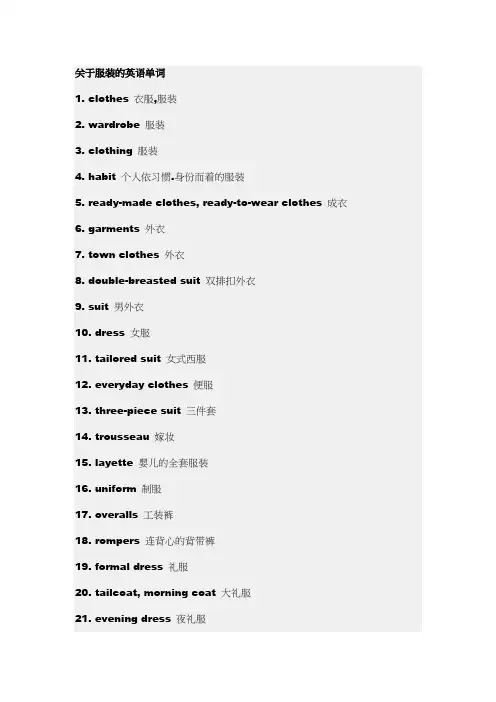
clothes的英语单词
- 格式:doc
- 大小:16.96 KB
- 文档页数:7
clothes的英语单词
## English Answer:
Clothes are garments worn to cover the body and protect
it from the elements. They can be made from a variety of
materials, such as cotton, wool, silk, or synthetic fibers.
Clothes can be designed for different purposes, such as
warmth, protection, modesty, or fashion.
Different types of clothes include:
Tops: Shirts, blouses, t-shirts, sweaters, jackets,
coats.
Bottoms: Pants, shorts, skirts, dresses.
Underwear: Underwear, bras, socks.
Accessories: Hats, scarves, gloves, belts, jewelry.
Clothes can reflect a person's culture, personality,
and style. They can be used to express oneself, make a
statement, or simply to feel comfortable.
History of clothes:
The earliest evidence of humans wearing clothes dates
back to around 100,000 years ago. These early garments were
likely made from animal skins and were used for warmth and
protection. Over time, humans began to develop more
sophisticated clothing, using different materials and
techniques.
In the ancient world, clothes were often used to denote
social status. For example, in ancient Egypt, the pharaohs
and other members of the elite wore elaborate and ornate
clothing, while the common people wore simpler garments.
In the Middle Ages, clothing styles were influenced by
religious beliefs. For example, in Europe, many people wore
clothing that covered their bodies from head to toe.
During the Renaissance, clothing styles became more
elaborate and luxurious. This was due in part to the rise
of trade and the availability of new materials.
In the 18th and 19th centuries, clothing styles began
to change more rapidly. This was due in part to the
Industrial Revolution, which made new materials and
manufacturing techniques available.
In the 20th century, clothing styles became more casual
and informal. This was due in part to the rise of new
social movements, such as the hippie movement.
Today, clothing styles continue to evolve and change.
There is a wide variety of clothing available, from
traditional garments to the latest fashion trends.
Importance of clothes:
Clothes are essential for human survival. They protect
us from the elements, keep us comfortable, and allow us to
express ourselves. Clothes can also play a role in our health and well-being. For example, wearing appropriate
clothing can help to prevent skin cancer and other health
problems.
Clothes can also have a significant impact on our
social interactions. The way we dress can affect how others
perceive us and how we feel about ourselves.
Conclusion:
衣服是人类文化和历史的重要组成部分。它们不仅为我们提供保护和舒适,还能表达我们的个性和风格。随着时间的推移,服装风格不断演变和变化,反映了社会、文化和技术的变化。今天,我们可以选择各种各样的服装,从传统的服装到最新的时尚趋势。
## 中文回答:
衣服是用来遮盖身体并保护其免受外界因素伤害的服饰。它们可以用各种材料制成,如棉、羊毛、丝绸或合成纤维。衣服可以设计用于不同的目的,例如保暖、保护、端庄或时尚。
不同的衣服类型包括:
上装,衬衫、衬衫、T 恤、毛衣、夹克、大衣。
下装,裤子、短裤、裙子、连衣裙。
内衣,内衣、胸罩、袜子。
配饰,帽子、围巾、手套、皮带、珠宝。
衣服可以反映一个人的文化、个性和风格。它们可以用来表达自己、发表声明或仅仅是为了让自己感到舒适。
衣服的历史:
人类穿衣服的最早证据可以追溯到大约 100,000 年前。这些早期的衣服可能是用动物皮制成的,用于保暖和保护。随着时间的推移,人类开始开发出更精细的服装,采用不同的材料和技术。
在古代世界,衣服经常用来表示社会地位。例如,在古埃及,法老和其他精英成员穿着精致华丽的衣服,而普通百姓则穿着更简单的衣服。
在中世纪,服装风格受到宗教信仰的影响。例如,在欧洲,许多人穿着从头到脚遮住身体的衣服。
在文艺复兴时期,服装风格变得更加精致和奢华。这部分归功于贸易的兴起和新材料的出现。
在 18 世纪和 19 世纪,服装风格开始发生更快的变化。这部分归功于工业革命,它提供了新的材料和制造技术。
在 20 世纪,服装风格变得更加休闲和随意。这部分归功于新社会运动的兴起,例如嬉皮士运动。
今天,服装风格仍在不断发展和变化。市面上有各种各样的服装,从传统服饰到最新的时尚潮流。
衣服的重要性:
衣服对人类生存至关重要。它们保护我们免受外界因素伤害,使我们感到舒适,并允许我们表达自我。衣服在我们的健康和幸福中也能发挥作用。例如,穿着合适的衣服有助于预防皮肤癌和其他健康问题。
衣服对我们的社交互动也有重大影响。我们的穿着方式会影响别人如何看待我们以及我们如何看待自己。
结论:
衣服是人类文化和历史的重要组成部分。它不仅能为我们提供保护和舒适感,还能表达我们的个性和风格。随着时间的推移,服装风格不断演变和变化,反映了社会、文化和技术的变化。今天,我们可以选择各种各样的服装,从传统的服装到最新的时尚趋势。