
青岛大学 2012 年硕士研究生入学考试(中国现当代文学)试题
- 格式:docx
- 大小:12.51 KB
- 文档页数:2

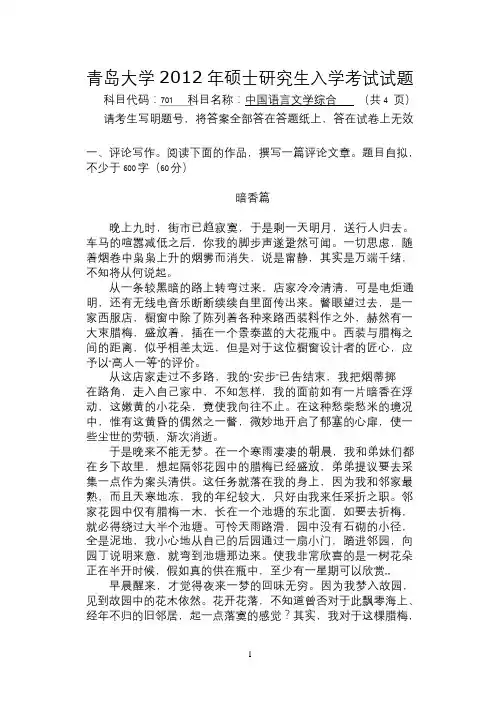
青岛大学2012年硕士研究生入学考试试题科目代码:701 科目名称:中国语言文学综合(共4页)请考生写明题号,将答案全部答在答题纸上,答在试卷上无效一、评论写作。
阅读下面的作品,撰写一篇评论文章。
题目自拟,不少于600字(60分)暗香篇晚上九时,街市已趋寂寞,于是剩一天明月,送行人归去。
车马的喧嚣减低之后,你我的脚步声遂跫然可闻。
一切思虑,随着烟卷中枭枭上升的烟雾而消失,说是甯静,其实是万端千绪,不知将从何说起。
从一条较黑暗的路上转弯过来,店家冷冷清清,可是电炬通明,还有无线电音乐断断续续自里面传出来。
瞥眼望过去,是一家西服店,橱窗中除了陈列着各种来路西装料作之外,赫然有一大束腊梅,盛放着,插在一个景泰蓝的大花瓶中。
西装与腊梅之间的距离,似乎相差太远,但是对于这位橱窗设计者的匠心,应予以“高人一等”的评价。
从这店家走过不多路,我的“安步”已告结束,我把烟蒂掷在路角,走入自己家中,不知怎样,我的面前如有一片暗香在浮动,这嫩黄的小花朵,竟使我向往不止。
在这种愁柴愁米的境况中,惟有这黄昏的偶然之一瞥,微妙地开启了郁塞的心扉,使一些尘世的劳顿,渐次消逝。
于是晚来不能无梦。
在一个寒雨凄凄的朝晨,我和弟妹们都在乡下故里,想起隔邻花园中的腊梅已经盛放,弟弟提议要去采集一点作为案头清供。
这任务就落在我的身上,因为我和邻家最熟,而且天寒地冻,我的年纪较大,只好由我来任采折之职。
邻家花园中仅有腊梅一木,长在一个池塘的东北面,如要去折梅,就必得绕过大半个池塘。
可怜天雨路滑,园中没有石砌的小径,全是泥地,我小心地从自己的后园通过一扇小门,踏进邻园,向园丁说明来意,就弯到池塘那边来。
使我非常欣喜的是一树花朵正在半开时候,假如真的供在瓶中,至少有一星期可以欣赏……早晨醒来,才觉得夜来一梦的回味无穷。
因为我梦入故园,见到故园中的花木依然。
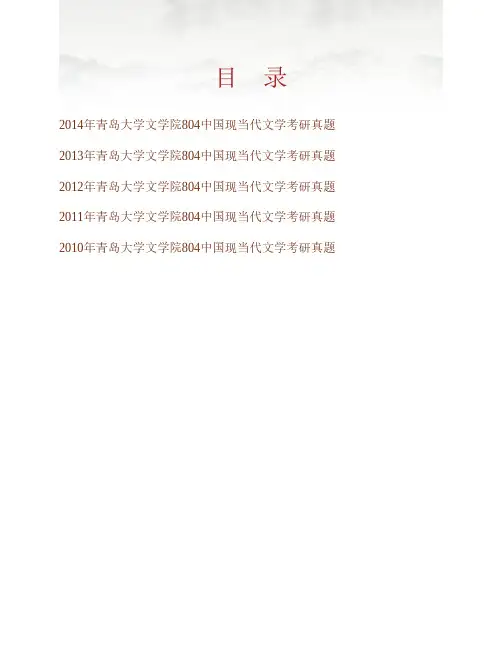
花开花落,不知道曾否对于此飘零海上、经年不归的旧邻居,起一点落寞的感觉?其实,我对于这棵腊梅,自小就极爱好,不忍攀折一枝。
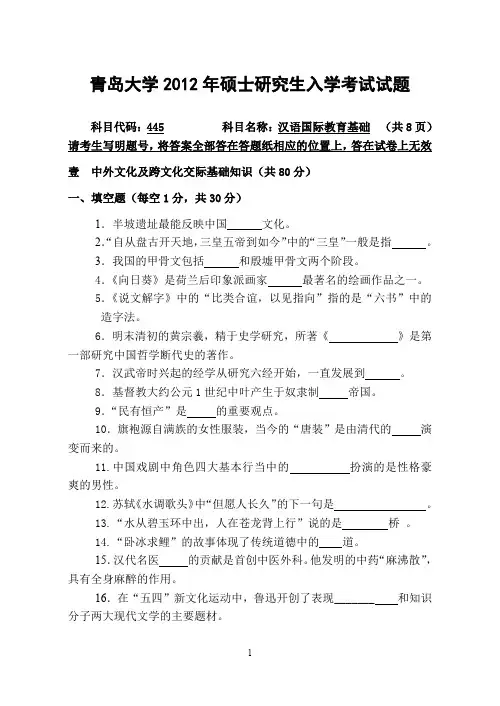
青岛大学2012年硕士研究生入学考试试题科目代码:445 科目名称:汉语国际教育基础 (共8页)请考生写明题号,将答案全部答在答题纸相应的位置上,答在试卷上无效 壹 中外文化及跨文化交际基础知识(共80分)一、填空题(每空1分,共30分)1.半坡遗址最能反映中国 文化。
2.“自从盘古开天地,三皇五帝到如今”中的“三皇”一般是指 。
3.我国的甲骨文包括 和殷墟甲骨文两个阶段。
4.《向日葵》是荷兰后印象派画家 最著名的绘画作品之一。
5.《说文解字》中的“比类合谊,以见指向”指的是“六书”中的造字法。
6.明末清初的黄宗羲,精于史学研究,所著《 》是第一部研究中国哲学断代史的著作。
7.汉武帝时兴起的经学从研究六经开始,一直发展到 。
8.基督教大约公元1世纪中叶产生于奴隶制 帝国。
9.“民有恒产”是的重要观点。
10.旗袍源自满族的女性服装,当今的“唐装”是由清代的 演变而来的。
11.中国戏剧中角色四大基本行当中的 扮演的是性格豪爽的男性。
12.苏轼《水调歌头》中“但愿人长久”的下一句是 。
13.“水从碧玉环中出,人在苍龙背上行”说的是 桥 。
14.“卧冰求鲤”的故事体现了传统道德中的 道。
15.汉代名医 的贡献是首创中医外科。
他发明的中药“麻沸散”,具有全身麻醉的作用。
16.在“五四”新文化运动中,鲁迅开创了表现_______ 和知识分子两大现代文学的主要题材。
伏羲皇帝神农金文母系氏族明夷待访录清代罗马孟子马褂净千里共婵娟赵州桥孝华佗农民17.中国图书分类和目录学的创始人是 。
18.中医传统的诊断方法是 。
19.中国是由 行使国家立法权。
20.中国书法史上的楷书四大家是指 、柳公权、欧阳询、赵孟頫。
21.北魏是鲜卑贵族建立的封建王朝,________帝积极学习汉族先进文化,促进了中国北方各民族大融合。
22.二十世纪前期中国京剧四大名旦是梅兰芳、程砚秋、尚小云和 。
23.杜甫是历史上最伟大的人民诗人之一,被后世尊为 。
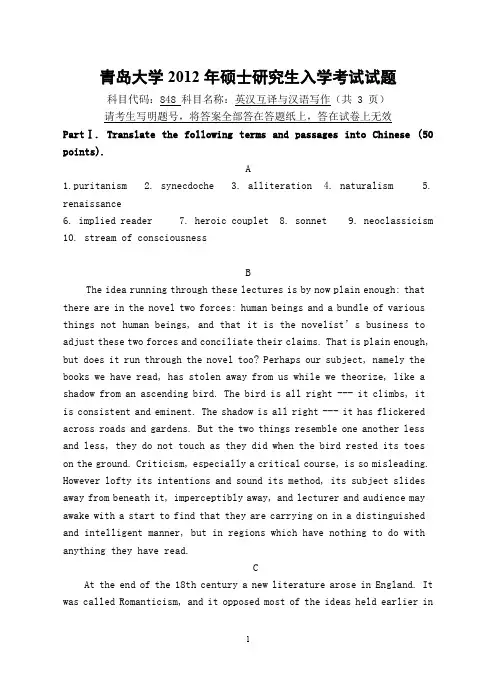
青岛大学2012年硕士研究生入学考试试题科目代码:848 科目名称:英汉互译与汉语写作(共 3 页)请考生写明题号,将答案全部答在答题纸上,答在试卷上无效PartⅠ. Translate the following terms and passages into Chinese (50 points).A1.puritanism2. synecdoche3. alliteration4. naturalism5. renaissance6. implied reader7. heroic couplet8. sonnet9. neoclassicism 10. stream of consciousnessBThe idea running through these lectures is by now plain enough: that there are in the novel two forces: human beings and a bundle of various things not human beings, and that it is the novelist’s business to adjust these two forces and conciliate their claims. That is plain enough, but does it run through the novel too? Perhaps our subject, namely the books we have read, has stolen away from us while we theorize, like a shadow from an ascending bird. The bird is all right --- it climbs, itis consistent and eminent. The shadow is all right --- it has flickered across roads and gardens. But the two things resemble one another less and less, they do not touch as they did when the bird rested its toeson the ground. Criticism, especially a critical course, is so misleading. However lofty its intentions and sound its method, its subject slides away from beneath it, imperceptibly away, and lecturer and audience may awake with a start to find that they are carrying on in a distinguished and intelligent manner, but in regions which have nothing to do with anything they have read.CAt the end of the 18th century a new literature arose in England. It was called Romanticism, and it opposed most of the ideas held earlier inthe century. Romanticism had its roots in a changed attitude toward mankind. The forerunners of the Romanticists argued that men are naturally good; society makes them bad. If the social world could be changed, all men might be happier. Many reforms were suggested: better treatment of people in prisons and almshouses; fewer death penalties for minor crimes; and an increase in charitable institutions.The Romanticists believed that all men are brothers and deserve the treatment to which human beings are by nature entitled. Every man has a right to life, liberty, and equal opportunity. These ideas had been well stated in the American Declaration of Independence. In France a revolution of the common people began in 1789. Many Englishmen hoped that the new democracies—France and the United States—would show the way for the rest of the world to follow. Along with democracy and individualism came other ideas. One of these ideas was that the simple, humble life is best. Another was that people should live close to nature. Thus the Romantic Movement was inherently anti-progress, if progress meant industrialization.PartⅡ. Translate the following passages into English (50 points).1我的生活曾经是悲苦的,黑暗的。