
高中英语 v.-ing形式用法讲解
- 格式:ppt
- 大小:12.53 MB
- 文档页数:78


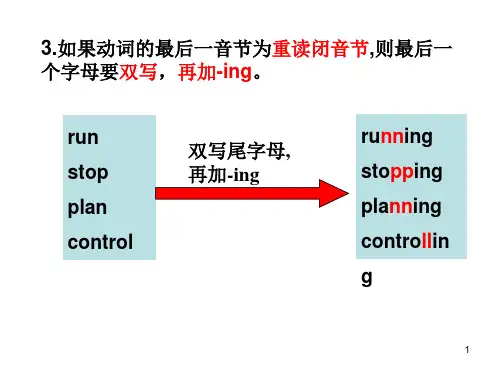

v-ing的用法v-ing的用法一.明确概念三大非谓语动词v-ing是什么?主动、进行被动、完成否定式、完成式、被动式、完成被动式、复合结构二.v-ing做主语1.动词做主语要加ing2.没用、没好处、没意义、浪费时间、浪费钱三.v-ing做宾语1.介词后的动词必须加ing2.少数及物动词后接动词时,后面所接的动词加ing避免错过少延期(avoid, miss, delay)建议完成多练习(suggest/advise, finish, practise)喜欢想象禁不住(prefer/enjoy/feel like, imagine, can’t help)承认否定与妒忌(admit, deny, envy)冒险逃脱莫原谅(risk,escape,forgive)忍受保持不介意(bear/stand, keep (on);mind)认真对待需坚持(get down to, stick to/insist on)注意欣赏要考虑(pay attention to, appreciate, consider)四.v-ing做定语可以转化为定语从句五.v-ing做表语区分ing和ed六.v-ing做宾语补足语感官动词、使役动词、想要和with1)感官动词:see hear watch feel notice observe keep find listen to look at2)使役动词:have get catch leave set①Soon they could see the steam rising fro m the wet clothes.②The missing boys were last seen playing near the river.七.v-ing做状语作时间条件原因让步状语事要位于句首且与后面用逗号隔开能转换为一个相应的状语从句作结果方式伴随状语时要位于句尾且与前面用逗号隔开有时也可以不用注意分词作状语时的逻辑主语(即分词动作的发出者)一般要与句中主语保持一致.〔这个是重点是考试和高考的常考点大家必须记住〕1)作时间状语eg. Walking in the street, I saw him.当我在街上走时,我看到他了.2)作条件状语e.g. Working hard, you will succeed.3)作原因状语e.g. Being ill, she stayed at home. 注意being是常用来作原因状语的4)作让步状语e.g. Having failed many times, he didn't lost heart.5)作结果状语e.g. His friend died, leaving him a lot of money,6)作方式状语e.g. Please answer the question using another way.7)作伴随状语可以转化为一个并列句e.g. He is standing there, singingThere was a terrible noise following the sudden burst of light.①The visiting minister expressed his satisfaction with the talks, adding that he had enjoyed his stay here.②European football is played in more than 80 countries,making it the most popular sport in the world.③Seeing from the top of the hill, we can find that the city looks more beautiful.Climbing to the top of the tower, we saw a magnificent view. 我们爬到塔顶后,看到了一片壮丽的景象。