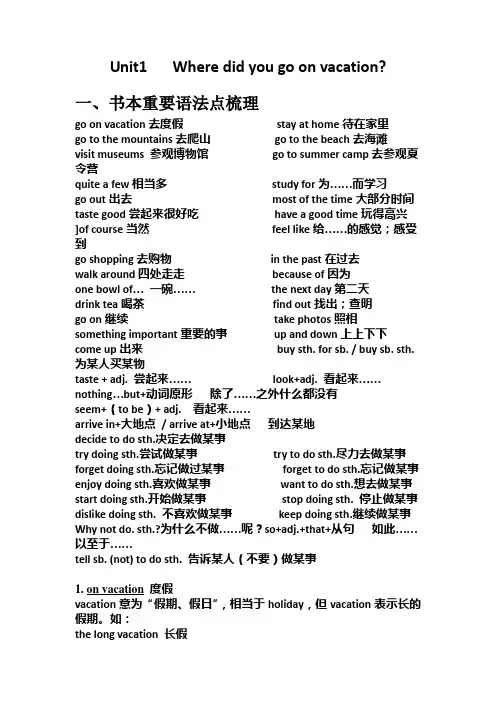
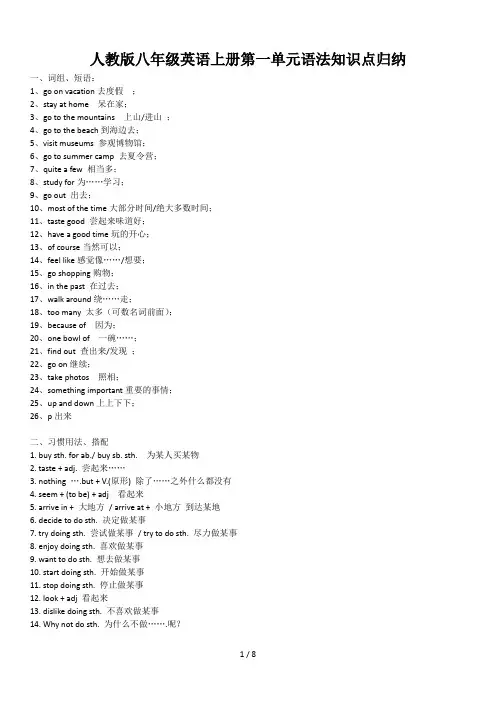
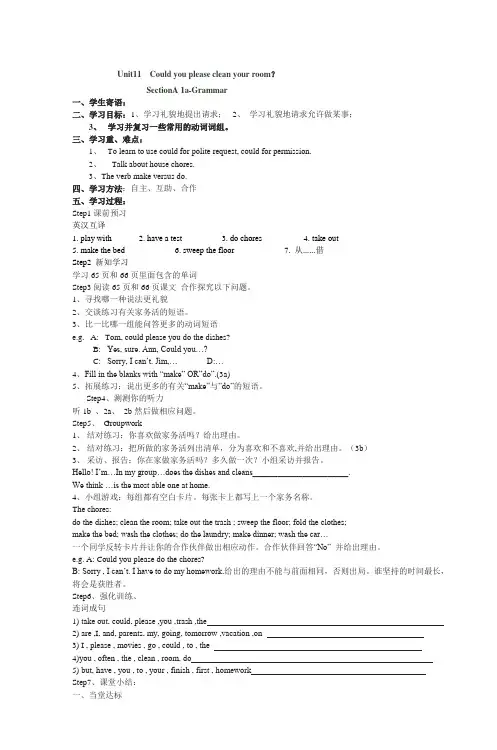
2013年秋八年级英语上册第一单元知识点(人教版)
- 格式:doc
- 大小:46.00 KB
- 文档页数:20
2013年秋八年级英语上册第一单元知识点(人教版)
最新(2013秋)人教版八年级上册英语知识点
Unit1 here did u g n vaatin?
一、重要短语归纳
1g n vaatin去度假 2sta at he待在家里
3g t the untains去爬 4g t the beah去海滩
visit useus 参观博物馆 6g t suer ap去参观夏令营
7quite a fe相当多 8stud fr为……而学习
9g ut出去 10st f the tie大部分时间
11taste gd尝起很好吃 12e up出,发生
13f urse当然 14feel lie给……的感觉;感受到
1g shpping去购物 16in the past在过去
17al arund四处走走 18beause f因为
19ne bl f… 一碗…… 20the next da第二天
21drin tea喝茶 22find ut找出;查明
23g n继续 24tae phts照相
2sething iprtant重要的事 26up and dn上上下下
27have a gd tie玩得高兴=en neself=have great fun
二、惯用法 1bu sth fr sb / bu sb sth为某人买某物
2taste + ad 尝起……
3l+ad 看起……
4nthing…but+动词原形 除了……之外什么都没有
See+(t be)+ ad 看起……
6arrive in+大地点 / arrive at+小地点 到达某地
7deide t d sth决定去做某事
8tr ding sth尝试做某事 / tr t d sth尽力去做某事
9frget ding sth忘记做过某事/ frget t d sth忘记做某事
10en ding sth喜欢做某事
11ant t d sth想去做某事
12start ding sth开始做某事
14stp ding sth 停止做某事
1dislie ding sth 不喜欢做某事
16eep ding sth继续做某事
17h nt d sth?为什么不做……呢?
18s+ad+that+从句 如此……以至于……
19tell sb (nt) t d sth 告诉某人(不要)做某事
三、词语辨析
1anhere 与 sehere
共同点:两者都是不定副词。
不同点:anhere,“在任何地方”,常用于否定句和疑问句中。I an’t find it anhere
sehere,“在某处,到某处”,常用于肯定句。 I lst e sehere near here
2与see有关的句式
1)see + 形容词 “看起…” u see happ tda
2)see + t d sth “似乎、好像做某事” I see t have a ld
3)It sees / seeed + 从句 “看起好像…;似乎…” It sees that n ne believe
u
4)see lie …“好像,似乎…” It sees lie a gd idea
3 deide:
1)deide t d sth决定做某事 The deide t visit the useu
2)deide + 疑问词 + 动词不定式 He an nt deide hen t leave
4 start与begin
共同点:start ding sth = start t d sth 开始,可与begin 互换 。He started
ding his her
不同点:但以下几种情况不能用begin:
1)创办,开办: He started a ne bshp last nth
2)机器开动: I an’t start ar
3)出发,动身: I ill start trr rning
ver:(prep)
1)“多于,超过,在…以上(表示数目、程度)”= re than
如: father is ver 40 ears ld
2)“在…之上,与物体垂直且不接触”,与 under 相反。 如:There is a ap ver the blabard
3)“超过”: I hear the nes ver the radi
4)“遍及”: I ant t travel all ver the rld
6 t an,t uh,uh t
1)t an “太多”,后接可数名词复数。
如:ther bught t an eggs esterda
2)t uh “太多”,修饰不可数名词或修饰动词作状语。
如:᠙e have t uh r t d
Dn’t tal t uh
3)uh t “太”,修饰形容词或副词。
如:᠙The hat is uh t big fr e
u’re aling uh t fast
小结:分辨三者的口诀: t uh, uh t, 用法区别看后头: uh 后接不可数, t 后修饰形或副。
t an 要记住,后面名词必复数。
7 beause:
1)beause f 介词短语,“因为,由于”,后接名词、代词或动名词,不能接句子。
如:He an’t tae a al beause f the rain
2)beause 连词,“因为”,引导状语从句,表示直接明确的原因或理由。
如:I dn’t bu the shirt beause it as t expensive 8tr t d sth与tr ding sth
tr t d sth:尽力做某事;
tr ding sth:尝试做某事。
如:I tried alling hi, but n ne ansered
I’ tring t learn English ell
9frget t d sth 与frget ding sth
1)frget t d sth忘记将要做的某事
如:Dn’t frget t lse the ind别忘了关窗户。
2)frget ding sth忘记做过某事
如:I frget lsing the ind我忘记已经关上窗户了。
10stp ding sth与stp t d sth
1)stp t d sth停下了去做另一事
如:I stpped t eat。我停下开始吃东西。
2)stp ding sth停止做某事
如:I stpped eating。我停止吃东西。
11sething,sebd,sene; anthing,anbd,anne
sething,sebd,sene:用于肯定句
anthing,anbd,anne:用于否定句、疑问句或条句
四、重要句子
1here did u g n vaatin?你去哪里度假了?
1)这是一个由疑问副词here引导的特殊疑问句。here用询问地点或场所,用于句首,其后跟一般疑问句。
如:here are u fr?
here des he live?
2)g n vaatin“去度假 ”
He ill g n vaatin ith his fail 他要和家人一起度假。
2Did u bu anthing speial?你买特别的东西了吗?
1)bu,vt,“购买”
如:It taes a lt f ne t bu a huse买一座房子要花一大笔钱。
2)bu sth fr sb =bu sb sth为某人买某物
如: father bught e a bie
= father bught a bie fr e
3)anthing speial“特别的东西”
注意:形容词修饰不定代词要后置
如:D u ant anthing else?你还想要其他什么吗?
3e t quite a fe phts there
1)tae phts照相,拍照
如:uld u help e tae se phts?
2)quite a fe“相当多”,后加可数名词复数
quite a little“相当多”,后加不可数名词
如:There are quite a fe peple in the restaurant
There is quite a little ater in the bttle
4Everthing tasted reall gd所有的东西尝起真的很好吃。 taste,连系动词,“尝起”,其后接形容词构成系表结构。
如:The fd tastes reall great
与之类似的词:sund(听起),feel(摸起),l(看起)。
H did u lie it?你觉得它怎么样?
用询问对方的观点或看法。
=hat did u thin f it?
=H did u feel abut it?
6Did u g shpping?你们去购物吗?
g shpping“去购物”
拓展:g ding“去做某事”,常用于表达从事某一体育活动或休闲活动。
如:g libing ; g sating (去滑冰); g hiing ; g sightseeing ; g fishing ; g
bating(去划船)
7I ent t a friend’s far in the untr ith fail我和家人一起去了乡下一个朋友的农场。
a friend’s far是名词所有格形式,“一个朋友的农场”。
拖展:名词的所有格:
名词的所有格主要表示所属关系,它有两种构成方式,即-’s 所有格和 f 所有格
一)’s格的用法
1)主要用于有生命的名词,其所有格构成为:单数名词后加’s;
复数名词以s作结尾的后加’,不以s作结尾的后加’s。
总结:复数名词以s结尾加’,其他都加’s