小学英语时态总结
- 格式:docx
- 大小:24.65 KB
- 文档页数:6
千里之行,始于足下。
第 1 页/共 6 页
小学英语时态总结
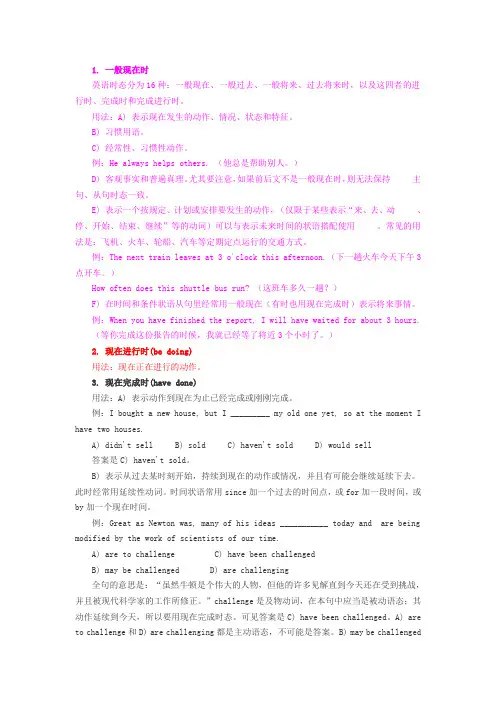
时态是语法体系中的重要组成部分,对于学习英语的学生来说尤为重要。在小学阶段,学生们初步学习了一些基本的英语时态,包括现在时、过去时和将来时。下面我将总结小学英语时态的相关内容。
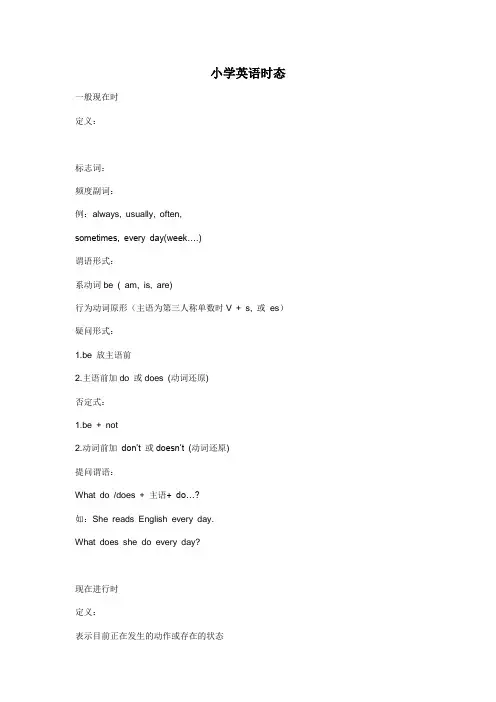
一、现在时态
现在时态主要表示目前正在进行的动作或状态,常见的有简单现在时和现在进行时。
1. 简单现在时
简单现在时用来表示经常发生的动作、真理性的陈述、习惯性的行为、常规和计划等。
肯定句结构:主语 + 动词原形 + 其他
例句:I go to school every day.(我每天上学。)
She likes playing basketball.(她喜欢打篮球。)
否定句结构:主语 + do/does + not + 动词原形 + 其他
例句:I do not play football.(我不踢足球。)
She does not like swimming.(她不喜欢游泳。)
一般疑问句结构:Do/Does + 主语 + 动词原形 + 其他
例句:Do you like ice cream?(你喜欢冰淇淋吗?) 锲而不舍,金石可镂。
Does he go to the park?(他去公园吗?)
2. 现在进行时
现在进行时表示目前正在进行的动作。
肯定句结构:主语 + am/is/are + 动词-ing + 其他
例句:I am watching TV now.(我正在看电视。)
They are playing soccer.(他们正在踢足球。)
否定句结构:主语 + am/is/are + not + 动词-ing + 其他
例句:I am not reading a book.(我没有在读书。)
She is not studying.(她没有在学习。)
一般疑问句结构:Am/Is/Are + 主语 + 动词-ing + 其他
例句:Are you eating lunch?(你在吃午饭吗?)
Is he playing the piano?(他在弹钢琴吗?)
二、过去时态
过去时态主要表示过去发生的动作或状态,常见的有简单过去时和过去进行时。
1. 简单过去时
简单过去时用来表示过去发生的动作或状态。
肯定句结构:主语 + 动词过去式 + 其他
千里之行,始于足下。
第 3 页/共 6 页
例句:I watched a movie yesterday.(昨天我看了一部电影。)
She danced at the party.(她在舞会上跳舞。)
否定句结构:主语 + did + not + 动词原形 + 其他
例句:I did not play tennis last week.(上周我没有打网球。)
She did not go to school yesterday.(昨天她没有去上学。)
一般疑问句结构:Did + 主语 + 动词原形 + 其他
例句:Did you have breakfast this morning?(你今早吃早饭了吗?)
Did they go to the zoo last weekend?(他们上周去了动物园吗?)
2. 过去进行时
过去进行时用来表示过去正在进行的动作。
肯定句结构:主语 + was/were + 动词-ing + 其他
例句:I was studying at that time.(那个时候我正在学习。)
They were playing games in the park.(他们那时在公园里玩游戏。)
否定句结构:主语 + was/were + not + 动词-ing + 其他
例句:He was not playing basketball yesterday.(昨天他没有在打篮球。)
She was not swimming in the river.(她没有在河里游泳。)
锲而不舍,金石可镂。
一般疑问句结构:Was/Were + 主语 + 动词-ing + 其他
例句:Were you sleeping when I called you?(我给你打电话的时候你在睡觉吗?)
Was she reading a book in the library?(她在图书馆里读书吗?)
三、将来时态
将来时态表示将来发生的动作或状态,常见的有一般将来时和将来进行时。
1. 一般将来时
一般将来时用来表示将来发生的动作或状态。
肯定句结构:主语 + will + 动词原形 + 其他
例句:I will go to the beach tomorrow.(明天我要去海滩。)
She will visit her grandparents next week.(下周她要去拜访她的祖父母。)
否定句结构:主语 + will + not + 动词原形 + 其他
例句:I will not watch TV tonight.(今晚我不会看电视。)
She will not go to the party.(她不会去参加派对。)
一般疑问句结构:Will + 主语 + 动词原形 + 其他
例句:Will you come to my birthday party?(你会来参加我的生日派对吗?) 千里之行,始于足下。
第 5 页/共 6 页
Will they travel to Japan next month?(他们下个月会去日本旅行吗?)
2. 将来进行时
将来进行时表示将来某个时间正在进行的动作。
肯定句结构:主语 + will be + 动词-ing + 其他
例句:I will be studying at this time tomorrow.(明天这个时候我将会在学习。)
They will be playing basketball in the park.(他们将在公园里打篮球。)
否定句结构:主语 + will + not + be + 动词-ing + 其他
例句:He will not be sleeping when we arrive.(当我们到达时,他不会在睡觉。)
She will not be cooking dinner at that time.(那个时候她不会在做晚饭。)
一般疑问句结构:Will + 主语 + be + 动词-ing + 其他
例句:Will you be waiting for me at the airport?(你会在机场等我吗?)
Will they be swimming in the pool later?(他们一会儿会在泳池里游泳吗?)
通过上述的总结和例句,我希望能够帮到你对小学英语时态的学习有所帮助。在实际运用中,要注意根据具体的语境和需要选择合适的时态,提高语言锲而不舍,金石可镂。
表达的准确性和流畅度。同时,多做练习和阅读,增加对时态的熟悉度和运用能力。