
八年级下册英语(冀教版)教学课件 Unit 7 Lesson 37
- 格式:ppt
- 大小:2.04 MB
- 文档页数:14


1 / 3
Lesson37重点句子讲解
1. Have you ever been abroad, Danny? 丹尼,你曾经出过国吗?
abroad 副词,意为“在国外,到国外;到处,广泛”,其反义词是at home。
be abroad“出国”,相当于go abroad。
如:He went abroad for study. 他出国学习去了。
Have you ever been abroad? 你曾经出过国吗?
The news soon spreads abroad. 消息很快传开了。
2. Have you been to any other countries in Asia? 你去过亚洲其他的国家吗?
I have been to China twice .我去过中国两次。
have been to 后跟地点名词,表示“去过某地”,现在已回来了。如:
Have you ever been to Beijing? 你到过北京吗?
He has been to Guilin many times. 他去桂林多次了。
表示“未曾到过某地”用have/has never been to+地点。如:
Tom has never been to China. 汤姆未曾到过中国。
【注意】
have gone to 是“去某地了”的意思,主语一般是第三人称,表示“去某地了,人不在这儿”。
Jim has gone to Shanghai. 吉姆到上海去了。
have/has been in+地点名词,表示某人待在某地,经常与构成的时间状语连用。如:
He has been in Beijing for two days. 他来北京两天了。
3. But maybe I will to Japan one day. 但是或许将来有一天我会去日本。
Japan n.日本。如:
2 / 3
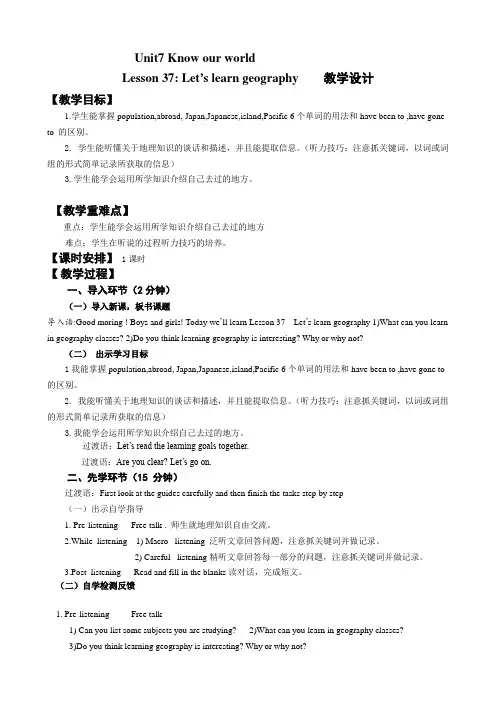
Unit7 Know our world
Lesson 37: Let’s learn geography 教学设计
【教学目标】
1.学生能掌握population,abroad, Japan,Japanese,island,Pacific 6个单词的用法和have been to ,have gone
to 的区别。
2. 学生能听懂关于地理知识的谈话和描述,并且能提取信息。(听力技巧:注意抓关键词,以词或词组的形式简单记录所获取的信息)
3.学生能学会运用所学知识介绍自己去过的地方。
【教学重难点】
重点:学生能学会运用所学知识介绍自己去过的地方
难点:学生在听说的过程听力技巧的培养。
【课时安排】 1课时
【教学过程】
一、导入环节(2分钟)
(一)导入新课,板书课题
导入语:Good moring ! Boys and girls! Today we’ll learn Lesson 37 Let’s learn geography 1)What can you learn
in geography classes? 2)Do you think learning geography is interesting? Why or why not?
(二) 出示学习目标
1我能掌握population,abroad, Japan,Japanese,island,Pacific 6个单词的用法和have been to ,have gone to
的区别。
2. 我能听懂关于地理知识的谈话和描述,并且能提取信息。(听力技巧:注意抓关键词,以词或词组的形式简单记录所获取的信息)
3.我能学会运用所学知识介绍自己去过的地方。
过渡语:Let’s read the learning goals together.
过渡语:Are you clear? Let’s go on.
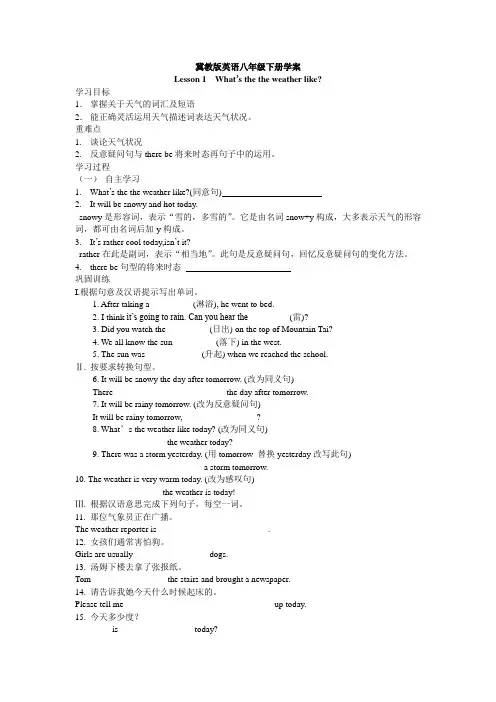
冀教版英语八年级下册学案
Lesson 1 What’s the the weather like?
学习目标
1. 掌握关于天气的词汇及短语
2. 能正确灵活运用天气描述词表达天气状况。
重难点
1. 谈论天气状况
2. 反意疑问句与there be将来时态再句子中的运用。
学习过程
(一) 自主学习
1. What’s the the weather like?(同意句)
2. It will be snowy and hot today.
snowy是形容词,表示“雪的,多雪的”。它是由名词snow+y构成,大多表示天气的形容词,都可由名词后加-y构成。
3. It’s rather cool today,isn’t it?
rather在此是副词,表示“相当地”。此句是反意疑问句,回忆反意疑问句的变化方法。
4. there be句型的将来时态
巩固训练
I.根据句意及汉语提示写出单词。
1. After taking a _________ (淋浴), he went to bed.
2. I think it’s going to rain. Can you hear the _________(雷)?
3. Did you watch the _________ (日出) on the top of Mountain Tai?
4. We all know the sun _________ (落下) in the west.
5. The sun was ____________ (升起) when we reached the school.
Ⅱ. 按要求转换句型。
6. It will be snowy the day after tomorrow. (改为同义句)
1 / 3
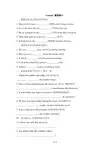
Lesson1 随堂练习
一、根据句意及汉语提示写单词。
1. Mary loves to have a __________ (淋浴) after taking exercise.
2. As we all know, the sun __________ (升起) in the east.
3. We are going to see the __________ (日出) in the hills tomorrow.
4. These little girls are scared of __________ (雷声).
5. Nobody knows the __________ (准确的) number of horses.
二、用所给单词的正确形式填空。
1. The sun __________(rise) at 6:27 yesterday morning.
2. Have you ever __________(hear) the strange story?
3. It will be __________(wind) tomorrow morning.
4. Look at the cloud! It is going to __________(rain).
5. Jenny is __________(scare) of letting us down.
三、按要求完成下列句子,每空一词。
1. What’s the weather like today? (改为同义句)
__________ __________ the weather today?
2. There will be a thunderstorm this afternoon. (改为一般疑问句)
__________ __________ __________ a thunderstorm this afternoon?