with的伴随状语用法
- 格式:docx
- 大小:37.29 KB
- 文档页数:2
with的伴随状语用法
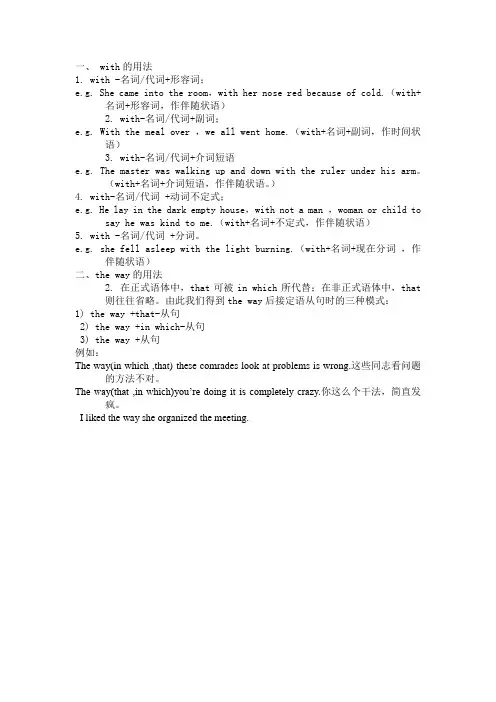
With作为介词,常用来引导伴随状语从句,表示某种伴随的关系。
它用于句子中,常放在句首或句中,连接两个并列的分句,表示两个动作或状态同时发生。
下面是关于with的伴随状语用法的一些相关内容。
1. 表示伴随的状态或特征:
- He walked down the street with a big smile on his face. (他脸上带着灿烂的微笑走在街上。
)
- She entered the room with confidence. (她自信地走进了房间。
) - The room was filled with the aroma of freshly brewed coffee. (房间里弥漫着新鲜煮好的咖啡的香气。
)
- The children lay in bed with eyes wide open. (孩子们睁大眼睛躺在床上。
)
2. 表示伴随的行为或动作:
- He walked into the room with a book in his hand. (他手里拿着一本书走进了房间。
)
- She sat by the window with her laptop open. (她坐在窗边,打开了她的笔记本电脑。
)
- The girl sang along with the music. (那个女孩随着音乐唱起来。
)
- They laughed with joy and excitement. (他们高兴兴奋地笑了起来。
)
3. 表示伴随的情感或心理状态:
- He looked at her with love in his eyes. (他怀着爱意看着她。
)
- She listened to the news with concern. (她关切地听着新闻。
)
- They cheered with relief after the exam was over. (考试结束后,他们如释重负地欢呼起来。
)
- I watched the movie with interest. (我感兴趣地看着电影。
)
4. 表示伴随的时间:
- She worked late into the night with a cup of coffee by her side. (她加班到深夜,在一边放了一杯咖啡。
)
- He stayed up all night with his friends. (他跟他的朋友整夜不睡。
)
- The kids played in the park with the sun shining brightly overhead. (孩子们在阳光明媚的头顶下在公园里玩耍。
)
- The concert lasted for hours with the audience clapping and cheering throughout. (音乐会持续了几个小时,观众一直拍手叫好。
)
5. 表示伴随的方式或手段:
- He wrote with a pen on a piece of paper. (他用钢笔在纸上写字。
)
- She painted with a brush and canvas. (她用刷子和画布绘画。
)
- He cooked the meal with love and care. (他用爱和关心煮饭。
)
- They solved the problem with teamwork and collaboration. (他们
通过团队合作解决了问题。
)
总结起来,with的伴随状语用法多种多样,可以表示伴随的状态、行为、情感、时间、方式等。
在使用时要注意根据句子的语境选择合适的用法。