
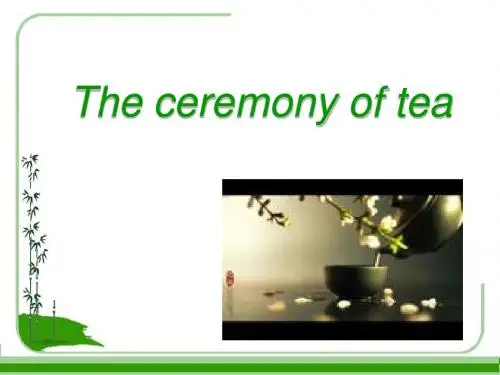
The ceremony of tea
- 格式:ppt
- 大小:653.50 KB
- 文档页数:11

中国茶道礼仪英文介绍China Tea Ceremony EtiquetteChina is known for its rich cultural heritage, and one aspect that stands out is the tradition of tea ceremony. The Chinese tea ceremony is a time-honored practice that dates back thousands of years and is deeply rooted in Chinese traditions and values. It is not only about enjoying a cup of tea but also about the art of preparing and serving tea while displaying grace, respect, and mindfulness. In this article, we will explore the essence of Chinese tea ceremony etiquette.1. Introduction to Chinese Tea CeremonyThe Chinese tea ceremony, also known as chadō or chayi, is a ceremonial way of preparing and serving tea. It has been appreciated and cherished by the Chinese people for generations as a way to showcase hospitality, respect, and gratitude. The ceremony involves several elements, including tea selection, water preparation, tea brewing, tea serving, and tea drinking. Each step is executed with precision and grace, making it a beautiful and harmonious experience.2. The Art of Tea SelectionIn Chinese tea ceremony, the selection of tea is of utmost importance. High-quality tea leaves with distinct flavors and aromas are chosen to ensure a delightful experience. Different types of tea, such as green tea, oolong tea, black tea, and pu-erh tea, hold unique characteristics and are suited for various occasions and seasons. The tea leaves are typically presented in adecorative container or bamboo tea caddy, emphasizing the aesthetics of the ceremony.3. Water PreparationWater, as the main ingredient in tea, plays a vital role in the Chinese tea ceremony. Special attention is given to the quality and temperature of the water. Traditionally, pure and clean water from natural sources, such as springs or mountain streams, is preferred. The water is heated to the appropriate temperature, which varies depending on the type of tea being served. The temperature is carefully controlled to bring out the best flavors and aromas of the tea leaves.4. Tea BrewingTea brewing is considered an art form in Chinese tea ceremony. The tea leaves are placed in a teapot or gaiwan, and hot water is poured over them. The brewing time is meticulously controlled to extract the flavors and essence of the tea without overpowering it. The tea is poured into small ceramic cups, which are often held with both hands as a sign of respect and reverence. The process is carried out with serenity and precision, creating a tranquil and meditative atmosphere.5. Tea ServingThe act of serving tea is a gesture of hospitality and respect in Chinese culture. The host carefully pours tea into the cups, starting with the eldest or most distinguished guest. The cups are filled to around 70-80% capacity, leaving room for the aroma to develop. The host pays close attention to eachguest, ensuring their cups are never empty. Pouring tea for others is an opportunity to express appreciation and gratitude.6. Tea DrinkingTea drinking in the Chinese tea ceremony is a moment to savor and appreciate the flavors, aromas, and textures of the tea. It is customary to hold the cup with both hands, gently inhale the fragrance, and take small sips, allowing the tea to linger on the palate. Guests may engage in quiet conversation or simply enjoy the peaceful ambiance created by the ceremony. It is impolite to slurp or make loud noises while drinking tea, as it may disrupt the tranquility of the moment.7. ConclusionThe Chinese tea ceremony is a testament to the elegance, mindfulness, and respect deeply ingrained in Chinese culture. It is not just about the tea itself but also about the rituals, gestures, and values associated with it. The ceremony promotes a sense of harmony, connection, and gratitude among participants. As tea continues to be cherished and celebrated in China and around the world, the art of the Chinese tea ceremony serves as a reminder of the beauty and significance of ancient traditions in our modern lives.In conclusion, the Chinese tea ceremony is a captivating fusion of art, culture, and tea. Its meticulous attention to detail, graceful gestures, and respect for nature and others make it a truly unique and cherished practice. Embracing the essence of Chinese tea ceremony etiquette allows one to experience the beauty and tranquility of this ancient tradition.。

Chinese tea culture is a rich and ancient tradition that has been an integral part of Chinese society for thousands of years.It is not merely about the beverage itself but encompasses a philosophy,a way of life,and a form of art.Historical BackgroundThe history of tea in China dates back to the Shang Dynasty,around1000BCE.It was initially consumed as a medicinal herb.Over time,tea became a popular beverage among the Chinese,and by the Tang Dynasty,it was a staple in daily life.The famous Chinese tea scholar,Lu Yu,compiled the first complete treatise on tea,The Classic of Tea,during the Tang Dynasty.Tea CeremoniesTea ceremonies,or Cha Dao in Chinese,are an essential part of tea culture.They are not just rituals but a spiritual practice that emphasizes harmony,respect,purity,and tranquility.The ceremony involves a series of steps,including warming the tea bowl, appreciating the aroma,and sharing the tea among participants.Types of TeaChina is renowned for its diverse types of tea.The main categories include green tea, black tea,oolong tea,white tea,yellow tea,dark tea,and flowerscented tea.Each type has its unique characteristics and preparation methods.For instance,green tea is known for its fresh and grassy flavor,while Puerh,a type of dark tea,is aged and has a complex, earthy taste.Tea ProductionThe process of tea production is a meticulous art form.It involves several stages such as plucking,withering,rolling,oxidizing,and drying.The techniques used can vary significantly depending on the type of tea being produced,affecting the final flavor and aroma.Tea Sets and UtensilsThe Chinese tea ceremony is incomplete without the proper tea set.Traditional tea sets include a teapot,tea cups,a tea tray,and various utensils such as a tea scoop,tea strainer, and tea towel.The choice of materials for these items,such as clay,porcelain,or glass, can also influence the taste of the tea.Health BenefitsTea is not only enjoyed for its taste but also for its health benefits.It is rich in antioxidants and has been associated with numerous health benefits,including improved heart health,reduced risk of certain cancers,and support for a healthy immune system.Cultural SignificanceIn Chinese culture,tea is often used as a symbol of hospitality and friendship.It is customary to offer tea to guests as a sign of respect.Furthermore,tea is deeply intertwined with Chinese philosophy and poetry,reflecting the harmony between humans and nature.Modern Tea CultureWhile traditional tea culture continues to be revered,modern Chinese society has also embraced new ways of enjoying tea.Teahouses and tea bars have become popular social spaces where people can enjoy a variety of teabased drinks,often infused with fruits or spices.ConclusionChinese tea culture is a profound and multifaceted aspect of Chinese heritage.It offers a unique blend of history,philosophy,art,and health consciousness that continues to captivate and influence people around the world.Whether enjoyed in a traditional tea ceremony or a modern teahouse,the essence of Chinese tea culture lies in its ability to bring people together and promote a sense of wellbeing and tranquility.。
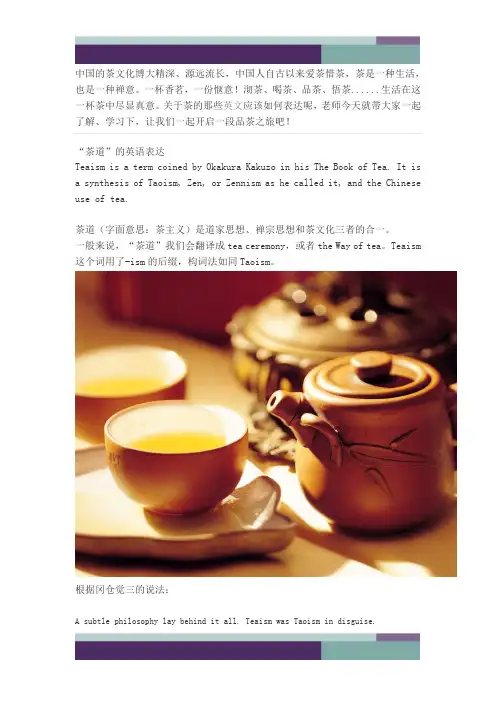
中国的茶文化博大精深、源远流长,中国人自古以来爱茶惜茶,茶是一种生活,也是一种禅意。
一杯香茗,一份惬意!沏茶、喝茶、品茶、悟茶......生活在这一杯茶中尽显真意。
关于茶的那些英文应该如何表达呢,老师今天就带大家一起了解、学习下,让我们一起开启一段品茶之旅吧!“茶道”的英语表达Teaism is a term coined by Okakura Kakuzo in his The Book of Tea. It is a synthesis of Taoism, Zen, or Zennism as he called it, and the Chinese use of tea.茶道(字面意思:茶主义)是道家思想、禅宗思想和茶文化三者的合一。
一般来说,“茶道”我们会翻译成tea ceremony,或者the Way of tea。
Teaism 这个词用了-ism的后缀,构词法如同Taoism。
根据冈仓觉三的说法:A subtle philosophy lay behind it all. Teaism was Taoism in disguise.茶道的背后隐含着一种哲学思想。
茶道其实就是道家思想的一种演化。
那么,学习、表演茶道的人,就是teaist,teaist必须有一种teamind,能欣赏并感受茶道中的哲学和美感体验。
后缀ism本身就是一个词,表示“主义、论、说”,那么可以用-ism构成的词有:absolutism,绝对主义;absurdism,荒诞主义,中心思想就是人类所有寻求真理和意义的行动都是荒诞的、无效的——有句话说,人类一思考,上帝就发笑,说的就是这个吧。
一、六大茶类术语绿茶green tea 、红茶 black tea、黑茶 dark tea、乌龙/青茶 oolong tea、黄茶 yellow tea、白茶 white tea二、茶叶分类术语(1)绿茶分类术语: Steamed green tea蒸青绿茶、Powered green tea 粉末绿茶、Silver needle green tea 银针绿茶、Lightly rubbed green tea 原形绿茶、Curled green tea 松卷绿茶、Sword shaped green tea剑片绿茶、Twisted green tea 条形绿茶、Pearled green tea 圆珠绿茶(2)普洱茶分类术语:Age-puer 陈放普洱、pile-fermented puer 渥堆普洱(3)乌龙茶分类术语:White oolong 白茶乌龙、twisted oolong 条形乌龙、Pelleted oolong、球形乌龙 roasted oolong、熟火乌龙、White tipped oolong 白毫乌龙(4)红茶分类术语:Unshredded black tea 功夫红茶、shredded black tea:碎形红茶(5)熏花茶分类术语:Scented green tea 熏花绿茶、scented puer tea 熏花普洱、Scented oolong tea 熏花乌龙、scented black tea 熏花红茶、Jasmine scented green tea 熏花茉莉三、滋味术语回甘sweet after taste——回味较佳,略有甜感。

为茶代言英语作文Tea has been a cherished beverage for centuries, transcending cultural boundaries and captivating the hearts and palates of people around the world. As a versatile and complex drink, tea holds a unique place in the tapestry of human civilization, serving as a symbol of hospitality, a catalyst for social interaction, and a source of profound cultural and personal significance. In this essay, I will endeavor to speak on behalf of this remarkable elixir, exploring its rich history, diverse varieties, and the multifaceted ways in which it has enriched the human experience.The origins of tea can be traced back to ancient China, where it was first cultivated and revered as a medicinal and spiritual beverage. The legend of the Emperor Shennong, who is credited with discovering the wonders of tea, has been passed down through generations, captivating the imaginations of tea enthusiasts worldwide. As the practice of tea cultivation and consumption spread throughout Asia, it evolved into a sophisticated art form, with each region developing its own unique brewing methods, flavor profiles, and cultural traditions.The diversity of tea is truly remarkable, with a wide array of varieties, each with its own distinct characteristics and nuances. From the delicate and fragrant green teas of Japan to the robust and earthy black teas of India, the tea plant (Camellia sinensis) has been transformed into a veritable cornucopia of flavors, aromas, and health benefits. The subtle differences in cultivation, processing, and blending techniques give rise to an endless array of tea types, each with the power to captivate the senses and transport the drinker to a different time and place.Beyond its sheer gustatory appeal, tea has long been revered for its myriad health benefits. Scientific research has consistently demonstrated the potent antioxidant properties of tea, which can help to protect the body against the damaging effects of free radicals and reduce the risk of various chronic diseases. The unique phytochemicals found in tea, such as polyphenols and L-theanine, have been linked to improved cognitive function, enhanced immune system performance, and even potential anti-cancer properties.The ritual of tea drinking has also played a pivotal role in the cultural and social fabric of many societies. In Japan, the centuries-old tradition of the tea ceremony, or "chanoyu," elevates the act of tea preparation and consumption into a profound artistic and spiritual experience. The meticulous attention to detail, the harmoniousintegration of various elements, and the sense of mindfulness and tranquility cultivated during the ceremony reflect the deep reverence and respect that the Japanese people hold for this ancient practice.Similarly, in the United Kingdom, the tradition of afternoon tea has become an integral part of the national identity, a time-honored custom that brings people together to indulge in a moment of respite and socialization. The ritual of brewing a perfect cup of tea, accompanied by delicate finger sandwiches, scones, and decadent pastries, has become a cherished pastime that transcends class boundaries and serves as a testament to the enduring appeal of this humble beverage.Beyond its cultural significance, tea has also played a crucial role in shaping global trade and economic dynamics. The tea trade, which flourished along the historic Silk Road and later through the colonial expansions of European powers, has had a profound impact on the geopolitical landscape, influencing the rise and fall of empires and the fortunes of countless individuals and communities. The quest for the finest teas, the establishment of lucrative trading routes, and the fierce competition between various tea-producing nations have all contributed to the rich tapestry of tea's historical narrative.In the modern era, the global tea industry continues to evolve, adapting to changing consumer preferences and environmentalchallenges. Sustainable farming practices, ethical sourcing, and the emergence of specialty tea markets have all contributed to a renewed appreciation for the complexities and nuances of this ancient beverage. As consumers become more discerning and conscious of the origins and production methods of their tea, the industry has responded with a greater emphasis on quality, traceability, and environmental stewardship.Moreover, the versatility of tea has expanded beyond its traditional role as a hot beverage. The rise of iced tea, tea-infused cocktails, and innovative tea-based culinary applications have further solidifiedtea's position as a versatile and adaptable ingredient, capable of captivating the palates of a wide range of consumers. From the refreshing and invigorating qualities of a perfectly brewed iced tea to the sophisticated and complex flavors of a tea-infused dessert, the possibilities for tea's culinary applications are endless.In conclusion, tea is a remarkable elixir that deserves to be celebrated and championed for its rich history, diverse varieties, and multifaceted contributions to human culture and well-being. As we continue to explore the depths of this ancient beverage, we uncover new layers of complexity, nuance, and appreciation, each sip offering a window into the storied past and promising future of this remarkable drink. Whether enjoyed in the tranquility of a traditional tea ceremony or savored as a refreshing companion to a modernlifestyle, tea remains a testament to the enduring power of the natural world to captivate, nourish, and enrich the human experience.。