
一般过去时、现在完成时与一般现在时的区别 (1)
- 格式:ppt
- 大小:866.50 KB
- 文档页数:34

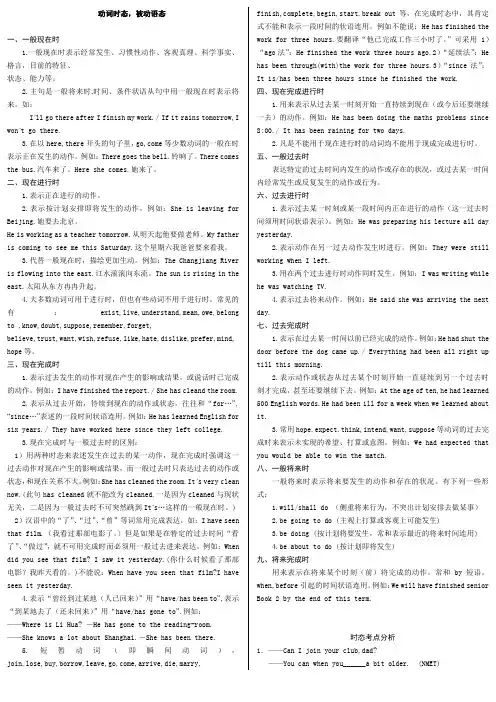
动词时态,被动语态一、一般现在时1.一般现在时表示经常发生、习惯性动作、客观真理、科学事实、格言,目前的特征、状态、能力等。
2.主句是一般将来时,时间、条件状语从句中用一般现在时表示将来。
如:I⨯ll go there after I finish my work./ If it rains tomorrow,I won⨯t go there.3.在以here,there开头的句子里,go,come等少数动词的一般在时表示正在发生的动作。
例如:There goes the bell.铃响了。
There comes the bus.汽车来了。
Here she comes.她来了。
二、现在进行时1.表示正在进行的动作。
2.表示按计划安排即将发生的动作。
例如:She is leaving for Beijing.她要去北京。
He is working as a teacher tomorrow.从明天起他要做老师。
My father is coming to see me this Saturday.这个星期六我爸爸要来看我。
3.代替一般现在时,描绘更加生动。
例如:The Changjiang River is flowing into the east.江水滚滚向东流。
The sun is rising in the east.太阳从东方冉冉升起。
4.大多数动词可用于进行时,但也有些动词不用于进行时。
常见的有:exist,live,understand,mean,owe,belong to ,know,doubt,suppose,remember,forget,believe,trust,want,wish,refuse,like,hate,dislike,prefer,mind, hope等。
三、现在完成时1.表示过去发生的动作对现在产生的影响或结果,或说话时已完成的动作。
例如:I have finished the report./ She has cleand the room.2.表示从过去开始,待续到现在的动作或状态,往往和“for…”, “since…”表述的一段时间状语连用。

区分英语中的现在完成时与一般过去式
现在完成时和一般过去式在英语中都是用来描述过去发生的动作或状态,但它们在用法和意义上存在一些明显的区别。
1.时间范围:一般过去式只关注过去某个时间点的动作或状态,与现在无关。
例如,“我昨天去了商店”(I went to the store yesterday)。
而现在完成时则关注从过去某个时间开始,一直持续到现在或者刚刚结束的动作或状态。
例如,“我已经学习了三个小时了”(I have studied for three hours)。
2.影响或结果:一般过去式仅仅描述过去发生的事情,不涉及对现在的影响
或结果。
而现在完成时则强调过去的动作对现在造成的影响或结果。
例如,“我昨天买了这本书”(I bought this book yesterday,只是描述过去购买的动作)和“我已经买了这本书了”(I have bought this book,强调现在已经拥有这本书的事实)。
3.与时间状语的连用:一般过去式可以与表示绝对过去的时间状语连用,例
如“昨天”、“上周”等。
而现在完成时则不能与这些表示绝对过去的时间状语连用,它通常与表示一段时间的时间状语连用,例如“for + 时间段”
或“since + 时间点”。
4.动词形式:现在完成时的动词形式为“have/has + 过去分词”,而一般过
去式的动词形式为“动词的过去式”。
综上所述,现在完成时和一般过去式的主要区别在于它们的时间范围、对现在的影响或结果、与时间状语的连用以及动词形式的不同。
在使用时需要根据具体语境选择合适的时态。

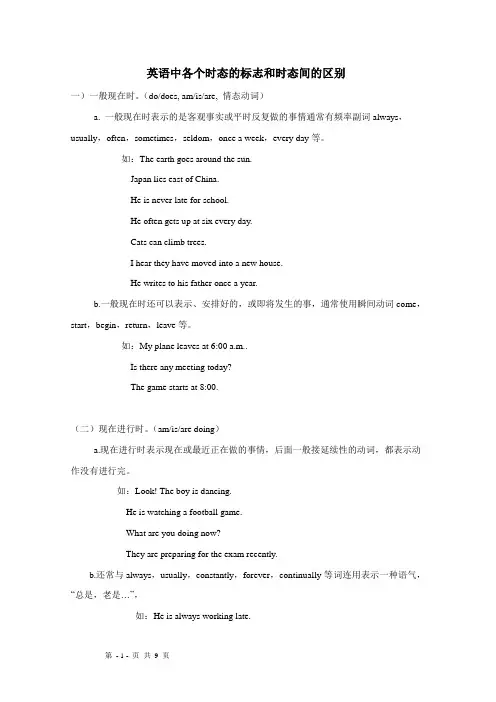
英语中各个时态的标志和时态间的区别一)一般现在时。
(do/does, am/is/are, 情态动词)a. 一般现在时表示的是客观事实或平时反复做的事情通常有频率副词always,usually,often,sometimes,seldom,once a week,every day等。
如:The earth goes around the sun.Japan lies east of China.He is never late for school.He often gets up at six every day.Cats can climb trees.I hear they have moved into a new house.He writes to his father once a year.b.一般现在时还可以表示、安排好的,或即将发生的事,通常使用瞬间动词come,start,begin,return,leave等。
如:My plane leaves at 6:00 a.m..Is there any meeting today?The game starts at 8:00.(二)现在进行时。
(am/is/are doing)a.现在进行时表示现在或最近正在做的事情,后面一般接延续性的动词,都表示动作没有进行完。
如:Look! The boy is dancing.He is watching a football game.What are you doing now?They are preparing for the exam recently.b.还常与always,usually,constantly,forever,continually等词连用表示一种语气,“总是,老是…”,如:He is always working late.Why are you always making this kind of mistake?He is continually getting into trouble with the police.c.后面接暂转动词时表示正在反复的动作,或表示将来时(一般只有go, come, leave 和have)如:The monkeys are jumping.They are hitting the tree.表将来:We are going swimming this afternoon.They are leaving here.They are having an English class tomorrow.试比较:He is doing his homework until his parents come to take him home.He will do his homework until his parents come to take him home.注:表示知觉、感觉、看法、认识、情感或愿望的动词和大部分暂转动词不能用现在进行时。