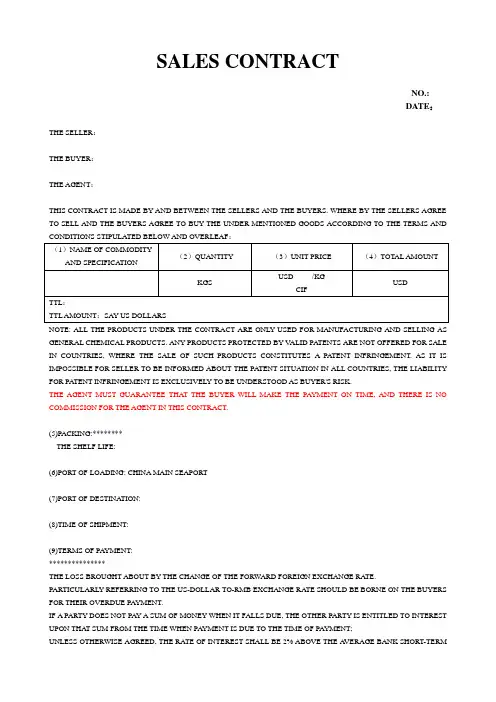
合同翻译英文模板
- 格式:docx
- 大小:16.06 KB
- 文档页数:6
合同翻译英文模板
Contract Translation Template。
Contract translation is a specialized field that
requires a deep understanding of legal terminology and
concepts in both the source and target languages. When
translating a contract, it is crucial to ensure that the
translated document accurately reflects the intentions of
the parties involved and complies with the legal
requirements of the target jurisdiction. This article
provides a template for translating contracts from one
language to another, outlining the key steps and
considerations to keep in mind.
Step 1: Understand the Source Contract。
The first step in translating a contract is to
thoroughly understand the source document. This involves
not only a linguistic analysis but also a comprehensive
understanding of the legal implications and obligations set out in the contract. It is important to identify the
parties involved, the subject matter of the contract, the
rights and responsibilities of each party, and any specific
terms or conditions that may have legal implications. This
understanding will form the basis for the accurate
translation of the contract into the target language.
Step 2: Identify Legal and Cultural Differences。
Once the source contract has been thoroughly understood,
the next step is to identify any legal or cultural
differences between the source and target languages and
jurisdictions. Legal systems and business practices can
vary significantly from one country to another, and it is
essential to be aware of these differences when translating
a contract. For example, the legal requirements for a valid
contract, the interpretation of specific terms, and the
enforceability of certain clauses may differ between
jurisdictions. Similarly, cultural nuances and business
customs can impact the interpretation of a contract, and
these must be taken into account during the translation
process.
Step 3: Select the Right Translator。
Given the complex nature of contract translation, it is
essential to select a translator who is not only fluent in
both the source and target languages but also has a deep
understanding of legal terminology and concepts. Ideally,
the translator should have experience in translating
contracts and be familiar with the legal systems of both
the source and target jurisdictions. It is also important
to consider the translator's qualifications and
certifications, as well as their track record in delivering
accurate and reliable translations.
Step 4: Translate the Contract。
Once the right translator has been selected, the actual
translation process can begin. The translator should start
by creating a draft translation of the contract, focusing
on accurately conveying the legal meaning and intent of the
source document in the target language. This may involve
using specialized legal dictionaries and reference materials to ensure the correct translation of legal terms
and concepts. The translator should also pay attention to
the structure and formatting of the contract, as well as
any numbering or referencing systems used, to ensure that
the translated document mirrors the original as closely as
possible.
Step 5: Review and Edit the Translation。
After the initial translation is complete, it is
crucial to review and edit the document to ensure its
accuracy and consistency. This may involve comparing the
translated contract with the original to identify any
discrepancies or omissions, as well as checking for
grammatical errors, typos, and other linguistic issues. It
is also important to verify that the translated contract
complies with the legal requirements of the target
jurisdiction and accurately reflects the intentions of the
parties involved. This review process may involve
consulting with legal experts or native speakers of the
target language to ensure the quality and accuracy of the
translation.
Step 6: Finalize the Translated Contract。
Once the translation has been reviewed and edited, the
final step is to finalize the translated contract. This may
involve incorporating any feedback or revisions from legal
experts or other stakeholders, as well as ensuring that the
document is formatted and presented in a professional
manner. It is important to maintain the confidentiality and
integrity of the translated contract throughout this
process, and to ensure that it is delivered to the relevant
parties in a secure and timely manner.
In conclusion, contract translation is a complex and
specialized task that requires a deep understanding of
legal terminology and concepts, as well as linguistic
proficiency in both the source and target languages. By
following the steps outlined in this template, translators
can ensure the accurate and reliable translation of
contracts from one language to another, while taking into