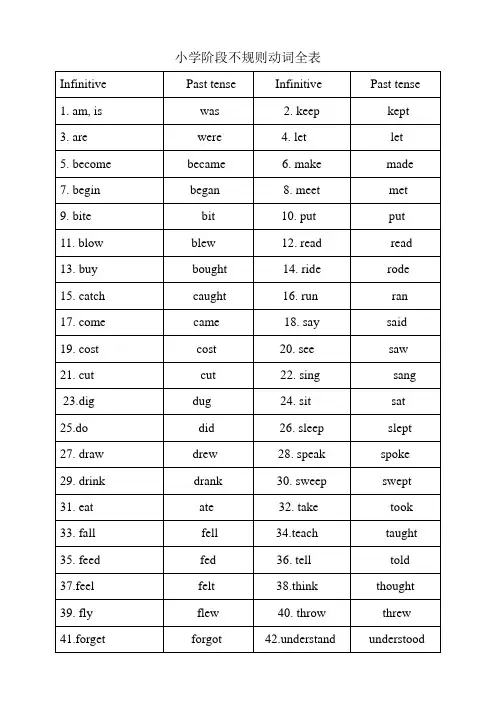
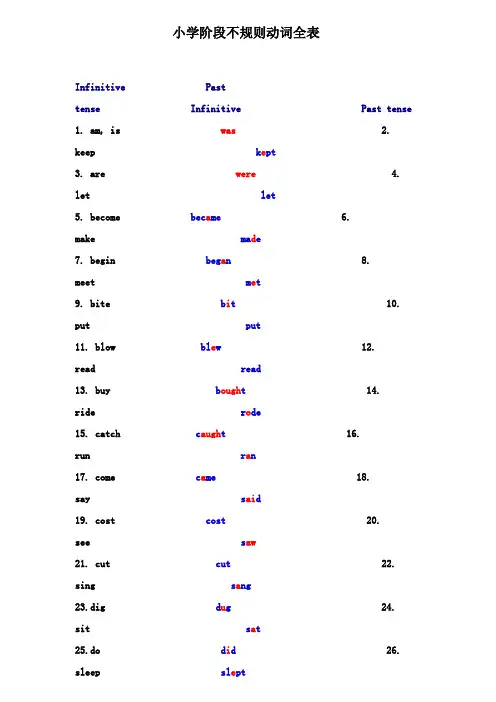
小学阶段不规则动词全表
- 格式:doc
- 大小:69.00 KB
- 文档页数:9
实用标准文档
文案大全 小学阶段不规则动词全表
动词原形 过去式 动词原形 过去式
1. am, is was 2. keep kept
3. are were 4. let let
5. become became 6. make made
7. begin began 8. meet met
9. bite bit 10. put put
11. blow blew 12. read read
13. buy bought 14. ride rode
15. catch caught 16. run ran
17. come came 18. say said
19. cost cost 20. see saw
21. cut cut 22. sing sang
23.dig dug 24. sit sat
25.do did 26. sleep slept
27. draw drew 28. speak spoke
29. drink drank 30. sweep swept
31. eat ate 32. take took
33. fall fell 34.teach taught
35. feed fed 36. tell told
37.feel felt 38.think thought
39. fly flew 40. throw threw
41.forget forgot 42.understand understood
43. get got 44. give gave
45. wake woke 46. go went
47. wear wore 48. grow grew
49. win won 50. have/has had
51. write wrote 52. know knew
一般疑问句
一般疑问句是疑问句的一种。它是指用yes或no来回答的句子。其结构是:
系动词be/助动词/情态动词+主语+其他成分?
如:
Is this your pen?
Yes it is./No it isn't.
注意:
1.将陈述句变为一般疑问句时,如句中有be 动词(am is are …)时,可直接将它们提至主语前。如主语为第一人称,应将其改为第二人称。如:
I'm in Class 2Grade 1. →
Are you in Class 2Grade 1﹖ 实用标准文档
文案大全 We're watching TV. →
Are you watching TV﹖
2.陈述句中有情态动词(can may must …)时,也可直接将它们提至主语前,即可成为一般疑问句。如:
He can swim now. →
Can he swim now﹖
The children may come with us. → May the children come with us﹖
3.陈述句中只有一个实义动词作谓语且其时态为一般现在时,变为一般疑问句时要在句首加do或does 主语后的实义动词用原形。如:
I like these animals. →
Do you like these animals﹖
She wants to go to the movies. → Does she want to go to the movies﹖
4.一般疑问句一般读升调(↑)
5.一般疑问句有时不用yes或 no 回答。
一、一般疑问句
一般疑问句也可称为 “yes / no questions”,因这种问句通常用yes /
no来回答,相当于汉语中的“……吗?”其语序是:系动词be / 助动词/ 情态动词+主语+其他成分?如:
Are you from Japan﹖
Yes I am. / No I'm not.
Is her sister doing her homework now﹖
Yes she is. / No she isn't.
Does he work in a bank﹖
Yes he does. / No he doesn't.
Do you live near your school﹖
Yes I do. / No I don't.
Can you speak French﹖
Yes I can. / No I can't.
May I go home now﹖
Yes you may. / No you mustn't.
注意:
1.将陈述句变为一般疑问句时,如句中有be 动词(am is are …)时,可直接将它们提至主语前。如主语为第一人称,应将其改为第二人称。如:
I'm in Class 2Grade 1. →
Are you in Class 2Grade 1﹖
We're watching TV. →
Are you watching TV﹖
2.陈述句中有情态动词(can may must …)时,也可直接将它们提至主语前,即可成为一般疑问句。如:
He can swim now. →
Can he swim now﹖
The children may come with us. → May the children come with us﹖
3.陈述句中只有一个实义动词作谓语且其时态为一般现在时,变为一般疑问句时要在句首加do或does 主语后的实义动词用原形。如:
I like these animals. → 实用标准文档
文案大全 Do you like these animals﹖
She wants to go to the movies. → Does she want to go to the movies﹖
4.一般疑问句一般读升调(↑)
5.一般疑问句有时不用yes或 no 回答。如:
Are they in town now﹖
I think so.
May I sit here﹖
Certainly.
Does he like soccer﹖
Sorry I don't know.
6. 一般疑问句的第一单词总是虚词,读的时候要读轻声。
二、特殊疑问句
以疑问词开头,对句中某一成分提问的句子叫特殊疑问句。常用的疑问词有:what who whose which when where how why等。
特殊疑问句有两种语序:
1.如疑问词作主语或主语的定语,即对主语或主语的定语提问,其语序是陈述句的语序:疑问词(+主语)+谓语动词+其他成分?如:
who is singing in the room﹖
whose bike is broken﹖
2.如疑问词作其他成分,即对其他成分提问,其语序是:疑问词+一般疑问句语序? 如:
what class are you in﹖
What does she look like﹖
Where are you from﹖
What time does he get up every morning﹖
How do you know﹖
注意:
1.回答特殊疑问句时,不能用yes / no,即问什么答什么,尤其是简略回答。如:
Who is from Canada﹖
Helen (is).
Where's the restaurant﹖
Near the station.
Why do you like koalas﹖
Because they are cute.
2.特殊疑问句一般读降调(↓)。
特殊疑问句
以疑问词who,what,when,which,why,where,whose,hou等引导的问句都叫特殊疑问句,也叫疑问词疑问句,有时还被称为wh-问句(wh-question)。结构一般为:疑问词+助动词+主语+主动词等。
特殊疑问句要由疑问代词或疑问副词开头,询问的内容不同, 使用的疑问词也不同。我们学过的疑问词有what(询问事物), how much(询问价格), what time (询问实用标准文档