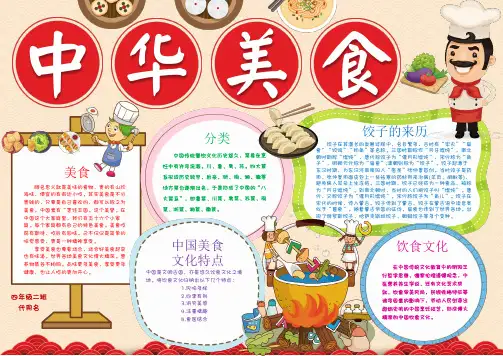
中华传统饮食英文小报手抄报Word模板
- 格式:docx
- 大小:36.76 KB
- 文档页数:3
中华传统饮食英文小报手抄报Word模板
Introduction
The Chinese traditional cuisine is known for its rich history and
diverse flavors. In this English newsletter, we will explore some of the
key aspects of Chinese traditional food and its cultural significance.
Section 1: Cuisine Overview
Chinese cuisine is characterized by its emphasis on fresh
ingredients, skilled cooking techniques, and the harmonious balance of
flavors. It can be broadly classified into eight regional styles, including
Cantonese, Sichuan, Shandong, and Hunan, each with its unique
characteristics.
Section 2: Staple Foods
Section 3: Popular Dishes
- Kung Pao Chicken: A classic Sichuan dish featuring diced
chicken, peanuts, and chili peppers.Kung Pao Chicken: A classic
Sichuan dish featuring diced chicken, peanuts, and chili peppers.
- Peking Duck: A Beijing specialty known for its crispy skin and
tender meat.Peking Duck: A Beijing specialty known for its crispy skin
and tender meat.
- Dim Sum: Bite-sized portions of various steamed or fried
delicacies, typically served in bamboo steamers.Dim Sum: Bite-sized
portions of various steamed or fried delicacies, typically served in
bamboo steamers.
Section 4: Tea Culture
Section 5: Cultural Influence
Chinese traditional food has had a profound impact on the culinary
world. Popular dishes like sweet and sour chicken and fortune cookies
are not only enjoyed in China but also widely recognized and
appreciated internationally.
Conclusion
Chinese traditional cuisine is a treasure trove of flavors and cultural
heritage. Its rich history, diverse regional styles, and unique dishes make
it a fascinating subject to explore. By understanding and appreciating
Chinese food, we gain insight into the rich tapestry of Chinese culture.