英语简单句的五种基本类型一览表
- 格式:doc
- 大小:165.00 KB
- 文档页数:4
英语简单句的五种基本类型一览表
1 / 4 英语简单句的五种基本类型一览表
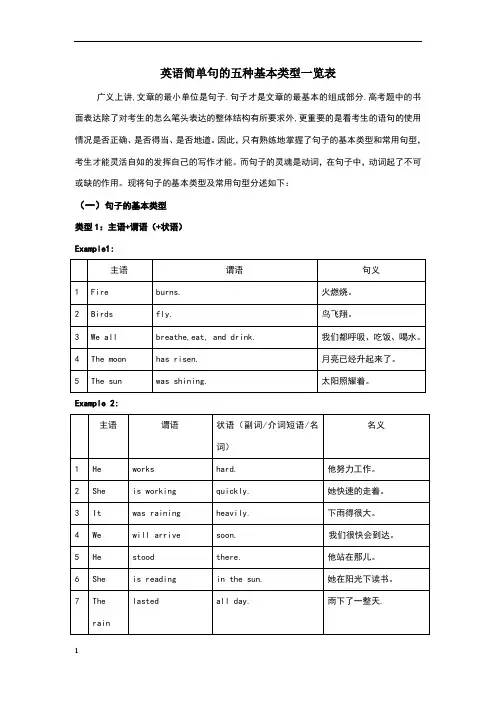
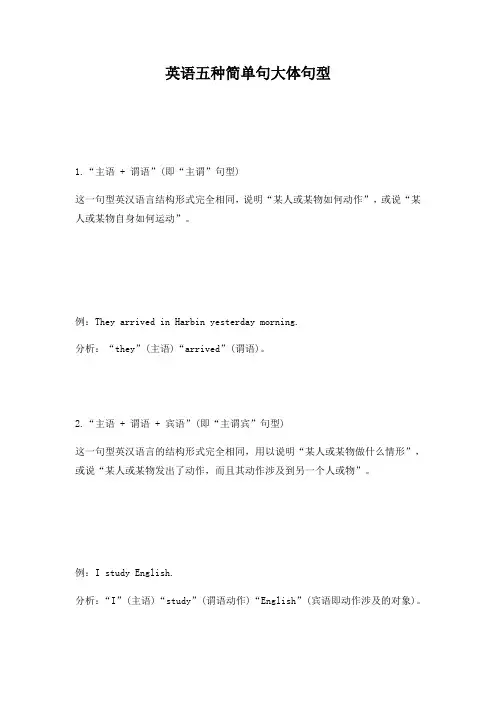
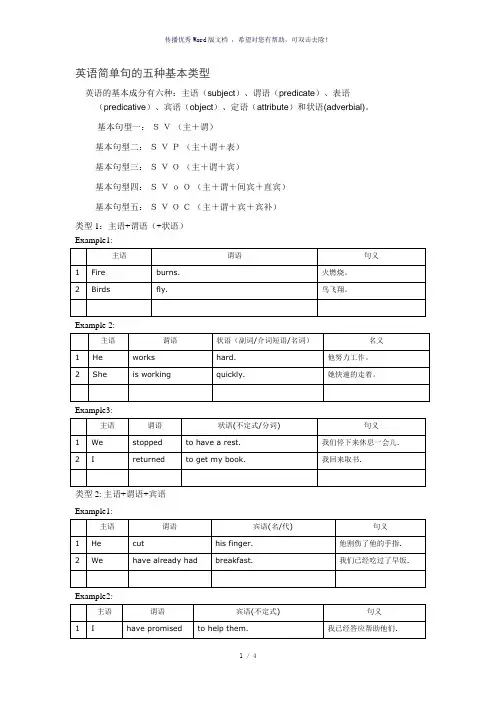
广义上讲,文章的最小单位是句子.句子才是文章的最基本的组成部分.高考题中的书面表达除了对考生的怎么笔头表达的整体结构有所要求外,更重要的是看考生的语句的使用情况是否正确、是否得当、是否地道。因此,只有熟练地掌握了句子的基本类型和常用句型,考生才能灵活自如的发挥自己的写作才能。而句子的灵魂是动词,在句子中,动词起了不可或缺的作用。现将句子的基本类型及常用句型分述如下:
(一)句子的基本类型
类型1:主语+谓语(+状语)
Example1:
主语 谓语 句义
1 Fire burns. 火燃烧。
2 Birds fly. 鸟飞翔。
3 We all breathe, eat, and drink. 我们都呼吸、吃饭、喝水。
4 The moon has risen. 月亮已经升起来了。
5 The sun was shining. 太阳照耀着。
Example 2:
主语 谓语 状语(副词/介词短语/名词) 名义
1 He works hard. 他努力工作。
2 She is walking quickly. 她快速的走着。
3 It was raining heavily. 雨下得很大。
4 We will arrive soon. 我 我们很快会到达。
5 He stood there. 他站在那儿。
6 She is reading in the sun. 她在阳光下读书。
7 The rain lasted all day. 雨下了一整天.
8 They had travelled a long way. 他们已经走了很长的路。
9 We waited two hours. 我们等了两小时。
10 It weighs two tons. 它重两吨。
11 We stayed the whole night. 我们呆了整整一个晚上。
12 He may live many years. 他也许能活好多年。 Example3:
主语
谓语 状语(不定式/分词) 句义
1 We stopped to have a rest. 我们停下来休息一会儿.
2 I returned to get my book. 我回来取书.
3 He arrived only to find the bus leaving. 他到达时却发现车正离开.
4 He stood there, begging. 他站在那儿乞讨.
5 She ran, followed by a dog. 她跑着,后面跟着一条狗.
类型2: 主语+谓语+宾语
Example1:
主语 谓语 宾语(名/代) 句义
1 He cut his finger. 他割伤了他的手指.
2 We have already had breakfast. 我们已经吃过了早饭.
3 A baby can not dress itself. 婴儿不能自己穿衣.
4 We lit a fire. 我们点起了一堆火.
5 I dug a hole. 我挖了一个洞.
Example2:
主语 谓语 宾语(不定式) 句义
1 I have promised to help them. 我已经答应帮助他们.
2 They decided not to go. 他们决定不去.
3 He pretended not to see me. 他假装没有看见我。
4 We planned to buy it. 我们计划买下它。
5 He agreed to pay for it. 他同意负担它的费用。
6 I wonder how to do it. 我茫然不知如何做。
7 I don’t know what to do. 我不知道怎么办。
8 She was wondering which to buy. 她正不知买哪个好。
9 You must remember when to begin. 你必须记住何时开始。
10 I don’t know where to go. 我不知去哪儿。
Example 3:
主语 谓语 宾语(动名词) 句义
1 He enjoys playing chess. 他喜欢下棋。
2 They remembered doing it. 他们记得曾做过此事。
3 She doesn’t mind my smoking. 她不介意我吸烟。
4 We suggested changing it. 我们建议改变它。
5 He couldn’t help laughing. 他忍不住大笑起来。 Example4:
主语 谓语 宾语从句 句义
1 I hope (that) you will come here. 我希望你来这里。
2 I suppose (that) you will be there. 我猜想你会在那里。
3 He explained (that) nothing could be done. 他解释说什么都没做。
4 I don’t think (that) it will rain tomorrow. 我认为明天不会下雨。
5 He saw (that) the plan was useless. 他明白那计划没用。
6 I suggested (that) he should leave early. 我建议他早些离开。
7 I wonder why he has not come. 我想知道他为什么没来。
8 I wonder whether(if) he will come. 我想知道他是否会来。
9 I do not mind where we go. 我们去哪里我都不介意。
10 He knows who she is. 他知道她是谁。
11 I do not care what you think. 我不在乎你怎么想。
12 Nobody knows whose it is. 没人知道它是谁的。
类型3:主语+系动词+表语
Example 1:
主语 系动词 表语 句义
1 This is a book. 这是一本书。
2 This book is mine. 这本书是我的。
3 They are hard-working. 他们很勤劳。
Example 2:
主语 系动词 表语 句义
1 The boy looks a smart boy 这孩子看起来很伶俐。
2 This film seems moving. 这部电影似乎很动人。
3 You appear all right. 你好像身体很好。
4 He got drunk. 他喝醉了。
5 She turned pale at the thought. 一想到这,她脸变得苍白。
6 The room became crowded soon. 房间很快拥挤起来。
7 The well ran dry. 井干了。
8 The food went bad. 食物发霉了。
9 She remained calm. 她保持冷静。
10 The shop stays open until 12. 商店营业直到现在12点。
11 The tool proved (to be) useful. 这工具证明很有用。
12 Cotton feels soft 棉花摸上去很柔软。 13 I felt puzzled and upset. 我感到困惑不安。
14 Her song sounds sweet. 她的歌听起来很甜。
15 The food tastes delicious. 这食物尝起来很可口.
16 Flowers smell pleasant. 花儿闻起来很怡人.
17 He keeps silent all day. 他一整天不说话.
类型4:主语+谓语+间接宾语+直接宾语
Example1:
主语 谓语 间接宾语 直接宾语 句义
1 I gave my friend the money. 我给了朋友钱。
2 They told us the news. 他们告诉我们这消息。
3 We showed our teachers the pictures. 我们给老师看了照片。
4 I didn’t lend anybody my books. 我没有把书借给任何人。
5 He offered me some money. 他给了我一些钱。
6 I owe the tailor ten pounds. 我欠裁缝十英镑。
7 He handed her the salt. 他把盐递给了她。
8 I will bring them some peanuts. 我将给他们带些花生。
Example2:
主语 谓语 直接宾语 to 间接宾语 句义
1 I gave the money. to my friend 我给了朋友钱。
2 They told the news. to us 他们告诉我们这消息。
3 We showed the pictures. to our teachers 我们给老师看了照片。
4 I didn’t lend my books. to anybody 我没有把书借给任何人。
5 He offered some money. to me 他给了我一些钱。
6 I owe ten pounds. to the tailor 我欠裁缝十英镑。
7 He handed the salt. to her 他把盐递给了她。
8 I will bring some peanuts. to them 我将给他们带些花生。
Example3:
主语 谓语 间接宾语 直接宾语 句义
1 I bought my wife a gold watch. 我给妻子买了一块金表。
2 They saved me some money. 他们给我储蓄了一些钱。
3 She made herself a new dress. 她给自己做了一套新衣服。
4 I left him some food. 我给他留了些食物。
5 He got me two tickets. 他给我买了两张票。
6 I did him a favor. 我帮了他一个忙。