人教版高中英语必修一Unit1知识点详解
- 格式:docx
- 大小:77.86 KB
- 文档页数:16
高一英语必修 1 Unit 1 Friendship
Part 1. Warming up
1. 介词不同,含义有别:
be good to sb./sth. 对 ⋯ 好 be good for sb./sth. 对 ⋯ 有好处
be good at (doing) sth. 擅长,精通 be good with sb./sth. 善于应付 ⋯ 的 eg. She was very good to me when I was ill.
Doing morning exercises is good for health. Tim is good at speaking English.
He is very good with children. 他对孩子很有一套。
2. add up 合计,把 ⋯ 加起来 add up to 合计达到 ⋯
add to 增加,增添 add A to B 把 ⋯ 加进 ⋯ 里面,把 ⋯ 和 ⋯相加 eg. Please add these figures up. These figures add up to 900. The bad weather added to our difficulities. Please add some salt to the water. Add three to four and you get seven.
▲ add vt. 补充说 (后接 that 从句或者直接引语) eg. He added that they would return in a week.
“ And don ’ t be late, ” she added.
3. point n.点,要点,观点,意义,得分 v.指着
be on the point of doing sth. when......=be about to do sht. when.... 正要做某事,这时 ......
4. until 与 not ⋯ until
until 表示动作、 状态的持续, 强调 “一直到 ⋯⋯ 为止 ”,或强调某个动作或状态一直持续到另一个动作或状态出现之前。常与表示延续性动作的动词连用。
not ⋯ until表示 “到 ⋯⋯ 为止;直到 ⋯⋯ 才 ”,常与表示瞬间性动作的动词连用。 eg. He lived with his parents until he graduated from college.
The noise of the street didn ’ t stop until midnight.
5. finish sth./doing sth. 后跟动名词作宾语的动词或短语还有: admit, appreciate, avoid ,
consider,delay, enjoy,escape, feel like, forgive, get down to, give up, imagine ,mind, miss(错过) , practice, suggest, risk ,can't stand(不能忍受) , can’thelp (忍不住), give up, put off 等。 help sb.(to) do sth.
There is no way to escape doing the work. 没有办法逃脱做这项工作。
We shall appreciate hearing from you again. 能再次收到你的来信,我们将十分感激。
He put off paying the bills
6. get sth. done 使某事被做 ( get 做使役动词, “使、叫、让 ”后接复合宾语 ) eg. When are you going to get your hair cut? I must get my homework finished first before going out to play.
▲ get sb. to do sth. 让某人做某事 eg. I will get him to do the work.
▲ get sb./sth. doing 使⋯某人或者某物开始 ⋯ 起来 eg. Let me try now. I will get the car going.
▲ get + n. + adj. 使 ⋯ 成为某种状态 eg. Get everything ready.
★ 联想: have sth. done 使某事被做
have sb. do sth. 让某人做某事
have sb./sth. doing 使某人或者某物持续做某事
“让某人做某事 ”的表达方法 let /make/have sb. do sth. get sb. to do sth.
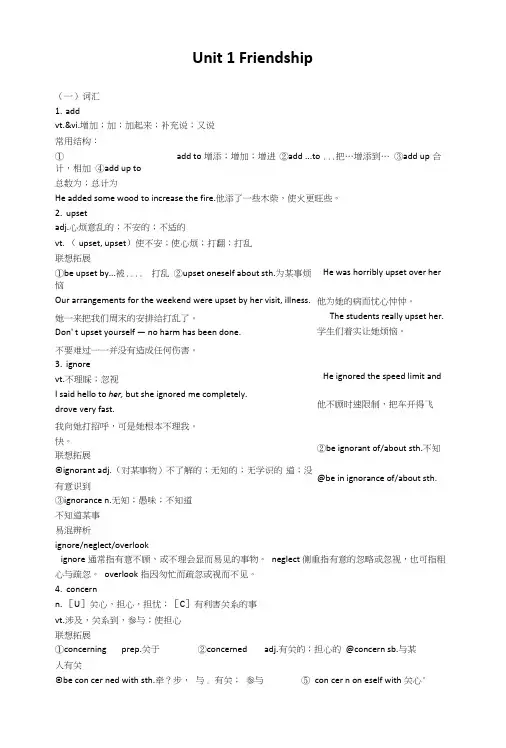
7. Your friend comes to school very upset.
upset 此处为 adj. 做主语补足语,用来补充说明主语的情况。 Eg. He went to bed cold and hungry. She got married young.
▲ upset 的用法:
(1). adj. 心烦意乱的,不安的,不适的(多做表语)
搭配: be upset about sth. 为某事烦心 be upset that 心⋯烦
eg. She was really upset about losing the money.
I was upset that he had left without saying goodbye.
(2). vt. 使不安,使心烦 (upset, upset) upset oneself about sth 为某事烦恼 Eg.
Don ’ t upset yourself about it.
The bad news upset the boy ’ s mother.
8. ignore vt. 不理睬,忽视 eg. He ignored my advice, so he failed in this exam.
Alice saw Jack coming, but ignored him.
ignorance n.无知 ignorant adj. 不知道的,无知的
be ignorance of/about sb./sth. 对某人 /某物不知道 eg. I was ignorant(of the fact)that the boss
should be so strict. 我不知道老板居然那样严格。
9. calm down vt./vi. (使)平静下来, (使)镇定下来
eg. The excited girl quickly calmed down.
He took a deep breath to calm himself down.
▲ calm adj. 平静的,镇静的,沉着的
eg. Keep calm.
After the storm, it became calm again.
▲ adj. calm, quiet, still, silent 辨析:
calm 平静的,沉着的(指无风浪或者人的心情不激动)
quiet 安静的,宁静的(指没有声音,不吵闹或者心里没有烦恼,忧虑)
still 静止的,不动的(指没有运动或者动作的状态)
silent 沉默的,不出声的(指没有声音或者不讲话)
【一言辨异】
When facing danger, you should keep calm; when taken photos of, you should keep still; when
someone else is asleep, you should keep quiet; in class, you shouldn ’keept silent about the teacher ’
s questions.
10. have got to 不得不,必须 (否定: haven’tgot to) = have to (否定: don’thave to) eg. I
have got to go to a meeting. Have you got to go now?
He hasn ’ t got to come tomorrow.
【说明】 :
have got to 很少用于过去时态
换,表示习惯性动作,尤其句中有
, have to 可用于各种时态;表示一次性动作时,两者可互
always, often 等时,应用 have to.
11. concern ( 1) vt. ( 使 )担忧,涉及,关系到
eg. She concerns herself about her son ’ s future.
The news concerns your brother.
▲ concern 做动词时,更多情况下用过去分词做表语。
搭配:① be concerned about/for sth. 为 ⋯ 担心,关心,关注,挂念
② be concerned with sth. 与 ⋯ 有关,涉及
③ as/so far as sb. be concerned 就某人而言
He was concerned with the matter.
As far as I am concerned, I don ’ t agree with you.
(2) n. [u]/[c] 担心,挂念,关注,利害关系;关心的事
with concern 关心地
12. go on holiday 去度假
take care of = look after = care
for walk the dog 遛狗 13. While walking the dog, you were careless and it got loose
(1). While walking the dog = While you were walking the dog 是一个由
while
⋯
引导的省略的时间
状语从句。
【点拨】 在 when/while 引导的时间状语从句, where 引导的地点状语从句, if/unless/once
引导的条件状语从句, as/as if 引导的方式状语从句, though/although/even if 引导的让步状语
从句中,若主从句主语相同,且从句谓语动词含有 be 动词的某种形式,则从句的主语和 be
动词可以省略;或者当从句主语为 it,且从句谓语动词含有 be 动词的某种形式,这时省略
it 和 be 动词。