
现在分词new
- 格式:ppt
- 大小:1.02 MB
- 文档页数:48
现在分词 第 1 页 (共 4 页) 现在分词
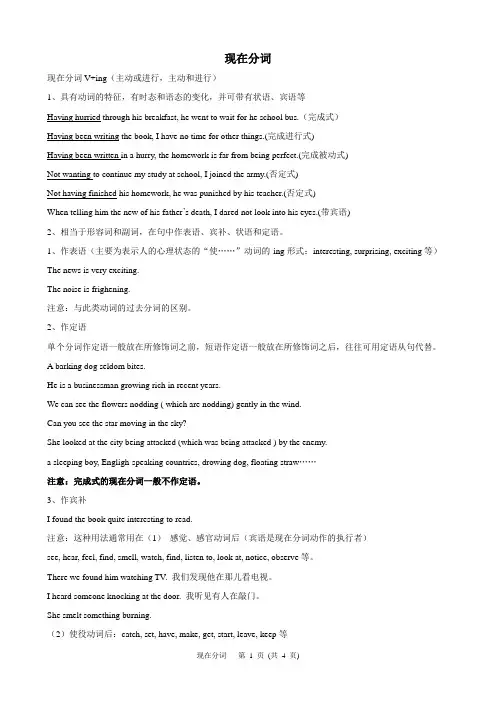
现在分词V+ing(主动或进行,主动和进行)
1、具有动词的特征,有时态和语态的变化,并可带有状语、宾语等
Having hurried through his breakfast, he went to wait for he school bus.(完成式)
Having been writing the book, I have no time for other things.(完成进行式)
Having been written in a hurry, the homework is far from being perfect.(完成被动式)
Not wanting to continue my study at school, I joined the army.(否定式)
Not having finished his homework, he was punished by his teacher.(否定式)
When telling him the new of his father’s death, I dared not look into his eyes.(带宾语)
2、相当于形容词和副词,在句中作表语、宾补、状语和定语。
1、作表语(主要为表示人的心理状态的“使„„”动词的-ing形式:interesting, surprising, exciting等)
The news is very exciting.
The noise is frighening.
注意:与此类动词的过去分词的区别。
2、作定语
单个分词作定语一般放在所修饰词之前,短语作定语一般放在所修饰词之后,往往可用定语从句代替。
A barking dog seldom bites.
He is a businessman growing rich in recent years.
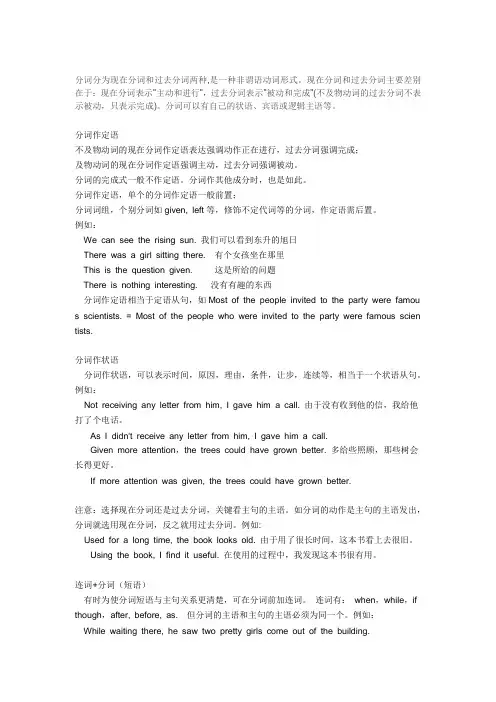
分词分为现在分词和过去分词两种,是一种非谓语动词形式。现在分词和过去分词主要差别在于:现在分词表示"主动和进行",过去分词表示"被动和完成"(不及物动词的过去分词不表示被动,只表示完成)。分词可以有自己的状语、宾语或逻辑主语等。
分词作定语
不及物动词的现在分词作定语表达强调动作正在进行,过去分词强调完成;
及物动词的现在分词作定语强调主动,过去分词强调被动。
分词的完成式一般不作定语。分词作其他成分时,也是如此。
分词作定语,单个的分词作定语一般前置;
分词词组,个别分词如given, left等,修饰不定代词等的分词,作定语需后置。
例如:
We can see the rising sun. 我们可以看到东升的旭日
There was a girl sitting there. 有个女孩坐在那里
This is the question given. 这是所给的问题
There is nothing interesting. 没有有趣的东西
分词作定语相当于定语从句,如Most of the people invited to the party were famous scientists. = Most of the people who were invited to the party were famous scientists.
分词作状语
分词作状语,可以表示时间,原因,理由,条件,让步,连续等,相当于一个状语从句。例如:
Not receiving any letter from him, I gave him a call. 由于没有收到他的信,我给他打了个电话。
As I didn't receive any letter from him, I gave him a call.
Given more attention,the trees could have grown better. 多给些照顾,那些树会长得更好。
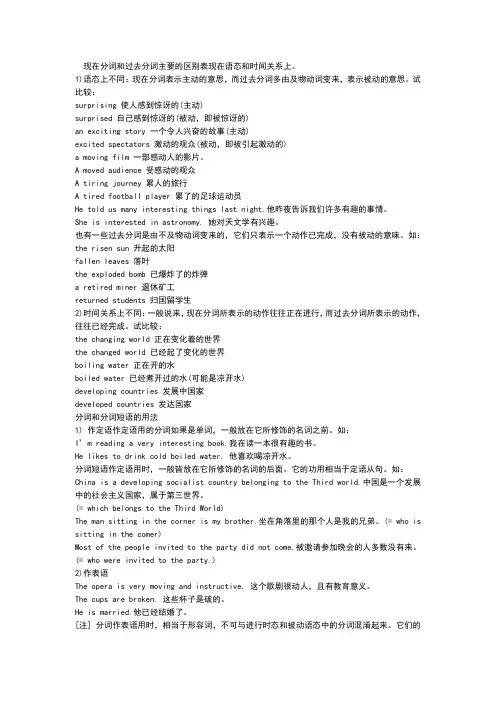
现在分词和过去分词主要的区别表现在语态和时间关系上。
1)语态上不同:现在分词表示主动的意思,而过去分词多由及物动词变来,表示被动的意思。试比较:
surprising 使人感到惊讶的(主动)
surprised 自己感到惊讶的(被动,即被惊讶的)
an exciting story 一个令人兴奋的故事(主动)
excited spectators 激动的观众(被动,即被引起激动的)
a moving film 一部感动人的影片。
A moved audience 受感动的观众
A tiring journey 累人的旅行
A tired football player 累了的足球运动员
He told us many interesting things last night.他昨夜告诉我们许多有趣的事情。
She is interested in astronomy. 她对天文学有兴趣。
也有一些过去分词是由不及物动词变来的,它们只表示一个动作已完成,没有被动的意味。如:
the risen sun 升起的太阳
fallen leaves 落叶
the exploded bomb 已爆炸了的炸弹
a retired miner 退休矿工
returned students 归国留学生
2)时间关系上不同:一般说来,现在分词所表示的动作往往正在进行,而过去分词所表示的动作,往往已经完成。试比较:
the changing world 正在变化着的世界
the changed world 已经起了变化的世界
boiling water 正在开的水
boiled water 已经煮开过的水(可能是凉开水)
developing countries 发展中国家
developed countries 发达国家
分词和分词短语的用法
1) 作定语作定语用的分词如果是单词,一般放在它所修饰的名词之前。如:
动词
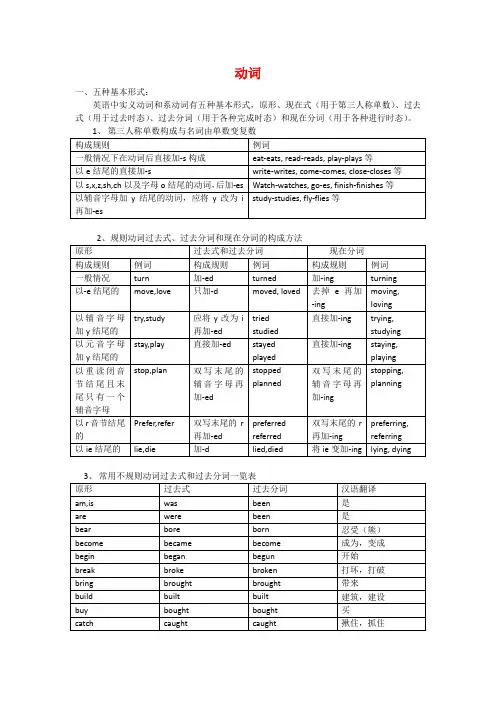
一、五种基本形式:
英语中实义动词和系动词有五种基本形式,原形、现在式(用于第三人称单数)、过去式(用于过去时态)、过去分词(用于各种完成时态)和现在分词(用于各种进行时态)。
1、 第三人称单数构成与名词由单数变复数
构成规则 例词
一般情况下在动词后直接加-s构成 eat-eats, read-reads, play-plays等
以e结尾的直接加-s write-writes, come-comes, close-closes等
以s,x,z,sh,ch以及字母o结尾的动词,后加-es Watch-watches, go-es, finish-finishes等
以辅音字母加y结尾的动词,应将y改为i再加-es study-studies, fly-flies等
2、规则动词过去式、过去分词和现在分词的构成方法
原形 过去式和过去分词 现在分词
构成规则 例词 构成规则 例词 构成规则 例词
一般情况 turn 加-ed turned 加-ing turning
以-e结尾的 move,love 只加-d moved, loved 去掉e再加-ing moving,
loving
以辅音字母加y结尾的 try,study 应将y改为i再加-ed tried
studied 直接加-ing trying,
studying
以元音字母加y结尾的 stay,play 直接加-ed stayed
played 直接加-ing staying,
playing
以重读闭音节结尾且末尾只有一个辅音字母 stop,plan 双写末尾的辅音字母再加-ed stopped
planned 双写末尾的辅音字母再加-ing stopping,
planning
以r音节结尾的 Prefer,refer 双写末尾的r再加-ed preferred
referred 双写末尾的r再加-ing preferring,