
TheInfluenceofHumanActivityontheEnvironment
- 格式:ppt
- 大小:746.50 KB
- 文档页数:23
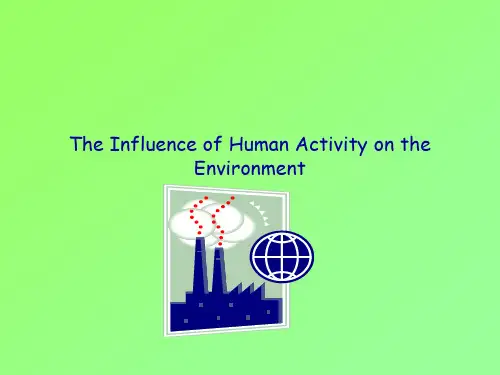

The Impact of Human Activities on theEnvironmentHuman beings, as the dominant species on Earth, have left an indelible mark on the environment through various activities. From the industrial revolution to the present day, our actions have significantly altered the natural world, leading to a range of environmental issues that threaten our planet's sustainability.The industrial revolution marked a turning point in human history, as it ushered in a new era of rapid technological and economic growth. However, this growth came at a cost. Factories and power plants began to emit large amounts of pollutants into the air and water, leading to air pollution, water pollution, and soil degradation. The burning of fossil fuels also released vast amounts of greenhouse gases into the atmosphere, contributing to global warming and climate change.Urbanization, another significant driver of environmental degradation, has led to the loss of natural habitats and the degradation of ecosystems. As cities expand, they encroach on forests, wetlands, and othernatural areas, displacing wildlife and disrupting ecological balances. The construction of roads andbuildings also leads to soil erosion and water pollution. Agricultural activities, particularly intensive monoculture farming and the excessive use of fertilizers and pesticides, have had a devastating impact on the environment. These practices have depleted soil nutrients, contaminated water sources, and destroyed habitats, leading to a decline in biodiversity and the loss of critical ecosystem services.The impact of human activities on the environment is not limited to local scales. Global trade and the movement of people and goods have had far-reaching consequences for the planet. For instance, the overexploitation of resources in developing countries has led to deforestation, soil erosion, and biodiversity loss. At the same time, the disposal of waste in other countries has created environmental problems that transcend national borders.The environmental impact of human activities is also reflected in the rising levels of plastic pollution. The widespread use of plastic products has led to theaccumulation of millions of tons of plastic waste in our oceans, rivers, and landfills. This plastic waste not only poses a threat to wildlife but also contaminates our food and water supplies, posing a serious risk to human health. In conclusion, the impact of human activities on the environment is profound and multifaceted. From industrial pollution to urbanization, agricultural practices, and global trade, our actions have had devastating consequences for the natural world. To address these issues and ensure a sustainable future for ourselves and our planet, it is crucial that we adopt environmentally responsible practices and policies that prioritize the protection and restoration of our environment.**人类活动对环境的影响**人类作为地球上的主导物种,通过各种活动在环境上留下了不可磨灭的印记。
人类活动对自然环境的影响英语作文高中Here is a 650-word essay on the topic of "The Impact of Human Activities on the Natural Environment" in English:The development of human civilization has come at a significant cost to the natural environment. Since the onset of the Industrial Revolution, human activities have had an increasingly detrimental impact on the planet's ecosystems and natural resources. From pollution and deforestation to climate change and biodiversity loss, the consequences of our actions have been far-reaching and often difficult to reverse.One of the most significant ways in which human activities have affected the natural environment is through the release of greenhouse gases into the atmosphere. The burning of fossil fuels for energy production, transportation, and industrial processes has led to a rapid increase in the concentration of carbon dioxide, methane, and other greenhouse gases in the Earth's atmosphere. This, in turn, has contributed to the warming of the planet and the disruption of global climate patterns.The effects of climate change are already being felt around the world,with rising sea levels, more frequent and severe natural disasters, and changes in weather patterns that are threatening the livelihoods of millions of people. These changes are also having a profound impact on the natural world, with many species of plants and animals facing the risk of extinction due to habitat loss, changes in temperature and precipitation, and other environmental stressors.Another major impact of human activities on the natural environment is the degradation and destruction of ecosystems, particularly through deforestation and urban development. The clearing of forests for agricultural land, logging, and the expansion of human settlements has led to the loss of vast swaths of natural habitat, with devastating consequences for the plant and animal species that depend on these environments.The loss of biodiversity is a particularly concerning issue, as the world's ecosystems rely on a delicate balance of species to function properly. When this balance is disrupted, it can have cascading effects that can be difficult to predict or control. For example, the decline of pollinator species such as bees and butterflies can have far-reaching impacts on the productivity of agricultural systems and the overall health of ecosystems.In addition to these broad, global impacts, human activities can also have more localized effects on the natural environment. Pollutionfrom industrial processes, agricultural runoff, and urban waste can contaminate air, water, and soil, with serious consequences for the health of local ecosystems and human communities. The overexploitation of natural resources, such as overfishing or the unsustainable extraction of minerals and fossil fuels, can also lead to the depletion of these resources and the disruption of the natural systems that depend on them.Despite the significant challenges posed by the impact of human activities on the natural environment, there is reason for hope. In recent years, there has been a growing awareness of the need to adopt more sustainable practices and to take steps to mitigate and adapt to the effects of climate change and environmental degradation. Governments, businesses, and individuals are increasingly taking action to reduce greenhouse gas emissions, protect and restore natural habitats, and promote more sustainable practices in areas such as agriculture, energy production, and transportation.However, much more needs to be done to address the complex and interconnected issues that are threatening the health of our planet. This will require a concerted effort from all sectors of society, as well as a fundamental shift in the way we think about and interact with the natural world. By embracing a more sustainable and environmentally-conscious approach to development and resourceuse, we can work to minimize the impact of human activities on the natural environment and ensure a brighter, more sustainable future for generations to come.。

人类活动是如何影响环境的英语作文英文回答:Human activities have a profound impact on the environment, affecting both its physical and biological components. These impacts can be direct or indirect, with far-reaching consequences for both human societies and natural ecosystems.Pollution: One of the most visible and significant ways that human activities affect the environment is through pollution. Pollutants released from industrial processes, transportation, and agriculture can contaminate air, water, and soil, threatening human health and damaging wildlife. Air pollution, for example, can cause respiratory problems, cardiovascular disease, and even contribute to climate change. Water pollution can contaminate drinking water sources, spread diseases, and disrupt aquatic ecosystems. Similarly, soil pollution can damage soil fertility, reduce crop yields, and release harmful chemicals into theenvironment.Deforestation: Another major human impact on the environment is deforestation. The clearing of forests for agriculture, logging, and other purposes can lead tohabitat loss, species extinction, soil erosion, and climate change. Forests play a vital role in regulating the Earth's climate, providing oxygen, absorbing carbon dioxide, and regulating water cycles. Deforestation disrupts these natural processes, contributing to global warming and other environmental problems.Overfishing: The overexploitation of marine resources through fishing can have severe consequences for marine ecosystems. Overfishing can deplete fish stocks, disrupt food chains, and damage coral reefs and other marine habitats. In some cases, overfishing can lead to the collapse of entire fisheries, with significant economic and social impacts for coastal communities.Climate Change: The burning of fossil fuels for energy and transportation has dramatically increased atmosphericgreenhouse gas concentrations, leading to climate change. Climate change is already having a wide range of impacts on the environment, including rising sea levels, melting glaciers, extreme weather events, and shifts in plant and animal distributions. The consequences of climate changeare likely to be far-reaching and could pose a seriousthreat to both human and natural systems.Invasive Species: The introduction of non-nativespecies into new environments can have unintended and often detrimental consequences for native species and ecosystems. Invasive species can compete for resources, transmit diseases, and even alter the physical structure of habitats. In some cases, invasive species can become dominant and disrupt the balance of natural ecosystems.These are just a few of the many ways that human activities can affect the environment. It is important to recognize the impacts of our actions and take steps to mitigate them. By promoting sustainable practices, reducing pollution, protecting biodiversity, and addressing climate change, we can help to protect the environment for futuregenerations.中文回答:人类活动对环境的影响。

人类活动影响环境英语作文Human Activities and Their Impact on the Environment。
Introduction:Human activities have had a significant impact on the environment. From industrialization to urbanization, the actions of humans have caused various environmental issues. In this essay, we will explore some of the major human activities that have negatively affected the environment and discuss potential solutions to mitigate these impacts.Body:1. Deforestation:Deforestation is one of the most significant human activities that have adversely affected the environment. Trees play a crucial role in maintaining the ecological balance by absorbing carbon dioxide and producing oxygen.However, due to the demand for timber, agricultural expansion, and urbanization, large areas of forests are being cleared. This not only leads to a loss ofbiodiversity but also contributes to climate change. To address this issue, governments and individuals should promote sustainable forestry practices and reforestation efforts.2. Pollution:Pollution is another major consequence of human activities. Industrial activities release harmful chemicals and pollutants into the air, water, and soil, leading toair pollution, water pollution, and soil degradation. These pollutants not only harm human health but also damage ecosystems and disrupt the balance of nature. To combat pollution, strict regulations should be imposed on industries to limit their emissions. Additionally, individuals should adopt eco-friendly practices such as reducing waste, recycling, and using renewable energy sources.3. Overfishing:Overfishing is a human activity that has had a devastating impact on marine ecosystems. The demand forfish has led to excessive fishing, depleting fish populations and disrupting the marine food chain. This not only affects the biodiversity of oceans but also threatens the livelihoods of communities that depend on fishing. To address this issue, sustainable fishing practices should be implemented, including imposing fishing quotas, creating marine protected areas, and promoting responsible fishing techniques.4. Urbanization and Habitat Destruction:Rapid urbanization has resulted in the destruction of natural habitats. As cities expand, forests, wetlands, and other ecosystems are being converted into concrete jungles. This leads to the displacement of wildlife and loss of biodiversity. To minimize the impact of urbanization, city planning should prioritize green spaces, create wildlife corridors, and promote sustainable infrastructuredevelopment.5. Climate Change:Human activities, particularly the burning of fossil fuels, have contributed to climate change. The release of greenhouse gases into the atmosphere has led to global warming, rising sea levels, and extreme weather events. To combat climate change, it is essential to transition to renewable energy sources, reduce carbon emissions, and promote energy efficiency. Additionally, international cooperation is crucial to address this global issue effectively.Conclusion:Human activities have undoubtedly had a profound impact on the environment. However, by recognizing the consequences of our actions and implementing sustainable practices, we can mitigate these impacts and preserve the planet for future generations. It is essential for governments, industries, and individuals to work togetherto find innovative solutions and ensure a sustainable future for all.。