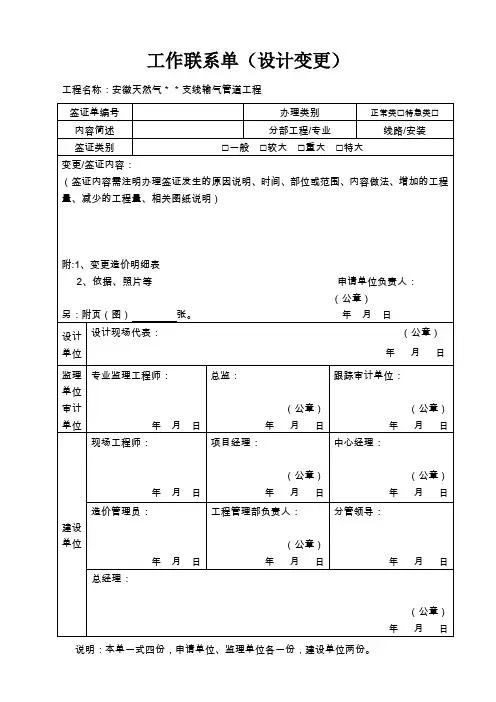
签证变更和设计变更 流程
- 格式:doc
- 大小:16.50 KB
- 文档页数:5
签证变更和设计变更 流程
英文回答:
Visa changes and design changes are two different
processes that involve different requirements and
procedures. Let's start with visa changes.
When it comes to visa changes, it typically refers to
making modifications or updates to an existing visa. This
could include extending the duration of stay, changing the
visa category, or adding additional endorsements. The
specific requirements and procedures for visa changes vary
depending on the country and the type of visa.
For example, if someone is in the United States on a
student visa and decides to change their program of study,
they would need to submit a request to the U.S. Citizenship
and Immigration Services (USCIS) for a change of status.
This would involve providing documentation such as a new
acceptance letter from the educational institution and proof of financial support for the new program.
In some cases, individuals may need to leave the
country and apply for a new visa altogether. For instance,
if someone in the United Kingdom on a work visa gets a new
job offer from a different company, they would need to
return to their home country and apply for a new work visa
based on the new employment.
Now, let's shift our focus to design changes. Design
changes refer to modifications or alterations made to the
original design of a product, service, or system. These
changes are typically made to improve functionality,
aesthetics, or user experience.
The process for design changes can vary depending on
the industry and the specific product or service. It often
involves a series of steps such as identifying the need for
change, conducting research and analysis, developing new
design concepts, testing and evaluating the proposed
changes, and implementing the final design.
For example, if a company wants to update the design of
their website to make it more user-friendly, they would
start by gathering feedback from users and analyzing data
on user behavior. Based on this information, they would
then work with a team of designers to create new design
concepts and prototypes. These prototypes would be tested
with users to gather feedback and make further refinements.
Once the final design is approved, it would be implemented
on the website.
In conclusion, visa changes and design changes are two
distinct processes with their own requirements and
procedures. Visa changes involve modifying an existing visa,
while design changes involve modifying the original design
of a product or service. The specific requirements and
procedures for each process depend on the country, visa
type, industry, and product/service in question.
中文回答:
签证变更和设计变更是两个不同的过程,涉及到不同的要求和流程。让我们先从签证变更开始。
签证变更通常指的是对现有签证进行修改或更新。这可能包括延长停留期限、更改签证类别或添加额外的批准。具体的签证变更要求和流程因国家和签证类型而异。
例如,如果有人在美国持有学生签证,并决定更改学习计划,他们需要向美国公民和移民服务局(USCIS)提交变更身份的申请。这将涉及提供文件,如来自教育机构的新录取通知书和新计划的财务支持证明。
在某些情况下,个人可能需要离开该国并重新申请签证。例如,如果在英国持有工作签证的人收到其他公司的新工作邀请,他们需要返回自己的国家,并基于新的就业情况申请新的工作签证。
现在,让我们转移到设计变更。设计变更指的是对产品、服务或系统的原始设计进行修改或改变。这些变更通常是为了改善功能、美观度或用户体验。
设计变更的过程因行业和具体的产品或服务而异。它通常包括一系列步骤,例如确定变更的需求,进行研究和分析,开发新的设计概念,测试和评估提议的变更,并实施最终设计。
例如,如果一家公司想要更新其网站的设计,使其更加用户友好,他们将首先收集用户反馈并分析用户行为数据。基于这些信息,他们将与设计团队合作创建新的设计概念和原型。这些原型将与用户进行测试,以收集反馈并进行进一步的改进。一旦最终设计获得批准,将在网站上实施。
总之,签证变更和设计变更是两个不同的过程,具有各自的要求和流程。签证变更涉及修改现有签证,而设计变更涉及修改产品或服务的原始设计。每个过程的具体要求和流程取决于国家、签证类型、行业和相关产品/服务。