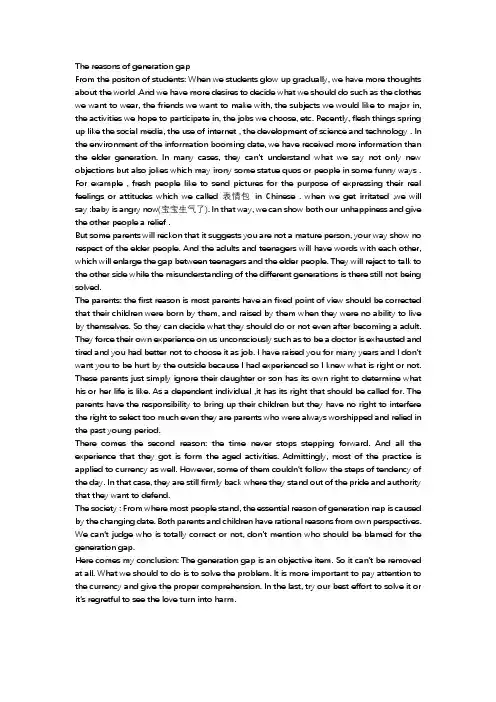
Title: The Causes of the Generation Gap in ChinaThe generation gap, a universal phenomenon that exists not only in China but also globally, refers to the differences in values, mindsets, behaviors, and moral standards between different generations. In China, where traditional culture intertwines with rapid modernization, the generation gap is particularly pronounced and complex. This essay delves into the underlying causes of the generation gap in China. Firstly, the rapid pace of social and economic development has significantly contributed to the widening of the generation gap. As China has transformed from a largely agrarian society to a modern industrial and technological powerhouse, the lifestyles, aspirations, and priorities of people have undergone drastic changes. Older generations, who have grown up amidst scarcity and hardships, often have a more conservative outlook on life, emphasizing thrift and stability. In contrast, younger generations, born and raised in an era of abundance and rapid information exchange, tend to be more adventurous, individualistic, and receptive to new ideas. This disparity in life experiences and attitudes creates a rift between the generations. Secondly, the differences in educational backgrounds and knowledge levels play a pivotal role in shaping the generation gap. The older generation, many of whom had limited access to education, relies heavily on their practical experience and traditional wisdom. Conversely, the younger generation, armed with a broader range of knowledge acquired through formal education and the Internet, often possesses a more global perspective and innovative mindset. This disparity in educational backgrounds and knowledge levels leads to disagreements on various issues, including career choices, lifestyle preferences, and social norms.Thirdly, the rapid evolution of technology has further exacerbated the generation gap. The younger generation is adept at utilizing digital tools and platforms, while the older generation may struggle to keep up with the pace of technological change. This technological divide not only limits communication between generations but also reinforces stereotypes and misunderstandings. For instance, older people may view the constant use of smartphones and social media by young people as a sign of laziness or distraction, while young people may perceive the older generation's reluctance to embrace technology as a sign of being outdated or inflexible. Moreover, changes in family structures and societal roles have contributed to the generation gap. In traditional Chinese families, older generations held significant authority and decision-making power. However, with the advent of the one-child policy and the rise of individualism, family structures have become more nuclear and egalitarian. This shift in power dynamics has empowered younger generations to assert their independence and question traditional norms. Consequently, conflicts arise when older and younger generations clash over issues such as career aspirations, marriage and family life, and personal choices.Lastly, the differing values and priorities of each generation contribute to the persistence of the generation gap. Older generations tend to prioritize family, stability, and social harmony, while younger generations place greater emphasis onself-expression, personal fulfillment, and career advancement. These differing values and priorities lead to disagreements and misunderstandings in various aspects of life, including work-life balance, leisure activities, and social interactions.In conclusion, the generation gap in China is a complex phenomenon rooted in multiple factors, including rapid social and economic development, differences in educational backgrounds and knowledge levels, the rapid evolution of technology, changes in family structures and societal roles, and differing values and priorities. To bridge this gap, it is essential for members of different generations to engage in open communication, foster mutual understanding, and respect each other's perspectives and experiences. By doing so, we can create a more harmonious society where generations can learn from and support each other.。