
情态动词+have done表推测
- 格式:pptx
- 大小:218.84 KB
- 文档页数:16

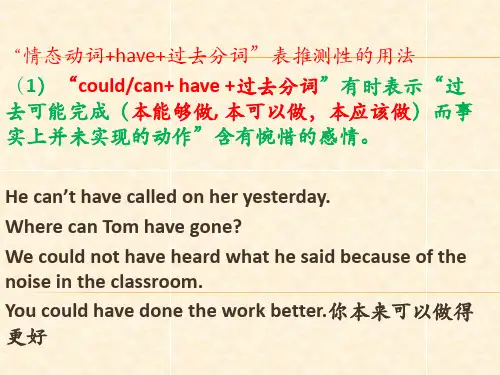
情态动词+havedone的用法小结摘要:情态动词have done不仅是高中英语教学的重点和难点,也是高考的重点。
情态动词have done有两大功能:一是表示推测;二是表示虚拟。
关键词:情态动词;推测;虚拟情态动词是高中阶段一个难以掌握的语法项目,且一直是高考的重点和难点。
近年来各省市对情态动词的考查热点之一就是:“情态动词+have done”。
“情态动词+have done”这一结构有两大功能:一是表示推测;二是表示虚拟。
一、用“情态动词+have done”结构表示对过去动作的推测,高考试题中常用过去时态或过去的时间状语给以暗示1.must have done:表示对过去动作的肯定推测,常译作“一定做了……”,语气十分强烈,只能用于肯定句中。
(1)jack described his father,who _______ a brave boy many years ago,as a strong-willed man.(2010年安徽)a.would beb.would have beenc.must bed.must have been(2)—guess what!i have got a for my term paper.(2007年上海)—great!you____read widely and put a lot of work into it.a.mustb. shouldc.must haved.should havekeys:d;c(注意:must have done只能表推测)2.may/might have done表示对过去的可能性推测“过去可能做了某事”,其程度小于must have done,一般也用于肯定句。
如:—i left my handbag on the train,but luckily someone gave it to the railway officials.—how unbelievable to get it back!i mean,someone _______ it.(2011年江苏)a.will have stolenb.might have stolenc.should have stolend.must have stolenkeys:b3.can/could (not)have done意思是“过去(不)可能做过某事”,常用于否定句和疑问句。
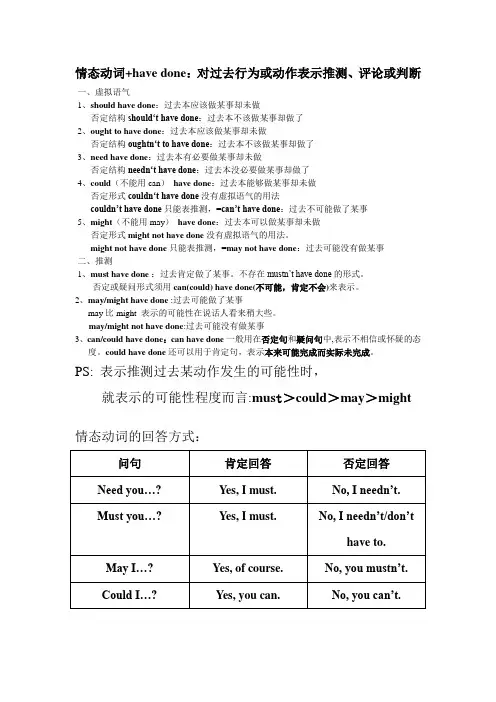
情态动词+have done:对过去行为或动作表示推测、评论或判断一、虚拟语气1、should have done:过去本应该做某事却未做否定结构should‘t have done:过去本不该做某事却做了2、ought to have done:过去本应该做某事却未做否定结构oughtn‘t to have done:过去本不该做某事却做了3、need have done:过去本有必要做某事却未做否定结构needn‘t have done:过去本没必要做某事却做了4、could(不能用can)have done:过去本能够做某事却未做否定形式couldn‘t have done没有虚拟语气的用法couldn’t have done只能表推测,=can’t have done:过去不可能做了某事5、might(不能用may)have done:过去本可以做某事却未做否定形式might not have done没有虚拟语气的用法。
might not have done只能表推测,=may not have done:过去可能没有做某事二、推测1、must have done:过去肯定做了某事。
不存在mustn’t have done的形式。
否定或疑问形式须用can(could) have done(不可能,肯定不会)来表示。
2、may/might have done :过去可能做了某事may比might 表示的可能性在说话人看来稍大些。
may/might not have done:过去可能没有做某事3、can/could have done:can have done一般用在否定句和疑问句中,表示不相信或怀疑的态度。
could have done还可以用于肯定句,表示本来可能完成而实际未完成。
PS: 表示推测过去某动作发生的可能性时,就表示的可能性程度而言:mus t>could>may>might 情态动词的回答方式:。
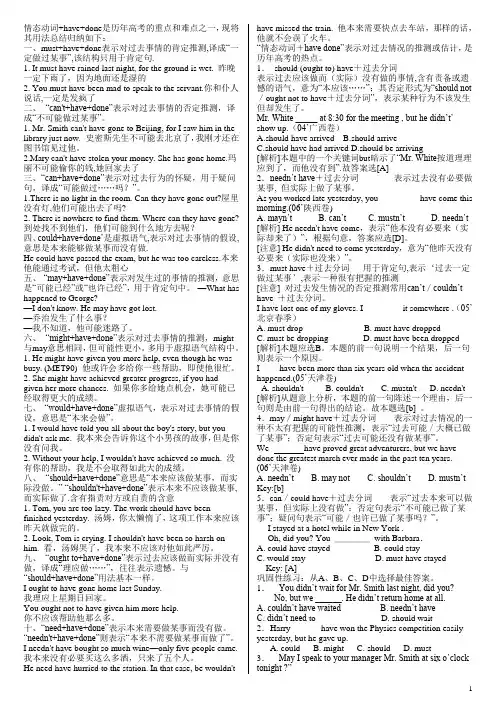
情态动词+have+done是历年高考的重点和难点之一,现将其用法总结归纳如下:一、must+have+done表示对过去事情的肯定推测,译成“一定做过某事”,该结构只用于肯定句.1. It must have rained last night, for the ground is wet. 昨晚一定下雨了,因为地面还是湿的2. You must have been mad to speak to the servant.你和仆人说话,一定是发疯了二、“can't+have+done”表示对过去事情的否定推测,译成“不可能做过某事”。
1. Mr. Smith can't have gone to Beijing, for I saw him in the library just now. 史密斯先生不可能去北京了,我刚才还在图书馆见过他。
2.Mary can't have stolen your money. She has gone home.玛丽不可能偷你的钱,她回家去了三、“can+have+done”表示对过去行为的怀疑,用于疑问句,译成“可能做过……吗?”。
1.There is no light in the room. Can they have gone out?屋里没有灯,他们可能出去了吗?2. There is nowhere to find them. Where can they have gone? 到处找不到他们,他们可能到什么地方去呢?四、could+have+done’是虚拟语气,表示对过去事情的假设,意思是本来能够做某事而没有做.He could have passed the exam, but he was too careless.本来他能通过考试,但他太粗心五、“may+have+done”表示对发生过的事情的推测,意思是“可能已经”或“也许已经”,用于肯定句中。