七上U 3导学设计
- 格式:doc
- 大小:198.50 KB
- 文档页数:18
A: Are these your pencils?
B: Yes, they are. They’re_____ ______.
They’re ________.
B: No, they aren’t . They’re _____ ______.
They’re _____.
B: No, they aren’t . They’re _______ ________.
Step6 Activity 1b(5mins)
1.Read the conversationsand circle the key words.
________________________________________
2.Listen and number the conversations.
Is this / that …?是一般疑问句,意为“这/那是……吗?”,回答时要用yes(是)或no(不是),且答语中要用it替代this或that。如:— Is that his schoolbag? — Yes, it is. / No, it isn’t.
Are these / those …?常用于询问对方“这些/那些是……吗?”,回答时通常用they来代替these或those,以避免重复。如:— Are these your friends? ---Yes, they are. / No, they aren’t.
___________________________________________
Step5Sentencepresentation(6mins)
1. Show someschoolthings and tell whose thing it is .
A: Is this your schoolbag?
这四个单词都是指示代词
单数形式:________ ______复数形式:_______________
1.A:Is this your pencil?
B:Yes, it is.It’s _____./No, it isn’t.It’s ____/_____.
2.A:Are those his books?
B:No, they______. They are his/ hers./Yes, they are.They’re __________.
Step 9:Practice the conversations2c(3minutes)
Read through the sample conversation. Then makeourown conversations using the school things in the classroom in pairs like this:
2. Finish2b.Listen again. Complete the conversation with the words in the box.
________________________________________
First listen, then check the answers.
3. Learn some sentence patterns.
4.Train the listening and speaking skills
5. Emotional aims:It’s polite to thank the one who helps you.
Ⅱ. Studying Key Points
1.Learn andmaster some new words about school things:
a pencil a pen books an eraser a ruler
a pencil box a schoolbag a dictionary
2.The key sentence patterns:
1)Is this/ thatyour pencil?
Yes, it is.It’s mine./No, it isn’t.It’s his/ hers.
2)Arethese/those his books?
Yes, they are.They’re mine./No, they’re aren’t. They’re his /hers.
导学案
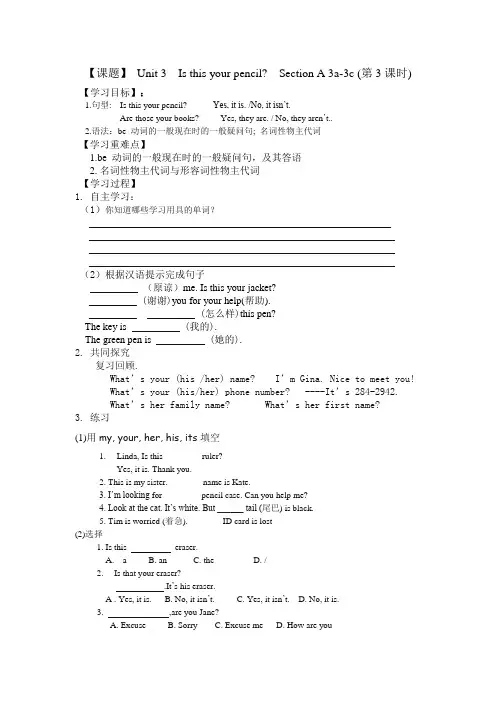
Unit 3 Is this your pencil?
Period 1 Section A (1a-2d)
【学习目标】
Ⅰ. Studying Aims and Demands
1. Learn some new words about school things.
2. Learn to recognize the owner of things.
2.Answer the teacher’s question:
What school things can you see?
________________________________________
Step2Wordpresentation(7mins)
1. Look at a picture of a pencil and learn to read and spell the new wordpencil.
2. In the same way, to learn the following new words:
pen book eraser ruler
pencil box schoolbag dictionary
3. Show some pictures again and read these words together.
They’re _____.
3. Show more pictures and practice the conversation above together.
4. A game: According to some pictures and practice thesepossessive pronouns.
4. Listen to others’ ideas and correct or improve your own answers, Then write them down.
听力技巧小结:
1.__________________________________________ _.
2.___________________________ _____________.
Step 10:Role-play theconversation2d( 3 minutes )
1.Readthe conversationsilently.
2.Repeat sentence by sentence.
3. Role- play the conversation.
4. Show the conversations in front of the class.
4. Show your conversations in class by asking and answering one by one.
Step 8:Listening practice.( 5 minutes )
1.Finish2a.
Listen and check the thingswehear .
B:_________________________________.
A:_________________________________.
B:_________________________________.
3. Practice your own conversations with your partners in your group.
4. Spell the new words together ,then write them down according to the pictures.
________________ ________________ ________________ ________________ ________________ ________________ ________________ ________________
Step3Activity 1a(2mins)
1 picture.
2. Ask someone to reportthe answers.
_______________________________________
3.Someone read the words for the students, the others follow together.
Ⅲ.Studying Difficult Points
Learn and be able to use possessive pronouns and talk about whose things they are.
【学习过程】
Step1Lead in (3mins)
1.Watch a video about “what’s this?”.
Step 7 Activity 1c(3mins)
1.Practiceconversationsabovewithyourpartners.Then make your own conversations.
2. Makeup yourown conversations.
A:_________________________________.
__________________________________________
3. Have a think: What preparations have we done before beginning to listen to the conversations?
B: Yes, they are. They’re_____ ______.
They’re ________.
B: No, they aren’t . They’re _____ ______.
They’re _____.
B: No, they aren’t . They’re _______ ________.
Step6 Activity 1b(5mins)
1.Read the conversationsand circle the key words.
________________________________________
2.Listen and number the conversations.
Is this / that …?是一般疑问句,意为“这/那是……吗?”,回答时要用yes(是)或no(不是),且答语中要用it替代this或that。如:— Is that his schoolbag? — Yes, it is. / No, it isn’t.
Are these / those …?常用于询问对方“这些/那些是……吗?”,回答时通常用they来代替these或those,以避免重复。如:— Are these your friends? ---Yes, they are. / No, they aren’t.
___________________________________________
Step5Sentencepresentation(6mins)
1. Show someschoolthings and tell whose thing it is .
A: Is this your schoolbag?
这四个单词都是指示代词
单数形式:________ ______复数形式:_______________
1.A:Is this your pencil?
B:Yes, it is.It’s _____./No, it isn’t.It’s ____/_____.
2.A:Are those his books?
B:No, they______. They are his/ hers./Yes, they are.They’re __________.
Step 9:Practice the conversations2c(3minutes)
Read through the sample conversation. Then makeourown conversations using the school things in the classroom in pairs like this:
2. Finish2b.Listen again. Complete the conversation with the words in the box.
________________________________________
First listen, then check the answers.
3. Learn some sentence patterns.
4.Train the listening and speaking skills
5. Emotional aims:It’s polite to thank the one who helps you.
Ⅱ. Studying Key Points
1.Learn andmaster some new words about school things:
a pencil a pen books an eraser a ruler
a pencil box a schoolbag a dictionary
2.The key sentence patterns:
1)Is this/ thatyour pencil?
Yes, it is.It’s mine./No, it isn’t.It’s his/ hers.
2)Arethese/those his books?
Yes, they are.They’re mine./No, they’re aren’t. They’re his /hers.
导学案
Unit 3 Is this your pencil?
Period 1 Section A (1a-2d)
【学习目标】
Ⅰ. Studying Aims and Demands
1. Learn some new words about school things.
2. Learn to recognize the owner of things.
2.Answer the teacher’s question:
What school things can you see?
________________________________________
Step2Wordpresentation(7mins)
1. Look at a picture of a pencil and learn to read and spell the new wordpencil.
2. In the same way, to learn the following new words:
pen book eraser ruler
pencil box schoolbag dictionary
3. Show some pictures again and read these words together.
They’re _____.
3. Show more pictures and practice the conversation above together.
4. A game: According to some pictures and practice thesepossessive pronouns.
4. Listen to others’ ideas and correct or improve your own answers, Then write them down.
听力技巧小结:
1.__________________________________________ _.
2.___________________________ _____________.
Step 10:Role-play theconversation2d( 3 minutes )
1.Readthe conversationsilently.
2.Repeat sentence by sentence.
3. Role- play the conversation.
4. Show the conversations in front of the class.
4. Show your conversations in class by asking and answering one by one.
Step 8:Listening practice.( 5 minutes )
1.Finish2a.
Listen and check the thingswehear .
B:_________________________________.
A:_________________________________.
B:_________________________________.
3. Practice your own conversations with your partners in your group.
4. Spell the new words together ,then write them down according to the pictures.
________________ ________________ ________________ ________________ ________________ ________________ ________________ ________________
Step3Activity 1a(2mins)
1 picture.
2. Ask someone to reportthe answers.
_______________________________________
3.Someone read the words for the students, the others follow together.
Ⅲ.Studying Difficult Points
Learn and be able to use possessive pronouns and talk about whose things they are.
【学习过程】
Step1Lead in (3mins)
1.Watch a video about “what’s this?”.
Step 7 Activity 1c(3mins)
1.Practiceconversationsabovewithyourpartners.Then make your own conversations.
2. Makeup yourown conversations.
A:_________________________________.
__________________________________________
3. Have a think: What preparations have we done before beginning to listen to the conversations?