高三非谓语动词讲义
- 格式:doc
- 大小:95.66 KB
- 文档页数:9
1 非谓语动词
非谓语动词是指在句子中不是谓语的动词:
A: 是动词的特殊形式,有时态、语态的变化;功能可分为1、2、3;
B: 不受制于主语,没有人称和数的变化
C:种类
动名词
动名词既具有动词的一些特征、有时态语态变化,又具有名词的句法功能,在句中做主语、宾语、表语、 定语
时态 语态 主动式 被动式
一般式
(谓语动词同时发生) doing being done
完成式
(谓语动词发生之前) having done having been done
否定式:not + 动名词
逻辑主语:物主代词(有时用宾格代词)、名词所有格(有时用名词普通格)
Eg. 1 .He forgot having been taken to Guangzhou when he was five years old(宾语、完成式)
2. His not being praised upset him a lot.(主语、被动式)
3. In the ant city, the queen's job is laying eggs. (表语)
4.He can't walk without a walking-stick(定语)
5.The cave, his hiding-place is secret (同位语)
动名词的习惯用法
(1)要记住如下动词及短语只跟动名词作宾语: 非谓语动词
动词不定式(3—起名词、形容词、副词作用) 分词(2—起形容词、副词作用) 现在分词(表主动、进行)
过去分词(表被动、完成) 动名词(1—起名词作用)
2 enjoy, finish, suggest, avoid(避免), excuse ,delay, imagine, keep, miss, consider, admit(承认),deny(否认), mind, permit, forbid, practise, risk(冒险), appreciate(感激), be busy, be worth, feel like, can't stand, can't help(情不自禁地), prevent\keep\stop…(from), ,protect…from, set about, be engaged in, spend…(in), succeed in, be used to, look forward to, object to, pay attention to, insist on, feel like、 have difficulty/trouble/problem doing sth 、have a good/great/wonderful time doing sth
no use
no good
no fun
② It`s + a shame + doing
a waste of time/money
useless
dangerous
③ There is no + doing... eg: There is no joking about the matter.
There is no point/sense/harm/ use doing sth
(4)主动形式表被动含义:
want (需要) doing
need (需要)
require (需要)
Sb\ Sth. + stand (经受) +
bear (忍受)
be + past (超过)
be worth (值得) to be done
be + in need of (需要)
e.g.
The boy needs taking good care of= The boy needs to be taken good care of .
比较 The boy needs to have a good rest This pair of shoes is past mending.
The problem is in need of working out. The question is well worth discussing
动词不定式
动词不定式:(to)+do,具有名词、形容词、副词的特征。
否定式:not /never + (to) do
逻辑主语:of\for sb+to do sth
以do为例,动词不定式的构成如下:
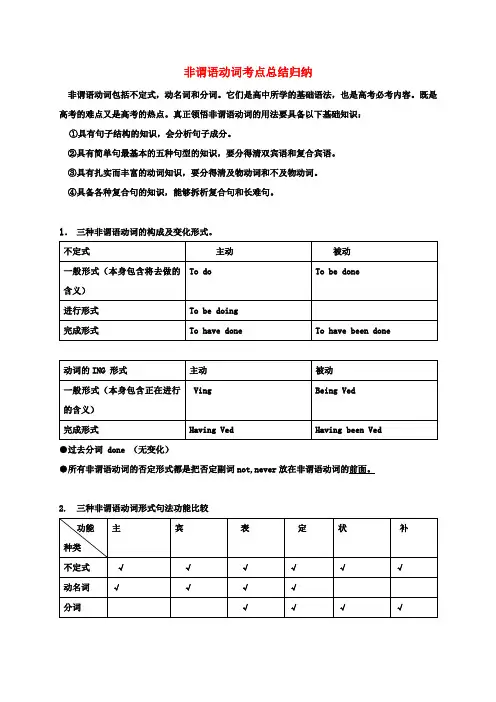
时态/语态 主动语态 被动语态
一般时 to do to be done
进行时 to be doing to be being done
完成时 to have done to have been done
完成进行时 to have been doing
(1)一般式:不定式的一般式所表示的动作与谓语动词动作同时发生或发生在谓语动词动作之后.
例如:
The patient asked to be operated on at once. 病人要求马上手术。
The teacher ordered the work to be done. 老师要求完成工作。
(2)进行式:不定式的进行式所表示的动作与谓语动词动作同时发生,例如:
3 The boy pretended to be working hard. 男孩假装工作得很努力。
(3)完成式:不定式的完成式表示的动作发生在谓语动词动作之前,例如:
I happened to have been taken to the cinema. 我偶然被带去过电影院。
(4)完成进行时:不定式的完成进行式表示谓语动作之前一直在进行的动作,
to + have been + v-ing ,例如:
The battle was said to have been going on for two days.
不定式的句法功能:
(1)作主语 To lose your heart means failure.
动词不定式短语作主语时,常用it作形式主语,真正的主语不定式置于句后
常用句式有:1、It+be+名词+to do。2、It takes sb.+some time+to do。3、It+be+形容词+of \for sb
+to do。 careless,,clever,good,foolish,honest,kind,lazy,nice,right,silly,stupid,wise,等表示赞扬或批评的形容词,不定式前的逻辑主语用of sb 。
(2)作表语:He appears to have caught a cold.
(3)作宾语:常与不定式做宾语连用的动词有:want, hope, wish, offer, fail, plan, learn, pretend, refuse,
manage, help, agree, promise, prefer, afford,agree,arrange,plan,forget
Eg. How did you manage to finish it so soon?
如果不定式(宾语)后面有宾语补足语,则用it作形式宾语,真正的宾语(不定式)后置,放在宾语补足语后面,常见的词有:think feel expect make suppose imagine …例如:
Marx found it important to study the situation in Russia.
动词不定式也可充当介词宾语,如:
I have no choice but to stay here.
He did nothing last Sunday but repair his bike.
有些动词常用代疑问词的不定式作宾语,例如:teach,remember,advise,show,
advise,show,know,forget,learn,understand,see,hear,find out,explain,decide,
discuss等动词不定式前有时可与疑问词连用,如:
He gave us some advice on how to learn English.
They haven’t decided when to leave so far.
(4)作宾语补足语:
在复合宾语中,动词不定式可充当宾语补足语,补充说明作宾语的名词或代词的动作或状态,如下动词常跟这种复合宾语:want, wish, ask, tell, order, beg, permit, help, advise, persuade, allow,
prepare, cause, force, call on, wait for, invite, invite, warn, expect, prefer, encourage等
Their parents prefer them to be home early.
My parents don’t allow me to go out at night.
(5)作定语:
动词不定式作定语,放在所修饰的名词或代词后。与所修饰名词有如下关系:
1.动宾关系:
I have a meeting to attend.
注意:不定式为不及物动词时,所修饰的名词如果是地点、工具等,应有必要的介词,如:
He found a good house to live in. The child has nothing to worry about.
What did you open it with?
如果不定式修饰time, place, way,可以省略介词:
He has no place to live. This is the best way to work out this problem.
如果不定式所修饰名词是不定式动作承受者,不定式可用主动式也可用被动式:
Have you got anything to send? 你要送什么东西吗? (你自己去送)
Have you got anything to be sent? 你有什么东西需要送吗? (别人替你送)