(完整版)情态动词的基本用法归纳
- 格式:docx
- 大小:13.67 KB
- 文档页数:4
情态动词的基本用法归纳
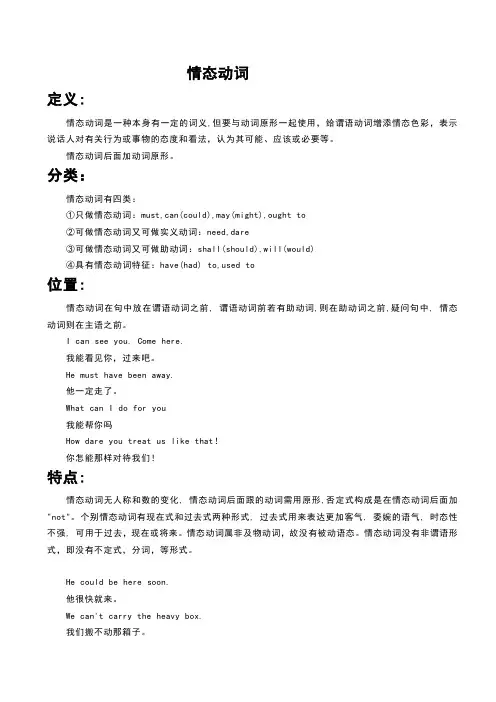
情态动词有 can (could), may (might), must, have to, shall (should, will (would),
dare (dared), need (needed), ought to 等。 情态动词无人称和数的变化;不能单独使用,必须与其后的动 词原形构成谓语。
一、 can, could
1) 表示能力(体力、知识、技能) 。
Can you lift this heavy box? (体力)
Mary can speak three languages. (知识)
Can you skate?(技能)
此时可用be able to代替。Can只有一般现在时和一般过去式; 而be able to则有更多的
时态。
I 'll not be able to come this afternoon.
当表示 经过努力才得以做成功某事 ”时应用be able to,不能用Can。如:
He was able to go to the party yesterday evening in spite of the heavy rain.
2) 表示请求和允许。
- Can I go now?
- Yes, you can. / No, you can 't.
此时可与 may 互换。在疑问句中还可用 could,might 代替,不是过去式,只是语气更委 婉,不能用于肯定句和答语中。
- Could I come to see you tomorrow?
- Yes, you can. ( No, I 'm afraid not. )
3) 表示客观可能性(客观原因形成的能力) 。
They've changed the timetable, so we can go by bus instead.
This hall can hold 500 people at least.
4) 表示推测(惊讶、怀疑、不相信的态度) ,用于疑问句、否定句和感叹句中。
Can this be true?
This can 't be done by him.
How can this be true?
二、 may, might
1) 表示请求和允许。 might 比 may 语气更委婉,而不是过去式。否定回答时可用 can't
或mustn' ,t表示 不可以,禁止 ”
- Might/ May I smoke in this room?
- No, you mustn ' t.
- May/Might I take this book out of the room?
- Yes, you can. (No, you can ' t / mustn ' t. )
用May I…?征徇对方许可时比较正式和客气,而用 Can I...?在口语中更常见。
2) 用于祈使句,表示祝愿。
May you succeed!
3) 表示推测、可能性(不用于疑问句) 。
might不是过去式,它所表示的可能性比 may小。
1. He may /might be very busy now.
2. Your mother may /might not know the truth. must, have to
1) 表示必须、必要。
You must come in time.
在回答引出的问句时, 如果是否定的,不能用mustn' t禁止,不准),而用needn' t, don ' t
have to (不必) .
- Must we hand in our exercise books today?
- Yes, you must.
- No, you don ' t have to / you needn ' t.
2) must 是说话人的主观看法, 而 have to 则强调客观需要。 Must 只有一般现在时, have to
有更多的时态形式。
1.
2.
3)
1.
2.
四、
1) dare作情态动词用时,常用于疑问句、否定句和条件从句中 ,过去式形式为dared。
1.
2.
3.
2) ought to, should 代替。
1 . You needn' t come so early.
2. Need I finish the work today?
- Yes, you must. / No, you needn ' t.
3) dare和need作实义动词用时, 有人称、时态和数的变化。在肯定句中, dare后面 常接带 to
的不定式。 在疑问句和否定句中, dare 后面可接带 to 或不带 to 的不定式。 而 need 后面只能接带
to 的不定式。
1. I dare to swim across this river.
2. He doesn' t dare (to) answer.
五、 shall, should
1) shall 用于第一人称,征求对方的意见。
What shall we do this evening? he play isn ' t interesting, I reyamll ust go now.
I had to work when I was your age. 表示推测、可能性(只用于肯定的陈述句)
You' re Tom' s good friend, so you must know what he likes best. Your
mother must be waiting for you now.
dare, need
How dare you say I ' m unfair?
He daren 't speak English before such a crowd, dare he?
If we dared not go there that day , we couldn ' t get the beautiful flowers.
need 作情态动词用时 , 常用于疑问句、否定句。在肯定句中一般用 must, have to, 2) shall 用于第二、三人称,表示说话人给对方的命令、警告、允诺或威胁。
1. You shall fail if you don ' t wc警告aTd.(
2. He shall have the book when I finish it.( 允诺 )
3. He shall be puni shed.(威胁)
六、 will, would
1) 表示请求、建议等, would 更委婉。
Will / Would you pass me the ball, please?
2) 表示意志、愿望和决心。
1. I will never do that again.
2. They asked him if he would go abroad.
3) would 表示过去反复发生的动作或某种倾向。 would 表示过去习惯时比 used to 正式,且没有 “现已无此习惯 ”的含义。
1. During the vacation, he would visit me every other day.
2. The wound would not heal.
4) 表示估计和猜想。
It would be about ten o ' clock when she left home.
七、 should, ought to
1) should, ought to 表示 “应该 ”, ought to 表示义务或责任,比 should 语气重。
1. I should help her because she is in trouble.
2. You ought to take care of the baby.
2) 表示劝告、建议和命令。 should, ought to 可通用,但在疑问句中常用
1. You should / ought to go to class right away.
2. Should I open the window?
3) 表示推测 should , ought to ( 客观推测 ), must( 主观推测 )。
1. He must be home by now. ( 断定他已到家 )
2. He ought to/should be home by now.( 不太肯定 )
3. This is where the oil must be.( 直爽 )
4. This is where the oil ought to/should be.( 含蓄 ) 八、 情态动词 +不定式完成式( have done)
1) can / could + have done 在肯定句中表示 “本来可以做而实际上能做某事 ”,是虚拟语
气;在疑问句或否定句中表示对过去行为的怀疑或不肯定 , 表示推测。
1. You could have done better, but you didn ' t try your(虚拟语气)
2. He can ' t have been to that town(. 推测)
3. Can he have got the book? (推测)
2) may / might + 不定式完成式( have done) 表示对过去行为的推测。不能用于疑问句中,没有虚拟语气的用法。
能性比 may 小。
1. He may not have finished the work .
2. If we had taken the other road, we might have arrived earlier.
3) must +不定式完成式( have done) 用于肯定句中,表示对过去行为的推测。意为 “一定、想必 ”。其疑问、否定形式用 can,
can '代替。参看 1) can / could + have done 表示推测。
1. You must have seen the film Titanic.
2. He must have been to Shanghai.
4) should +不定式完成式( have done) 用于肯定句中,表示对过去行为的推测。
He should have finished the work by now 。
表示 “本应该做而实际上没有做某事 ”,其否定式表示某种行为本不该发生却发生了。 以与ought to +不定式完成式r have done)互换。
1. You ought to / should have helped him. (but you didn ' t.)
2. She shouldn ' t have taken away my measuring tape, for I wanted to use it.