
since, for, because, as, now that区别
- 格式:ppt
- 大小:12.50 KB
- 文档页数:4

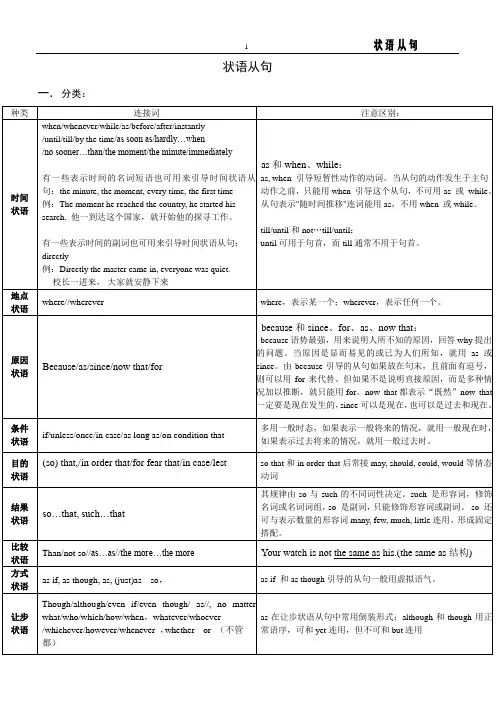
1 状语从句
状语从句
一. 分类:
种类 连接词 注意区别:
时间
状语 when/whenever/while/as/before/after/instantly
/until/till/by the time/as soon as/hardly…when
/no sooner…than/the moment/the minute/immediately
有一些表示时间的名词短语也可用来引导时间状语从句:the minute, the moment, every time, the first time
例:The moment he reached the country, he started his
search. 他一到达这个国家,就开始他的探寻工作。
有一些表示时间的副词也可用来引导时间状语从句:
directly
例:Directly the master came in, everyone was quiet.
校长一进来, 大家就安静下来 as和when、while:
as, when 引导短暂性动作的动词。当从句的动作发生于主句动作之前,只能用when 引导这个从句,不可用as 或 while。从句表示"随时间推移"连词能用as,不用when 或while。
till/until和not…till/until:
until可用于句首,而till通常不用于句首。
地点
状语 where//wherever where,表示某一个;wherever,表示任何一个。
原因
状语 Because/as/since/now that/for because和since、for、as、now that:
because语势最强,用来说明人所不知的原因,回答why提出的问题。当原因是显而易见的或已为人们所知,就用as或

副词从句(一)
副词从句(状语从句)是指在句中起副词作用的主谓结构,用从属连词引入。按语义副词从句可分为时间副词从句,地点副词从句,方式副词从句,条件副词从句,原因副词从句,结果副词从句,目的副词从句,比较副词从句,让步副词从句等。副词从句可以放在主句前面,也可以放在主句后面,甚至可以置于主句之间。前置时,从句一般用逗号和主句分开;后置时,从句与主句一般不用逗号分隔;置于句中的副词从句需用逗号与主句分开。
一、时间副词从句
1.由从属连词before, after, since, as, till, until, once, when, whenever, while, now(that), as
soon as, as (so) long as等引导的时间副词从句。
e.g. I) Once you object to a man, everything he does is wrong.
一旦你反对一个人,那么他无论坐什么事情都不对。
II) She comes talk to me whenever she feels lonely.
无论她什么时候觉得孤单,她都会来和我聊天。
III) He didn’t get married until he was forty.
他直到四十岁才结的婚。
IV) Now that you have done with your homework, you may have a rest.
现在你作业做完了,可以休息一下了。
【注1】when, while, as的区别
A.这三个词均可表示两个事件同时发生,在时间上没有先后之分。
e.g. I) As (when/while) I was walking down the street I noticed a police car in front of

初中英语语法之状语从句类型及考点讲义
状语从句概念解析
状语从句指句子用作状语时,起副词作用的句子,可以修饰谓语、非谓语动词、定语、状语或整个句子,可分为时间、地点、原因、条件、目的、结果、让步、方式和比较等从句,是英语复合句学习的一个重点,在各类考试中都会经常出现,这次就来给大家讲解一下什么是状语从句。
1. 时间状语从句:
常用引导词:when, as, while, as soon as, before, after,
since , till, until
特殊引导词:the minute, the moment, the second, every time,
the day,the instant, immediately , directly, no sooner … than,
hardly …when, scarcely … when instantly
I ran into the classroom as soon as the bell rang.
2. 地点状语从句:
常用引导词:where
特殊引导词:wherever, anywhere, everywhere
Wherever the sea is , you will find seamen.
3. 原因状语从句:
常用引导词:because=in that, since=now that, as, for
特殊引导词:seeing that, now that, in that, considering
that, given that
I 'm late because I didn't caught the bus.
4. 目的状语从句:
常用引导词:so that, in order that
特殊引导词: for fear that(唯恐/生怕),in the hope that,
for the purpose that, to the end that

1 状语从句的引导词及其区别
状语从句在句中作状语,修饰主句中的动词、形容词和副词等。按其作用和意义可分为时间、原因、目的、结果、条件、让步、方式、比较,地点九种。下面对这九种从句的要点加以总结。
一、各类状语从句的引导词及易混词的区别。
1. 时间状语从句
1) 引导词
(1)表示“当……时候”:when, while, as, whenever
When I went into the room, he was at work. 当我进屋时,他在工作。
While it was raining, they went out. 正在下着雨时,他们出去了。
Whenever he comes, he brings a friend. 他每次来都带个朋友。
(2)表示“一……就……”:as soon as, the moment/minute/instant,
immediately/directly/instantly , hardly/scarcely…when, no sooner…than
I’ll tell you the news the moment you come.你一来我就告诉你那个消息。
The machine will start instantly you press the button. 你一按按钮机器就会开动。
Hardly/Scarcely had I got to the cinema when the film began. 我一到电影院,电影就开始了。
I had no sooner reached home than it began to rain.我一到家天就下起了雨。
(3)其它:after, before, since, until, by the time,each time, next time
The boy went to bed after he finished my homework. 那男孩做完家庭作业之后才睡觉。