
英语教师试讲模板
- 格式:doc
- 大小:24.50 KB
- 文档页数:1
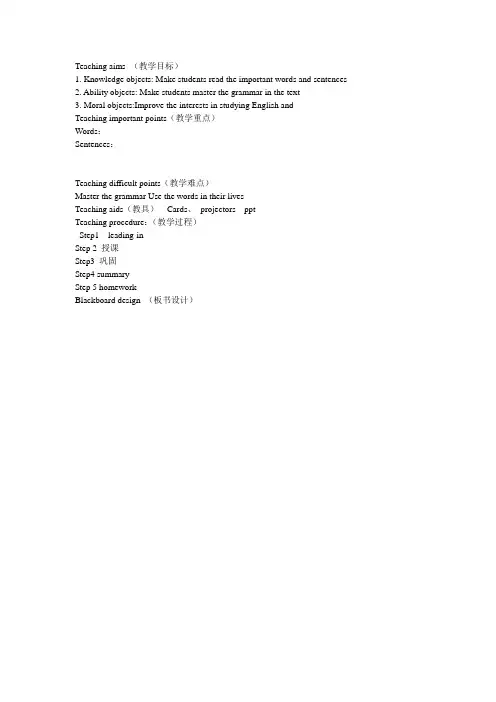

英语试讲教案模板全一、教学目标:1. 知识目标:(1)学生能够掌握单词:hello, good morning, good afternoon, good evening, how are you, I'm fine, thank you, I'm sorry, excuse me等。
(2)学生能够运用基本的日常英语进行自我介绍和简单交流。
2. 能力目标:(1)学生能够听懂并准确使用日常英语问候语。
(2)学生能够用英语进行简单的自我介绍和日常交流。
3. 情感目标:培养学生对英语学习的兴趣,提高他们的自信心,使他们能够积极参与课堂活动。
二、教学内容:1. 单词:hello, good morning, good afternoon, good evening, how are you, I'm fine, thank you, I'm sorry, excuse me等。
2. 日常英语问候语及回答。
三、教学重点与难点:1. 重点:单词的正确发音和运用。
2. 难点:日常英语问候语的运用和情景交际。
四、教学方法:1. 情境教学法:通过设置各种真实的生活场景,让学生在实际语境中学习和运用英语。
2. 互动教学法:引导学生积极参与课堂活动,进行真实的交流和互动。
五、教学步骤:1. 热身活动(5分钟):教师与学生用中文进行简单的自我介绍,引导学生用英语进行自我介绍。
2. 引入新课(10分钟):教师展示图片或实物,引导学生用英语描述,引入日常英语问候语的学习。
3. 讲解与示范(10分钟):教师讲解单词的正确发音和用法,并用示范句进行展示。
4. 练习与互动(10分钟):学生分组进行角色扮演,运用所学单词和问候语进行情景交际。
5. 总结与作业布置(5分钟):教师引导学生总结本节课所学内容,布置作业,要求学生课后进行复习和练习。
六、教学评估:1. 课堂观察:教师在课堂活动中观察学生的参与程度、发音准确性以及交际能力的运用。

一、教学目标1. 知识目标:- 学生能够掌握本节课的重点单词和句型。
- 学生能够正确发音并运用所学单词和句型进行简单的交流。
2. 能力目标:- 学生能够通过听、说、读、写等活动提高英语综合运用能力。
- 学生能够运用所学知识进行简单的角色扮演和情景对话。
3. 情感目标:- 学生能够对英语学习产生兴趣,增强学习英语的自信心。
- 学生能够在合作学习中培养团队精神,提高交际能力。
二、教学内容1. 单词:hello, good morning, how are you, please, thank you, goodbye2. 句型:How are you? I'm fine, thank you. And you? Goodmorning/afternoon/evening.3. 情景:日常问候和自我介绍三、教学重难点1. 重点:单词的正确发音和句型的运用。
2. 难点:在真实情境中运用所学知识进行交流。
四、教学准备1. 教师:多媒体课件、单词卡片、小礼品(作为奖励使用)2. 学生:准备好自我介绍的内容五、教学过程(一)导入(5分钟)1. 教师用英语进行自我介绍,引起学生的兴趣。
2. 学生模仿教师的自我介绍,教师给予鼓励和指导。
(二)新课讲授(15分钟)1. 展示单词卡片,引导学生说出单词的正确发音。
2. 通过游戏或歌曲等形式,让学生熟悉单词和句型。
3. 教师带领学生进行句型练习,如:- How are you? I'm fine, thank you. And you?- Good morning/afternoon/evening.4. 分组活动,让学生运用所学知识进行角色扮演。
(三)巩固练习(10分钟)1. 教师设置情景,让学生运用所学知识进行对话。
2. 学生自由组合,进行情景对话练习。
3. 教师巡视指导,纠正发音和语法错误。
(四)总结与拓展(5分钟)1. 教师总结本节课所学内容,强调重点单词和句型。

---Title: [Lesson Title]Subject: [Subject Area] (e.g., English Language Arts)Grade Level: [Grade Level]Duration: [Duration of the lesson, e.g., 45 minutes]Objectives:1. Knowledge and Skills:- Students will be able to understand and use new vocabulary related to [specific theme or topic].- Students will learn to construct [specific grammatical structure or phrase].- Students will be able to identify and analyze [specific literary or cultural elements].2. Processes and Strategies:- Students will engage in active listening and speaking activities.- Students will practice critical thinking and problem-solving skills through collaborative learning.- Students will develop their ability to communicate effectively in English.3. Attitudes and Values:- Students will appreciate the diversity of cultures and languages.- Students will develop a positive attitude towards learning English.- Students will understand the importance of perseverance and teamwork.Materials:- Textbook/Workbook: [Specific textbook or workbook title and page number(s)]- Whiteboard/Smartboard and markers/chalk- Handouts or worksheets- Multimedia resources (videos, songs, etc.)- Flashcards or cards for vocabulary practice- Interactive whiteboard or computer with internet access (if applicable)Procedure:1. Introduction (5 minutes)- Greet students and review the lesson objectives.- Briefly introduce the topic of the lesson.- Engage students with a relevant question or discussion prompt.2. Warm-Up (5 minutes)- Conduct a quick review of previously learned material to activate prior knowledge.- Use a short activity or game to get students warmed up, such as a vocabulary quiz or a quick conversation about a recent topic.3. Presentation (10 minutes)- Introduce new vocabulary and grammatical structures using visual aids, examples, and real-life contexts.- Demonstrate the use of the new language with a clear example.- Use interactive whiteboard tools to highlight key points.4. Practice (15 minutes)- Divide students into pairs or small groups for activities that reinforce the new language.- Provide structured practice activities such as:- Role-plays- Fill-in-the-blanks exercises- Vocabulary matching- Grammar practice sheets5. Application (10 minutes)- Have students apply what they have learned in a creative or practical way.- Assign a task that requires students to use the new language in a real-life scenario, such as writing a short paragraph or creating a poster.6. Consolidation (5 minutes)- Conclude the lesson with a summary of the key points.- Ask students to reflect on what they have learned and how they can use it in their daily lives.- Provide any additional resources or homework assignments for further practice.7. Assessment (Throughout the lesson)- Observe students' participation and engagement.- Assess understanding through questioning, responses, and task completion.- Provide feedback and encourage students to correct their own mistakes.8. Closing (1 minute)- Thank students for their participation.- Briefly review the main points of the lesson.- Invite any questions or comments from students.---Reflection:- After the lesson, reflect on the effectiveness of the teaching methods used.- Consider how the lesson objectives were met and identify areas for improvement.- Note any student responses or behaviors that could inform future lessons.---This template can be adapted to fit the specific needs of any English lesson, ensuring that it is well-structured, engaging, and conducive to learning.。

初中英语教师面试试讲模板自我介绍(Introduction)大家好,我是(你的姓名),非常荣幸能够参加这次初中英语教师面试。
我是一名热爱英语教育的教师,拥有(教育背景和相关工作经验)。
在接下来的试讲中,我将为大家呈现一个关于(主题)的课堂示范。
课堂目标(Lesson Objectives)本节课的目标是帮助学生掌握(核心能力或知识点)。
通过本节课的研究,学生将能够(列举具体目标)。
课堂准备(Lesson Preparation)在开始课堂之前,我将为学生准备好以下教学资源和材料:- PowerPoint演示文稿- 学生教材相关页面复印件- 课堂练题- 黑板和白板笔教学步骤(Teaching Steps)以下是我将采取的教学步骤:1. 热身(Warm-up):通过一个有趣的活动引起学生的兴趣,例如英文歌曲或趣味问题。
2. 导入(Introduction):介绍本节课将要研究的主题,并与学生进行简短的互动,激发他们的思考。
3. 主体教学(Main Teaching):通过展示PPT、解释教材内容和示范演练的方式,逐步讲解核心知识点,并与学生进行互动。
4. 练与巩固(Practice and Reinforcement):让学生进行小组或个人练,巩固所学内容,并提供即时的反馈和指导。
5. 总结与评价(Summary and Evaluation):总结本节课的重点,与学生一起回顾所学内容,并提供一些评价或扩展建议。
6. 课堂延伸活动(Extension Activity):鼓励学生在课后继续探索相关主题,并给予一些延伸研究的建议。
师生互动(Teacher-Student Interaction)在整个课堂过程中,我将积极引导学生参与,鼓励他们提问、回答问题和与同伴进行交流。
我将采用多种教学方法,如问答、小组讨论、角色扮演等,以激发学生的研究兴趣和积极性。
评估方法(Assessment Methods)我计划通过以下方式来评估学生的研究情况:- 观察学生在课堂上的参与度和反馈- 课堂练题的完成情况及准确性- 学生在小组活动中的合作表现- 个别与学生的沟通交流课堂管理(Classroom Management)为了确保良好的课堂管理,我将:- 提前规划好课堂活动和时间分配- 建立正确的师生沟通方式和学生之间的互动规则- 鼓励学生自主研究和合作研究- 调整教学节奏和方式,以满足不同学生的研究需求结束语(Conclusion)谢谢大家的聆听,我相信通过我精心设计的教学内容和方法,学生们将能够在本次课堂中获得丰富的英语知识,并提高他们的语言表达和交流能力。