八年级英语上册_形容词副词比较级和最高级用法总结_课件
- 格式:ppt
- 大小:593.50 KB
- 文档页数:30
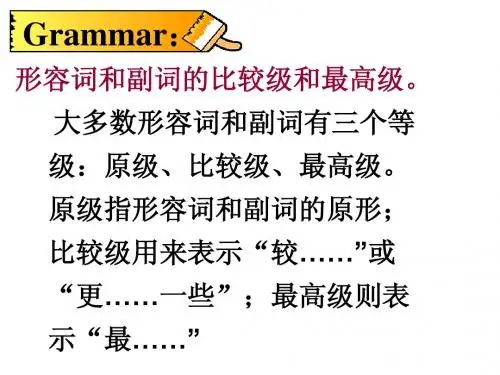


八年级形容词、副词的比较级和最高级语法知识讲解八年级上册英语形容词和副词的比较级和最高级绝大多数形容词有三种形式,原级,比较级和最高级, 以表示形容词说明的性质在程度上的不同。
一、形容词的原级: 形容词的原级形式就是词典中出现的形容词的原形。
例如: poor tall great glad bad二、比较级的定义:大多数的形容词都有三个级别:原级、比较级、最高级。
其中比较级表示“更……”,用于两者之间的比较,用来说明“前者比后者更……”,比较级前面一般用much, even, a little,a lot修饰,其中even, much 只能修饰比较级。
三、比较级和最高级的构成:(1)规则变化:单音节和部分双音节的形容词比较级一般在词尾加-er,最高级在词尾加-est calm--calmer—calmest tall--taller--tallest smart--smarter--smartest以字母e结尾的比较级直接在词尾加-r,最高级加-st.nice--nicer -nicest fine--finer-finest large—larger--largest以“辅音+y 结尾的词,变y为 i,比较级加-er”,最高级加-est.early—earlier-earliest happy—happier-happiest busy—busier-busiest 以重读闭音节的单个辅音字母结尾的词,双写辅音字母,比较级加-er,最高级加-estbig—bigger-biggest thin—thinner-thinnest hot—hotter-hottest多音节或部分双音节的形容词,比较级在原级前面加more,最高级在原级前加moste.g: popular--more popular—most popularimportant--more important—most important (2)不规则变化:少数形容词的比较级变化是不规则的:good—better--best bad/ill—worse--worst many/much—more--mostlittle—less--least far--farther/further—farthest/furthest old---older/elder—oldest/eldest四、比较级的用法:(一)当两个人或事物(A和B)进行比较时,我们需要用到形容词(副词)的原级或者比较级1( 表达“A和B一样”,用as…as的结构。