译林版五年级下英语知识点
- 格式:docx
- 大小:30.36 KB
- 文档页数:6
精编知识点
译林新版小学五年级下册知识点整理
Unit 1知识点
一、单词:
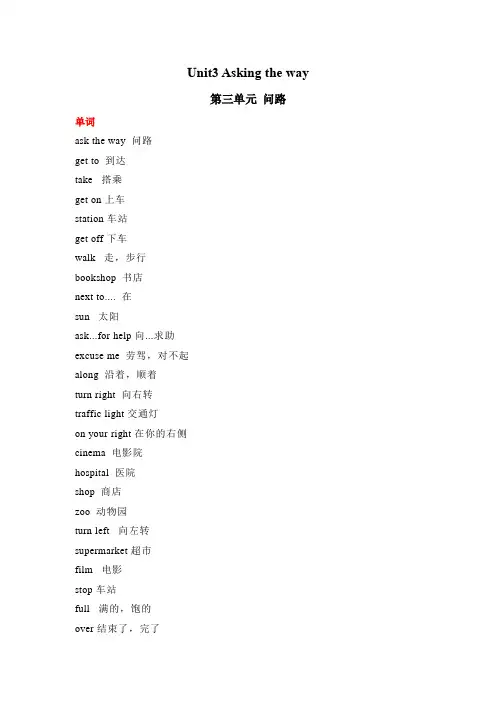
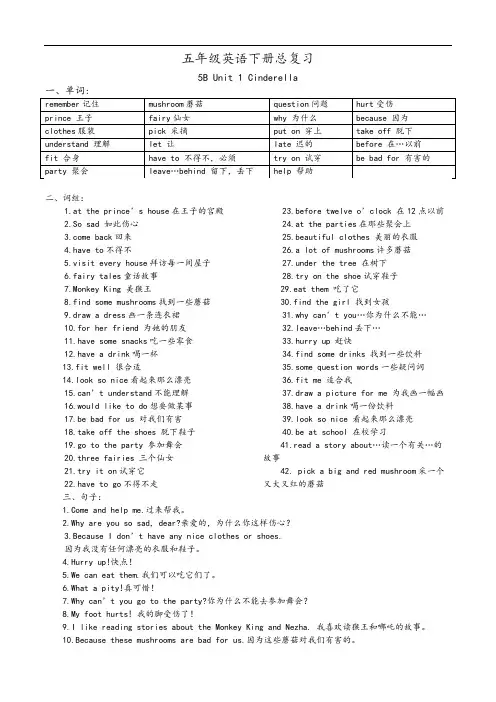
because 因为 fairy 仙女 fit 合适,合身 have to 不得不,必须
mushroom 蘑菇 prince 王子 pick 摘,拾 take off 脱下
clothes 衣服 let 让 put on 穿上 understand 明白,理解
before 在…以前 late 迟的 try on 试穿 be bad for有害的
pick 摘 leave…behind 留下,丢下
二、词组:
be sad 伤心 go to the party 去聚会 at the party 在聚会
come back 回来 take off 脱下 have a good time 过得愉快
try on 试穿 have to go必须走 leave…behind 留下,丢下
in the forest 在深林里 under a tree在一棵树下 look so nice 看起来很漂亮
are bad for us 对我们有害的 pick a big red mushroom 摘一个大红色的蘑菇
at the prince's house 在王子的房子 don't have any nice clothes or shoes 没有漂亮的衣服或鞋子
三、句型:
1. Why are you so sad ? 你为什么这么伤心?
2. Because I can’t go to the party. 因为我不能去参加聚会。
3.Why?为什么?
4. Because I don’t have any nice clothes and shoes.因为我没有漂亮的衣服或鞋子。
四、语法: can't = can not don't =do not
知识点1:can 的用法
1) can表示能力,意思是“能,会”。 后面直接跟动词原形,用于一切人称和数。
Can的否定形式为can not,其缩写为“can’t。
如:We can speak much English now. 我们现在能说英语了。
2) 表示许可,意思是“可以”。如:You can watch TV after supper. 晚饭后你可以看电视。
如:You can stay here for another six weeks. 你可以再待在这儿六个月。
3) 和can相关的常用句型
a)Can I help you? —Yes, please. / No , thanks.
B) Can I borrow your book?----Yes, of course.
c)Can I write on the book? ------No, you can’t \ mustn’t.
批注:could是can 的过去式,同时也可以用来表示委婉语气,但在小学阶段重点考察委婉语气的用法。如:Could \ Can you help me? ---- Yes, of course. \ Certainly .\ Sure. Could \ Can you tell me t
he way to the Zoo ?
情态动词的基本用法:
1)情态动词没有人称和数的变化;如: Li ming can speak English.
2)情态动词的后面必须跟动词原形; 如:He should go to school on time.
3)情态动词的句式变化
A.变否定句,变化规则是在情态动词后面"not"。
例如:He can play the piano.(改成否定句)He can’t play the piano.
B.变一般疑问句,变化规则是将情态动词直接提到句首,后面保持不变。
例如:He can play the piano.(改成一般疑问句)Can he play the piano?
C.变特殊疑问,变化规则是词加情态动词开头的一般疑问句。
例如:He can play the piano.(对划线部分提问) What can he play ?
知识点2:Would表示建议“你愿意…吗”
Would you like to go shopping with me? -----Yes, I’d love to. /I’d love to.
But I’m busy now. Would you like something to eat / drink? ----Yes, I’d like… 精编知识点
Unit 2知识点
一、单词:
far from 离……远 near 在……附近 by …乘…… bus 公共汽车,大巴士
on foot 步行 metro 地铁 taxi 出租车,的士 bike自行车
plane 飞机 ship轮船 train 火车 ride 骑车
show 给……看 basket 篮子 city城市
二、词组:
very big 很大 by bus 乘公共汽车 your new home 你的新家
on foot 步行 by metro 乘地铁 far from school 离学校远
by taxi 乘出租车 come to school 来学校 a taxi driver 一位出租车司机
in the park 在公园里 can fly 会飞 live on Moon Street 住在月亮街上
too young 太小(年龄) sit in the basket 坐在篮子里
show his bike to sam 展示他的自行车给山姆看 near City Library在城市图书馆附近
三、句型:
1. Where do you live?你住在哪里?
2. I live …我住在……
3. I live near/ far from…我住在附近/离远
4. How do you come to school? 你怎样来学校的?
5. I come to school…我来学校……
Unit 3知识点
一、单词:
along 沿着,顺着 ask the way 问路 ask…for help 向……求助
full 满的,饱的 get to 到达 on your right在你的右侧
next to 在……旁边 turn left向左转 See you later. 一会儿见。
traffic light交通灯 turn right 向右转 bookshop 书店
get off 下车 get on 上车 take 搭乘
walk 走;步行 street 街道 excuse me劳驾;对不起
cinema 电影院 hospital医院 shop商店
zoo动物园 supermarket超市 stop车站 over结束
二、词组:
get to 到达 get on上车 come out from从……出来
walk to 走到 get off 下车 see a new film 看一部新电影a
next to 在……旁边 on the street 在街上 ask a policeman for help 向一位警察求助
be over 结束 want to visit 想要参观 on your right 在你的右侧
turn left向左转 turn right 向右转 go along this street 沿着这条街走
wait for the bus 等公交车 take the metro 乘地铁 at Park Station在公园站
at the traffic lights 在交通灯
三、句型:
1. How do I get to …?我怎样到达……?
2. Go along this street.沿着这条街走。
3. Turn left / right at the traffic lights. 在交通灯向左/右转。
4.Get on / off …at …在……上/下车。
5. You can see the bookshop on your right.你可以看见书店在你的右手侧。
精编知识点
Unit
4知识点
一、单词:
feel 感觉 toothache 牙疼 anything 任何东西 See the doctor 看医生
check 检查 dentist 牙医 bedtime 就寝时间 giraffe 长颈鹿
neck 脖子 have a rest 休息 should 应该 brush one's teeth 刷牙
drink water 喝水 point at 指着,指向 take medicine 吃药
二、词组:
see the doctor 看医生 have a headache 头痛 drink some warm water 喝些温水let me check 让我检查 have a fever 发烧 eat a lot of sweets 吃许多糖