动词不定式、动名词用法和区别
- 格式:doc
- 大小:48.00 KB
- 文档页数:3
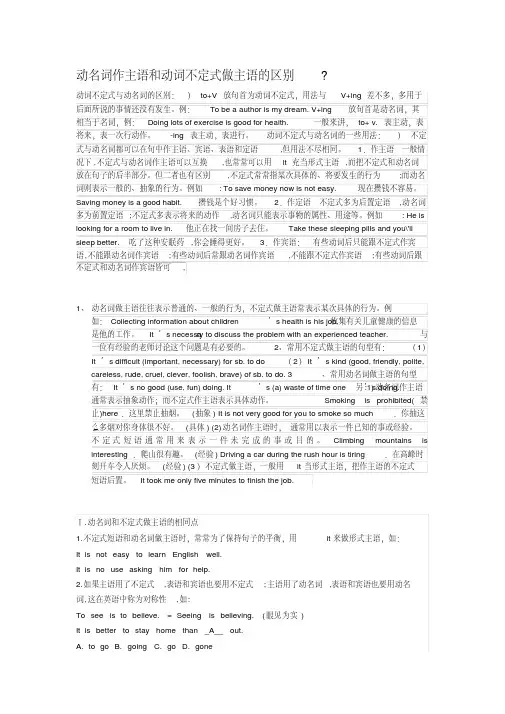
动词不定式、动名词的用法和区别
动 词 不 定 式: 动词不定式是由 to + 动词原形构成,在句中起名词,形容词和副词的作用,可以担任除谓语以外的其它任何成分。
1. 动词不定式作主语:
To mast a language is not an easy thing. / To teach English is my favorite.
动词不定式作主语时可以放在后面,而用 it 作形式主语放在原主语的位置上。
It's very kind of you to have given us much help.
2. 动词不定式作宾语:
某些及物动词可以用动词不定式作宾语,这些动词有decide, begin, help, begin, want, wish, like, forget, learn, ask.
I like to help others if I can.
3. 动词不定式作宾语补语 。
We expect you to be with us. 我们希望你和我们在一起。 / Please ask him to come here quickly.请叫他快过来。
4. 动词不定式作表语 :
What I should do is to finish the task soon. / The most urgent thing is to find the boy immediately.
5. 动词不定式作定语:
There are many ways to solve the problem. / I have something important to tell you.
6. 不定式作状语:
We went to the hospital to see our teacher. / She is making a test to get a kind of useful medicine from a Tibet flower.
动词不定式的否定形式: not + to + 动词原形
The teacher told us not to swim in that river. 老师告诉我们不要在那条河里游泳。
It's unfair not to tell us. 没告诉我们真是不公平。
带疑问词的不定式:
疑问词who, what,which,when, where, how, why 可以加在不定式的前面,构成不定式短语,使含义更加具体。
Where to go is not known yet. I don't know when to begin.。
Can you tell me where to get the battery. Do you know how to get to the station.
带逻辑主语的不定式:
动词不定式可以带有自己的逻辑主语,构成方法是: for + 逻辑主语 + 不定式。
注意:逻辑主语用宾格形式, for 本身无实际意义,它只表明后面的主语从逻辑上分析是不定式的主语。
It's necessary for us to help each other. / There are much work for me to finish,
动词不定式的被动形式: 表示不定式动词同所修饰的名词是被动关系 。
He is the man to be examined. 他是受检查的人。 / There are much work to be done. 有好多工作要做。
● 动 名 词
(
动名词是由动词原形 + ing 构成,同现在分词形式一样,在句中可作主语, 宾语,表语和定语。
1) 动名词作主语:
Talking like that is not polite. / Learning from others is important . / Putting on more clothes is not so good .
(注:动名词可以象动词不定式一样,用 it作形式主语, 而把动名词写在后面做真正的主语。)
It's no use waiting here, let's go home. / It's very difficult climbing this mountain.
2) 动名词作表语
The nurse's job is looking after the patients.
3) 动名词作宾语
有些动词须用动名词来作宾语,它们是begin, mind, suggest, finish, stop, need, enjoy, miss, keep.
Please stop smoking in the house. / I like reading in the forest. / Do you mind my opening the windows
4)动名词作定语
She is studying in the reading room. / He slept in the sleeping bag.
(动名词的否定形式:not + 动名词 )
He pretend not knowing it at all. 他假装全然不知。/ We considered not doing it now. 我们考虑现在不做这件事 。
动名词的被动形式 : 当动名词和它的逻辑主语是被动关系时,用动名词的被动形式来表示。)
His being looked down upon made him sick. / I can't really stand being treated like that.
动名词的几种特殊情况:
1) 有些动词的后面能跟动名词做宾语,有些动词能跟不定式,有些两者都可以, 它们的具体含义有时还不一样。
能跟动名词的动词有:avoid, consider, delay, deny, dislike, endure, enjoy, escape, forgive, finish, imagine, keep,
mind, miss, pardon, prevent, resist, suggest, understand, can't help, 等。
能跟不定式的动词有: decide, desire, expect, hope, mean, pretend, promise, refuse, undertake, want, wish,
agree, manage,
能跟动名词和不定式的动词有: love, like, hate, prefer, dislike, begin, continue, intend, attempt, propose, want,
need, remember, forget, regret, try, deserve, start,
1)动词后面跟动名词还是不定式,含义不相同,总的来说,表示习惯的, 一般性的动作多跟动名词,一次性的具体的被动动作多跟不定式。
I like to go with you. I like reading.
He promised to help her. We love watching VCD.
2) remember, forget, regret后面跟动名词时,动名词表示过去的动作, 后跟不定式时,不定式表示将来的动作。
I remember meeting him in the street. / I remember to write a letter to my parents.
3) "stop + 动名词"表示停止动名词所表示的动作, "stop + 不定式"表示停下来 做不定式所表示的动作。
Stop smoking, please. 请不要抽烟 。 Let's stop to have a rest. 咱们停下来休息一下吧。
$
4) 动名词和分词的区别: 动名词作定语时,动名词和它所修饰的词没有逻辑上的主谓关系,而分词作定语时,
分词和它所修饰的词有逻辑上的主谓关系。
reading text 阅读课文 〔动名词〕 developing country 发展中国家 〔分词〕
a sleeping bag 睡袋 〔动名词〕 boiled water 开水 〔分词〕
再谈动词不定式与动名词
A、动词不定式作宾补
1)tell / ask / want sb to do sth. ______________ 否定式:tell/ask/want sb not to do sth. __________
2)省to不定式作宾补 即:(l, m, n, 3h, 2看, 1f) sb do sth.
l—let; m—make; n—notice; 3h—hear, have, help; 2看—see, watch; 1f—feel
但注意:1)help sb (to) do sth. (to可省、可不省) 2)在改作被动语态时省去的to应还原
eg. Someone heard him sing in the room. / He was heard to sing in the room.
《
B、动词不定式与动名词的区别
1.(hope; learn; want=would like; decide) to do 2.(enjoy; finish; keep; mind; practise) doing
doingworthbeproblemssomehavefunhavetodoingprefertooncontributiamakefrompreventkeepstoplikefeelinspendinbusybe...//)...()(
(已做)记住已做了(未做)记住做(已做)忘记已做了(未做)忘记做停止做(正在做的事))停下来去做(另一件事::::::.3doingdotorememberdoingdotoforgetdoingdotostop
(原来的事)继续做(另一件事)接着做::.4doingdotoongo 常可替换)((),,.5doingdotolikestartbegin