
习语翻译
- 格式:ppt
- 大小:461.50 KB
- 文档页数:34

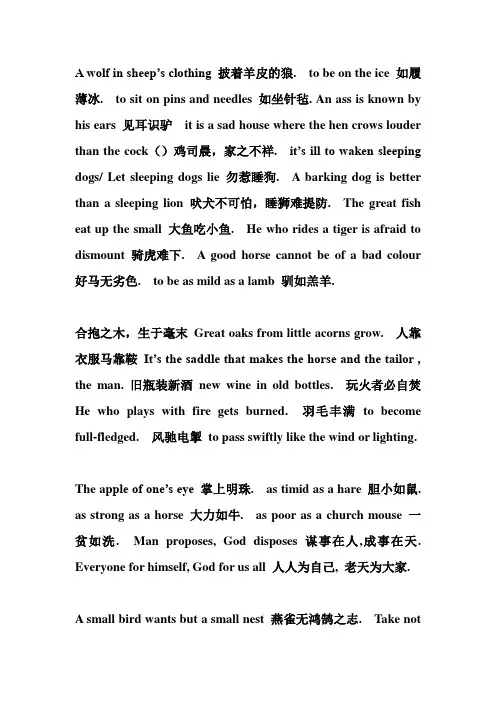
A wolf in sheep’s clothing 披着羊皮的狼. to be on the ice 如履薄冰. to sit on pins and needles 如坐针毡. An ass is known by
his ears 见耳识驴 it is a sad house where the hen crows louder
than the cock()鸡司晨,家之不祥. it’s ill to waken sleeping
dogs/ Let sleeping dogs lie 勿惹睡狗. A barking dog is better
than a sleeping lion 吠犬不可怕,睡狮难提防. The great fish
eat up the small 大鱼吃小鱼. He who rides a tiger is afraid to
dismount 骑虎难下. A good horse cannot be of a bad colour
好马无劣色. to be as mild as a lamb 驯如羔羊.
合抱之木,生于毫末 Great oaks from little acorns grow. 人靠衣服马靠鞍 It’s the saddle that makes the horse and the tailor ,
the man. 旧瓶装新酒 new wine in old bottles. 玩火者必自焚
He who plays with fire gets burned. 羽毛丰满 to become
full-fledged. 风驰电掣 to pass swiftly like the wind or lighting.
The apple of one’s eye 掌上明珠. as timid as a hare 胆小如鼠.

1 汉英习语翻译
常用汉语成语(Common Chinese Idioms)
top
按图索骥 Looking for a steed with the aid of its picture
百发百中 A hundred shots, a hundred bull's-eyes
班门弄斧 Showing off one's proficiency with the axe before Lu Ban the master carpenter
杯弓蛇影 Mistaking the reflection of a bow for a snake
闭门造车 Building a cart behind closed doors
病入膏肓 The disease has attacked the vitals
草木皆兵 every bush and tree looks like an enemy
吹毛求疵 Blow apart the hairs upon a fur to discover any defect
打草惊蛇 Beating the grass and flushing out the snake
调虎离山 Luring the tiger out of the mountains
东施效颦 Aping the Beauty's frown
对牛弹琴 Playing the lute to a cow
负荆请罪 Bringing the birch and asking for flogging
功亏一篑 Running an enterprise for the lack of one basketful
故步自封 Content with staying where one is
含沙射影 spitting sand on a shadow-attacking by insinuation
凯里学院本科毕业论文(设计)
1英语习语的翻译徐丹(凯里学院外国语学院贵州凯里556000)摘要:习语在英语语言中占重要地位,由于英语习语是人们智能的反映和历史的积淀,具有独特的文化特性,最大化的构成了语言和文化间的差异。因此,对于英语学习者来说,正确的理解、翻译英语习语是十分必要,也是必不可少的。本文简要阐述了英语习语的几种基本译法以及翻译时应注意的问题。关键词:英语习语;翻译;方法1.前言众所周知,每一种语言都是一个民族智慧与文化的载体,其中的习语更是不可或缺的重要组成部分,含有丰富的社会和文化内涵。英语是世界上使用最广泛的语言之一,英语中的习语十分丰富,它们从各个方面反映出以英语作为本族语的人民的生活哲理、道德观念、行为准则和风土人情。作为一种语言现象,习语是英语国家口头表达出现率最频繁的语言。在英语语言表达的生动性,凝炼性及使用频繁程度方面,习语更是首选。1.1习语的定义英语习语有两个特征:一是语义的统一性(semanticunity):二是结构的固定性(structuralstability)。习语(idioms)是个固定词组的词组,在语义上是个不可分割的统一体,其整体的意义往往不能从组成习语的各个词汇意义中揣测出来。从结构上看,习语也有本身的完整性,其中的各个组成部分是固定的,不可任意拆开或替换。习语是约定俗成、有固定寓意的语言。习语的范围很广,包括成语(setphrases)、谚语(proverbs)、俗语(colloquialisms)、俚语(slangs)、典故(allusions)、格言(sayings)和比喻性词组(metaphoricalphrases)等,是语言经过长期反复使用后而自然积淀下来的固定词组、短语或短句,其形式固定,其寓意深远。正确的理解和翻译英语习语对一个英语学习者来说是尤为重要的。2.英语习语的翻译方法2.1直译(literaltranslation)直译法,顾名思义,就是在不违背译文语言规范以及不引起错误的联想的条凯里学院本科毕业论文(设计)

“知人知面不知心”
• “You can know a man’s face but not his heart.”杨宪益
• “Appearances certainly are deceptive!” Howks霍克斯
• 水中捞月
• to catch the moon in the water /to make an impractical attempt
• fish in the air;
• cry for the moon;
• plough the sands;
• a wild goose chase
• 胸有成竹
• 直译: Before an artist can draw a bamboo, he must have the image in his mind
• 意译:to have a well-thought-out plan before doing sth.
• 意义相等的英语成语:to have a card up one’s sleeve
剖腹藏珠Penny wise and pound foolish
声东击西To shout in the east and strike in the west
刻骨铭心To be engraved on one’s heart and bones
眉飞色舞to beam with joy
粗枝大叶To be crude and careless
无孔不入To take advantage of every weakness
竭泽而渔Kill the goose that lays the golden eggs
打草惊蛇Wake a sleeping dog
井底之蛙To be like a frog at the bottom of a well
调虎离山To lure the tiger from the mountain