二级微型消防站配置标准
- 格式:doc
- 大小:38.17 KB
- 文档页数:4
二级微型消防站配置标准
Establishing standards for the configuration of secondary micro fire
stations is critical for ensuring the safety and well-being of
communities. 为了确保社区的安全和福祉,制定二级微型消防站配置标准至关重要。These standards should encompass various aspects such
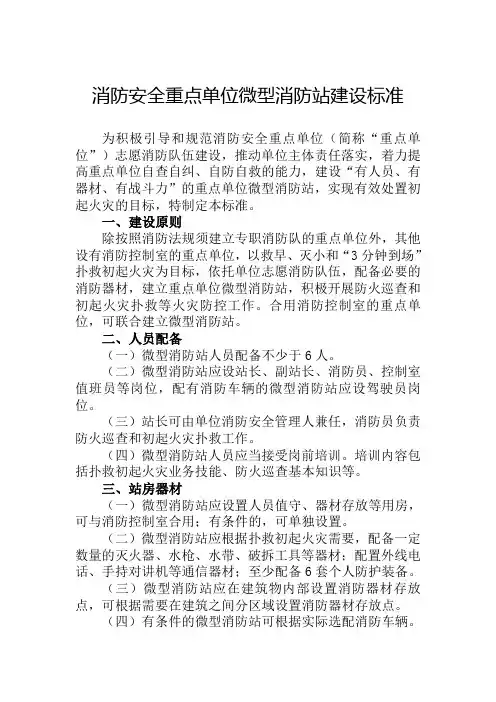
as location, equipment, staffing, and response times. 配置标准应包括诸如位置、设备、人员配备和响应时间等各个方面。Firstly, the location
of secondary micro fire stations plays a crucial role in their
effectiveness. 首先,二级微型消防站的位置对其效果至关重要。Ideally,
these stations should be strategically placed in areas with high
population density, commercial complexes, industrial zones, and
other high-risk locations. 理想情况下,这些站点应该被战略性地设置在人口密集地区、商业综合体、工业区和其他高风险地点。
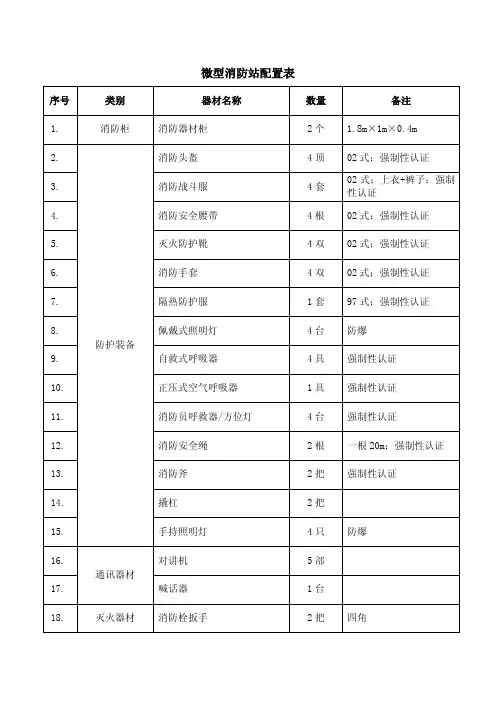
Additionally, the equipment available at secondary micro fire stations
must be up to standard and well-maintained. 此外,二级微型消防站的设备必须达到标准并得到良好的维护。This includes fire trucks, hoses,
extinguishers, protective gear, and other essential tools needed for
firefighting operations. 这包括消防车、软管、灭火器、防护装备和其他进行消防操作所需的基本工具。Regular inspections and training should be conducted to ensure that the equipment is in optimal condition
and that firefighters are proficient in using them. 应定期进行检查和培训,以确保设备处于最佳状态,消防员熟练掌握使用技巧。
Moreover, staffing at secondary micro fire stations is crucial for their
effective operation. 此外,二级微型消防站的人员配备是其有效运行的关键。Qualified and well-trained firefighters should be stationed at
these facilities at all times to respond promptly to emergencies. 应该随时有合格和训练有素的消防员驻扎在这些设施,以便迅速应对紧急情况。Additionally, administrative staff and support personnel are needed
to ensure the smooth functioning of the station and coordination
with other emergency services. 此外,还需要行政人员和支持人员,以确保消防站的顺利运行,并与其他应急服务协调。
In terms of response times, secondary micro fire stations should aim
to reach the scene of the incident within a minimal timeframe. 从响应时间来看,二级微型消防站应当力求在最短的时间内抵达事故现场。Efficient communication systems and well-defined protocols are
essential for reducing response times and ensuring swift action. 高效的通信系统和明确的操作流程对于缩短响应时间、确保迅速行动至关重要。Regular drills and simulations should be conducted to test the station's readiness and response capabilities. 应定期进行演练和模拟测试,以检验消防站的准备情况和应对能力。
Furthermore, collaboration with other emergency services and
stakeholders is key to the success of secondary micro fire stations. 此外,与其他应急服务和利益相关者的合作对于二级微型消防站的成功至关重要。This includes coordinating with police departments, medical
services, local government agencies, and community organizations
to ensure a cohesive response to emergencies. 这包括与警察局、医疗服务机构、地方政府机构和社区组织协调,确保对紧急情况做出协调一致的应对。Collaboration can also involve sharing resources, conducting
joint training exercises, and developing mutual aid agreements to
enhance overall emergency response capabilities. 合作还可以包括资源共享、联合训练演习和发展互助协议,以增强整体的应急响应能力。
In conclusion, the establishment of standards for the configuration of
secondary micro fire stations is crucial for ensuring the safety and
security of communities. 总之,制定二级微型消防站配置标准对于确保社区的安全和安全至关重要。By addressing factors such as location,
equipment, staffing, response times, and collaboration, these
standards can help optimize the effectiveness of these stations in responding to emergencies. 通过解决位置、设备、人员配备、响应时间和合作等因素,这些标准可以帮助优化这些站点在应对紧急情况时的效力。Ultimately, the goal is to ensure that secondary micro fire stations
are well-equipped, staffed with trained personnel, and integrated
into a comprehensive emergency response network to protect lives
and property. 最终目标是确保二级微型消防站设备齐全,有经过培训的人员驻扎,并融入到全面的应急响应网络中,以保护人们的生命和财产。