
v-ing的用法
- 格式:ppt
- 大小:1.78 MB
- 文档页数:53


V-ing形式是英语中非谓语动词的一种,它在句中可作主语、宾语、宾语补足语、表语和定语。
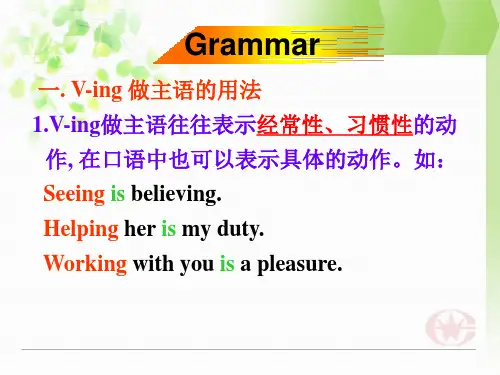
一、V-ing形式作主语表示泛指意义的行为。
谓语动词要用第三人称单数。
如:Saving money is a good habit.二、V-ing形式作宾语1. 有些动词后常跟V-ing形式作宾语,常见的有finish,practice,enjoy,suggest,keep,mind,advise等。
如:A young man practiced speaking English with Mr. Green just now.2. 有些动词词组或某些结构后常跟V-ing形式,常见的有give up,look forward to,feel like,pay attention to,put off,succeed in,be / get used to,can‘t help,be interested in,be afraid of,be busy等。
如:He gave up smoking in the end.注意:1. 某些动词后既可跟动词不定式,也可跟V-ing形式作宾语,但表达的意思不同,常见的有remember to do sth. (记住去做某事),remember doing sth. (记得做过某事);forget to do sth. (忘记去做某事),forget doing sth.(忘记做过某事);stop to do sth. (停下来去做另一件事),stop doing sth (停止做某事);try to do sth.(尽力做某事),try doing sth.(尝试做某事)等。
2. 还有一些动词后面既可跟动词不定式,也可跟V-ing形式作宾语,但表达的意思无多大区别,常见的有love,like,hate,prefer,begin,start,continue等。
三、V-ing形式作宾语补足语通常表示动作正在进行,能带这类结构的动词多为感官动词(如see,watch,hear等)以及某些使役动词(如keep,get 等)。