
牛津译林版八年级英语下册Unit 2 Travelling Study skills课件
- 格式:ppt
- 大小:4.06 MB
- 文档页数:32

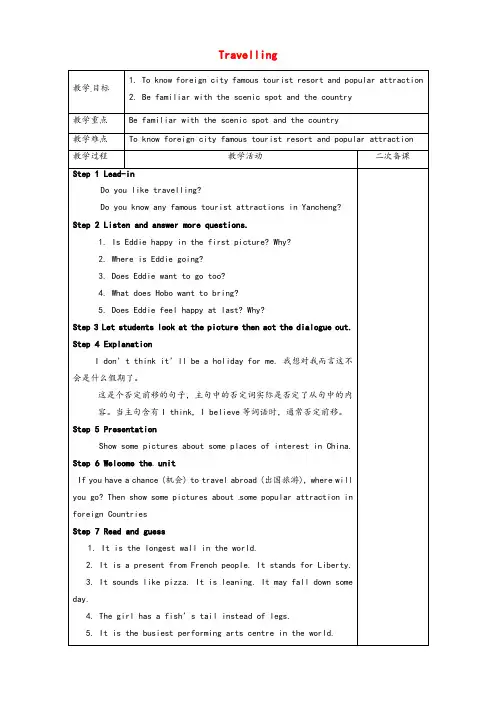
Travelling
教学目标 1. To know foreign city famous tourist resort and popular attraction
2. Be familiar with the scenic spot and the country
教学重点 Be familiar with the scenic spot and the country
教学难点 To know foreign city famous tourist resort and popular attraction
教学过程 教学活动 二次备课
Step 1 Lead-in
Do you like travelling?
Do you know any famous tourist attractions in Yancheng?
Step 2 Listen and answer more questions.
1. Is Eddie happy in the first picture? Why?
2. Where is Eddie going?
3. Does Eddie want to go too?
4. What does Hobo want to bring?
5. Does Eddie feel happy at last? Why?
Step 3 Let students look at the picture then act the dialogue out.
Step 4 Explanation
I don’t think it’ll be a holiday for me. 我想对我而言这不会是什么假期了。
这是个否定前移的句子,主句中的否定词实际是否定了从句中的内容。当主句含有I think, I believe等词语时,通常否定前移。
Step 5 Presentation

用心 爱心 专心 - 1 - Unit 2 Travelling
一、教学内容:
Unit 2 Travelling
Grammar
二、教学目标:
掌握Unit2的词法结构和用法:
1. so…that /such…that/enough to/too…to…
2. have/has been in, have/has been to, have/has gone to
3. 延续性与短暂性动词
经典讲解
Grammar 1: so…that /such…that/enough to/too…to…
解释:如此……以至于……
so+ adj. /adv. +that从句或such+单/复数名词+that从句
例:
It’s so hot in summer that we can’t do without the air conditioner.
夏天的天气热的我们少不了空调。
The teacher spoke so fast that I couldn’t understand what he was saying.
老师讲得太快以致于我听不懂他在说什么。
He is such a genius that he doesn’t have to study much for exams.
他是个天才,所以他考试都不用怎么念书。
They are such good basketball players that everybody wants to watch their games.
他们个个都是很棒的篮球员, 所以每个人都想去看他们打球。
表示:足以做某事 enough to… 如: He is old enough to do it.
意思是太……而不能 too...to… 例: He is too young to go to school.
中考链接

牛津译林版英语八下Unit 2《Travelling》说课稿
一. 教材分析
牛津译林版英语八下Unit 2《Travelling》主要讲述了关于旅行的相关话题。本单元通过介绍不同类型的旅行方式、旅行计划、旅行中的注意事项等,帮助学生掌握与旅行相关的词汇和表达方式,提高学生的听说读写能力。教材内容丰富,贴近学生生活,有利于激发学生的学习兴趣。
二. 学情分析
八年级的学生已经具备了一定的英语基础,对于日常生活中的基本表达已经能够熟练运用。但是,对于一些关于旅行的专业词汇和表达方式可能较为陌生。因此,在教学过程中,需要关注学生的个体差异,针对不同学生的学习需求进行引导和帮助。
三. 说教学目标
1. 知识目标:学生能够掌握与旅行相关的词汇和表达方式,如旅行方式、旅行计划、旅行注意事项等。
2. 能力目标:学生能够听懂、会说、会读、会写关于旅行的句子,提高学生的听说读写能力。
3. 情感目标:通过本单元的学习,学生能够培养对旅行的兴趣,提高对英语学习的热情。
四. 说教学重难点
1. 重点:学生能够掌握与旅行相关的词汇和表达方式。
2. 难点:学生能够运用所学的词汇和表达方式进行实际交流,编写关于旅行的短文。
五. 说教学方法与手段
1. 交际法:通过模拟真实场景,让学生在实际交流中运用所学知识。
2. 任务型教学法:通过完成各种任务,激发学生的学习兴趣,提高学生的参与度。
3. 多媒体辅助教学:利用多媒体课件、图片、视频等丰富教学手段,提高学生的学习兴趣。
六. 说教学过程
1. 导入:以一段关于旅行的视频导入,激发学生的学习兴趣。 2. 新课呈现:通过展示图片、实物等,引入本节课的主题,引导学生学习相关词汇和表达方式。
3. 课堂练习:设计不同类型的练习,让学生在实际交流中运用所学知识。
4. 小组活动:学生分组进行讨论,分享各自的旅行经历,促进学生之间的交流。
5. 课堂小结:对本节课所学内容进行总结,帮助学生巩固记忆。
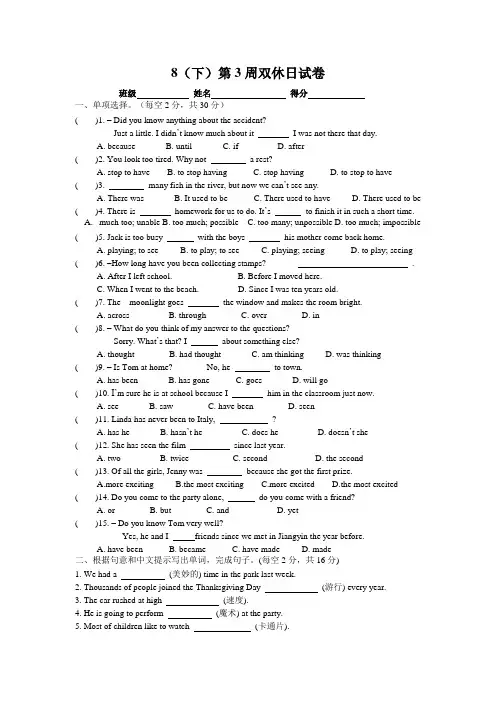
8(下)第3周双休日试卷
班级 姓名 得分
一、单项选择。(每空2分,共30分)
( )1. – Did you know anything about the accident?
-- Just a little. I didn’t know much about it I was not there that day.
A. because B. until C. if D. after
( )2. You look too tired. Why not a rest?
A. stop to have B. to stop having C. stop having D. to stop to have
( )3. many fish in the river, but now we can’t see any.
A. There was B. It used to be C. There used to have D. There used to be
( )4. There is homework for us to do. It’s to finish it in such a short time.
A. much too; unable B. too much; possible C. too many; unpossible D. too much; impossible
( )5. Jack is too busy with the boys his mother come back home.